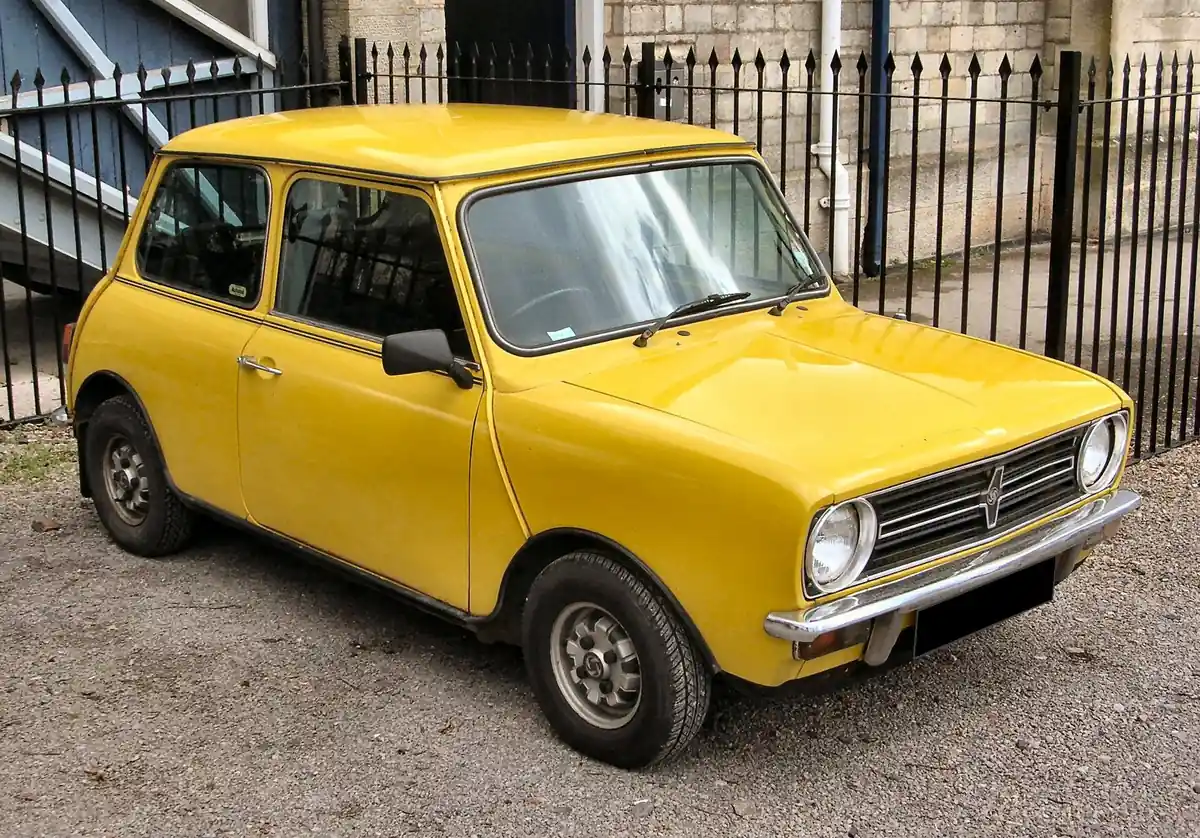
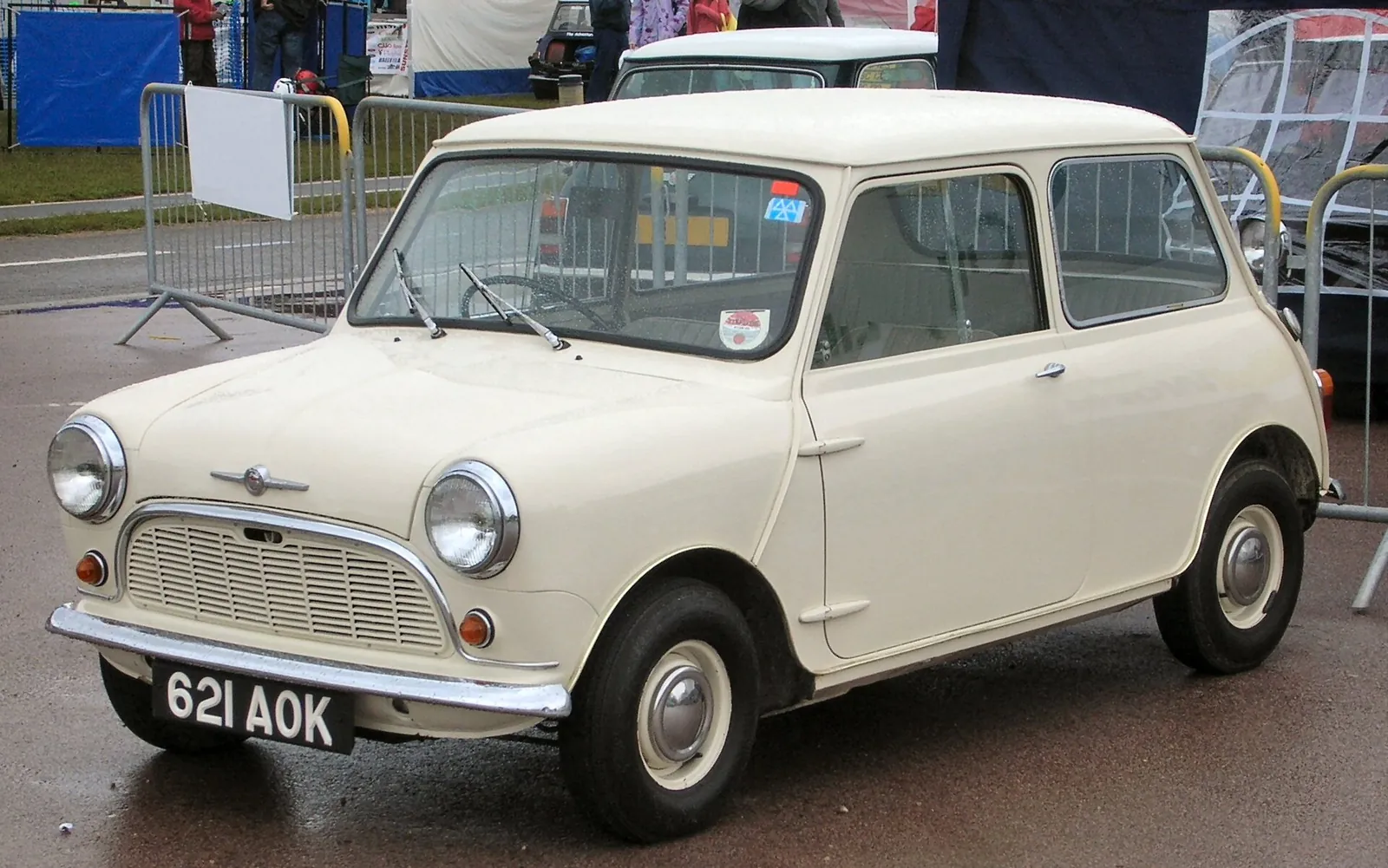
One generation for forty-one years, like the Citroën 2CV and the Volkswagen Beetle before it in this catalogue: no second generation ever replaced the Mini, so this entry spans the whole 1959–2000 run and the evolution lives in its trims rather than in a family tree.[1] For most of that run it was not officially even a Mini. It launched as the Austin Seven and the Morris Mini-Minor, sold under both of BMC’s badges at once, and only became a marque in its own right in 1969; the brand entry attached to this car explains that history in full.
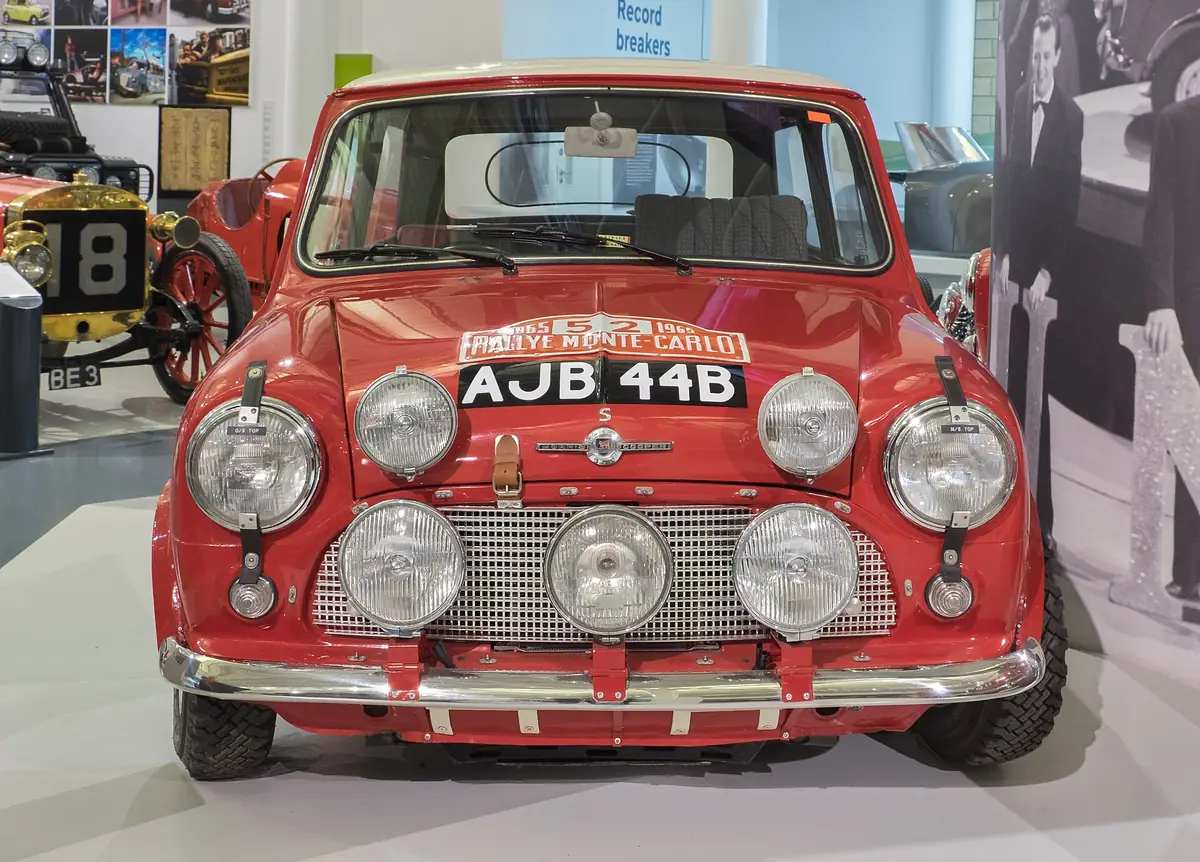
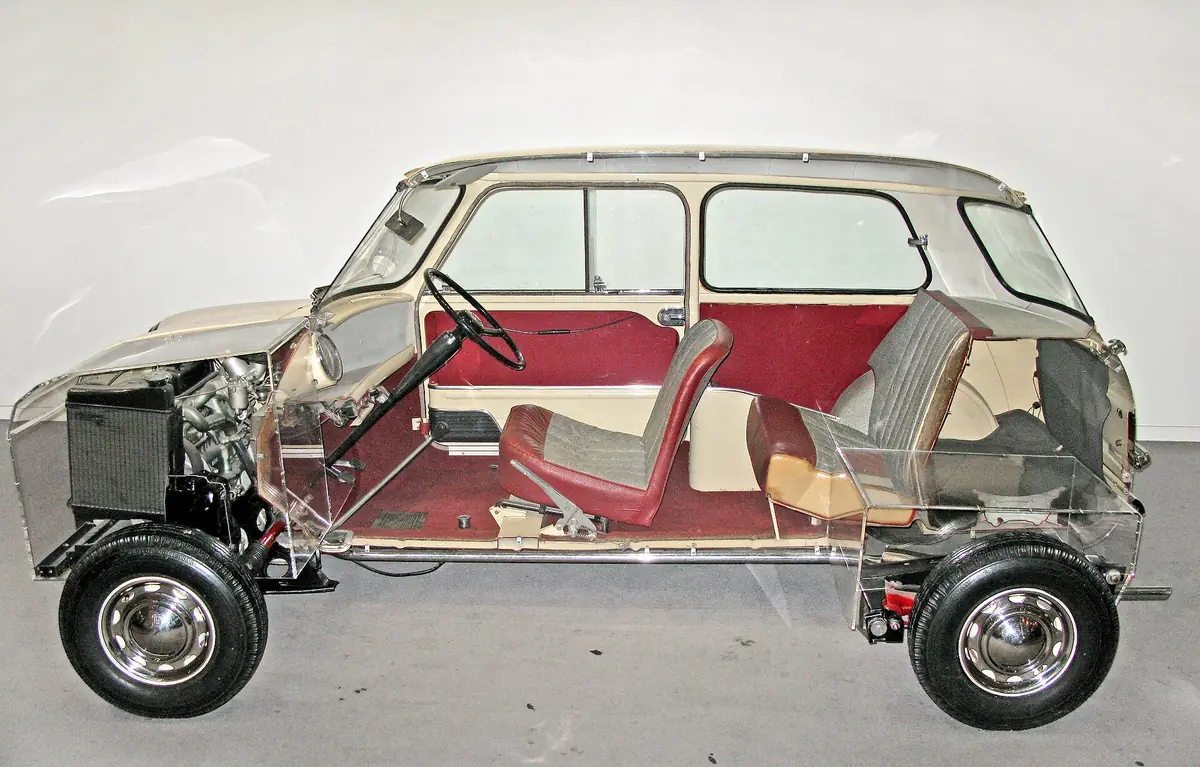
The base 850’s 34 bhp and the Cooper S’s 76 bhp both come from the same 848–1,275 cc BMC A-Series engine family, mounted transversely with the gearbox built into the sump, the layout that let four-fifths of the car’s floor go to people rather than machinery, and the reason almost every small front-wheel-drive car since has copied it. The Cooper S is the reason a shopping car has a competition record at all: it won the Monte Carlo Rally outright in 1964, 1965 and 1967, and would have won 1966 too had the works cars not been disqualified over their headlamp wiring.
Wikipedia’s own kerb-weight figure for the car is a single unattributed 580–686 kg range covering every trim and every year, which is not much use per-trim. Dutch vehicle-registration records fill some of that gap (real, dated, badge-matched figures), but they describe individual cars, not a manufacturer’s specification, and two 1963 Cooper S registrations disagree with each other by 22%. That conflict is why the Cooper S trim here carries a placeholder for mass rather than either of those two numbers: a spread that size usually means the records describe different states of tune or modification, not one true figure worth picking between.