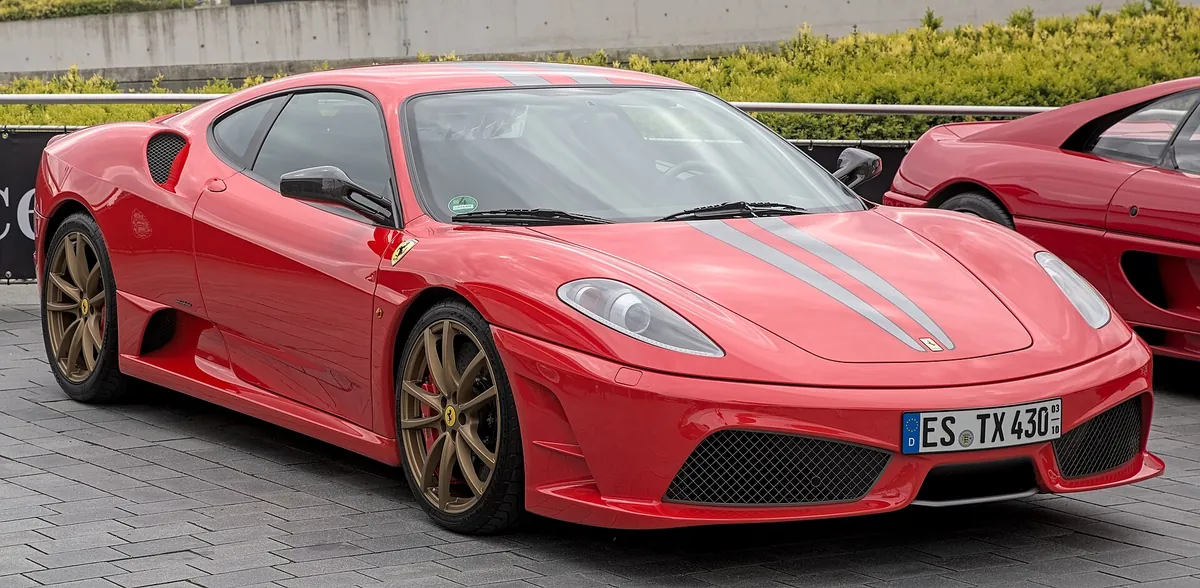
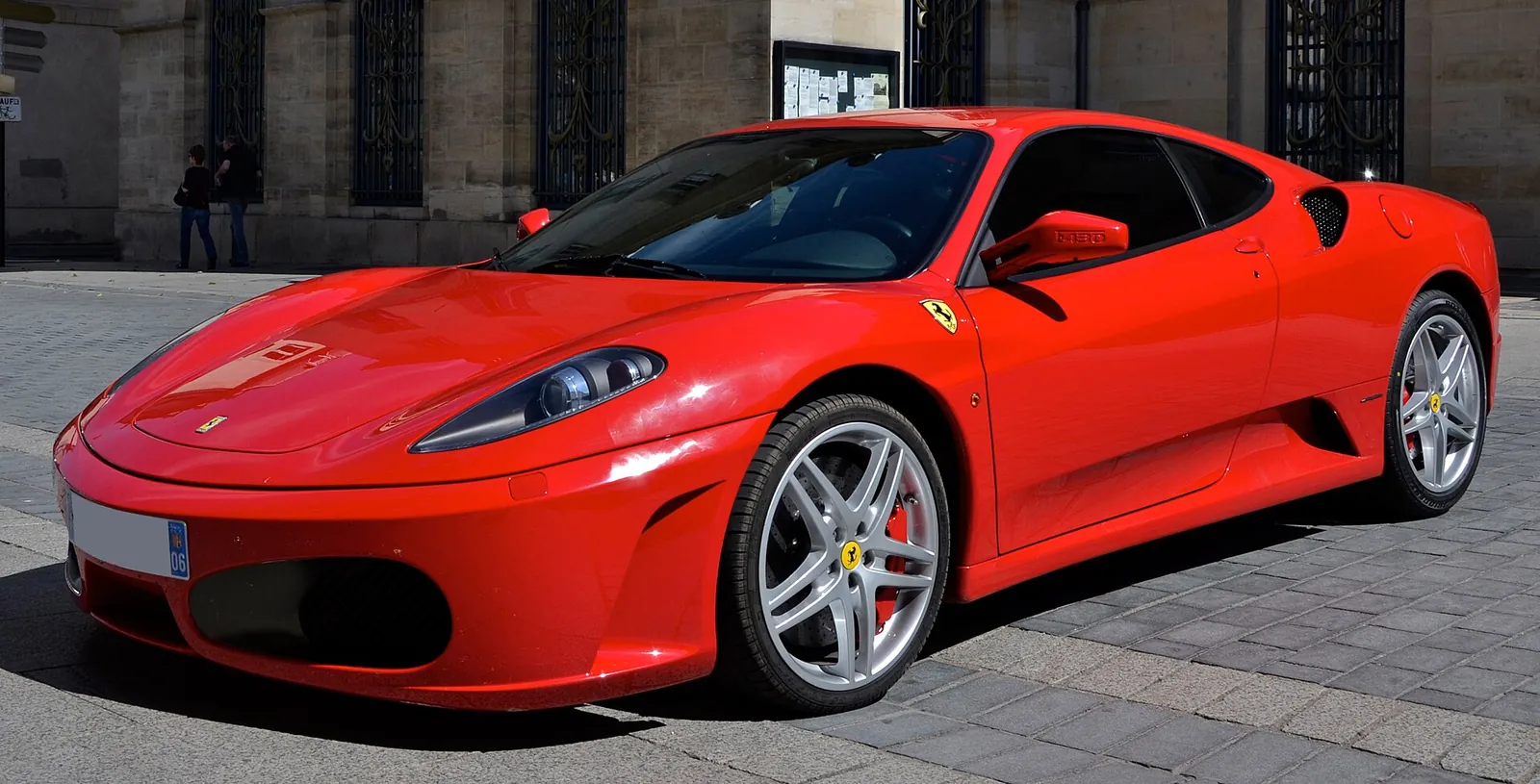
Ferrari’s own historical entry for the F430 credits the new F136 V8 with ending “a fifty-year development cycle” of Dino-derived engines, and the article backs that framing with real detail: the connecting rods, pistons and crankshaft were entirely new, while the four-valve heads and intake trumpets carried over directly from Formula One practice.[1]
Both dimensions and weight arrived here as imperial-to-metric conversions
rather than native SI figures: the infobox publishes wheelbase, length,
width and mass in inches and pounds throughout, unusually for a European car
this recent, and every converted value states its factor in sourceNote.
Top speed for both trims is also a straight mph-to-km/h conversion of the same physical quantity, which this site treats differently from the mph/km/h acceleration trap: converting “196 mph top speed” to km/h is unit conversion, not a change of what is being measured, unlike converting a 0-60 mph time into a 0-100 km/h time, which the site never does. No 0-100 km/h acceleration figure is published for either trim, so that field is left empty rather than estimated from the 0-60 mph time given instead.