
Skip to content
Markey
Theme: System (currently light)
Dacia wordmark: the letters D A C I A in a bold geometric typeface, preceded by a linked double-D emblem

Generation

Dacia Logan (L90)

Dacia Logan (L90/U90/F90), 2004-2012

Produced
2004–2012
Code
L90/U90/F90
Designer
Renault Technocentre
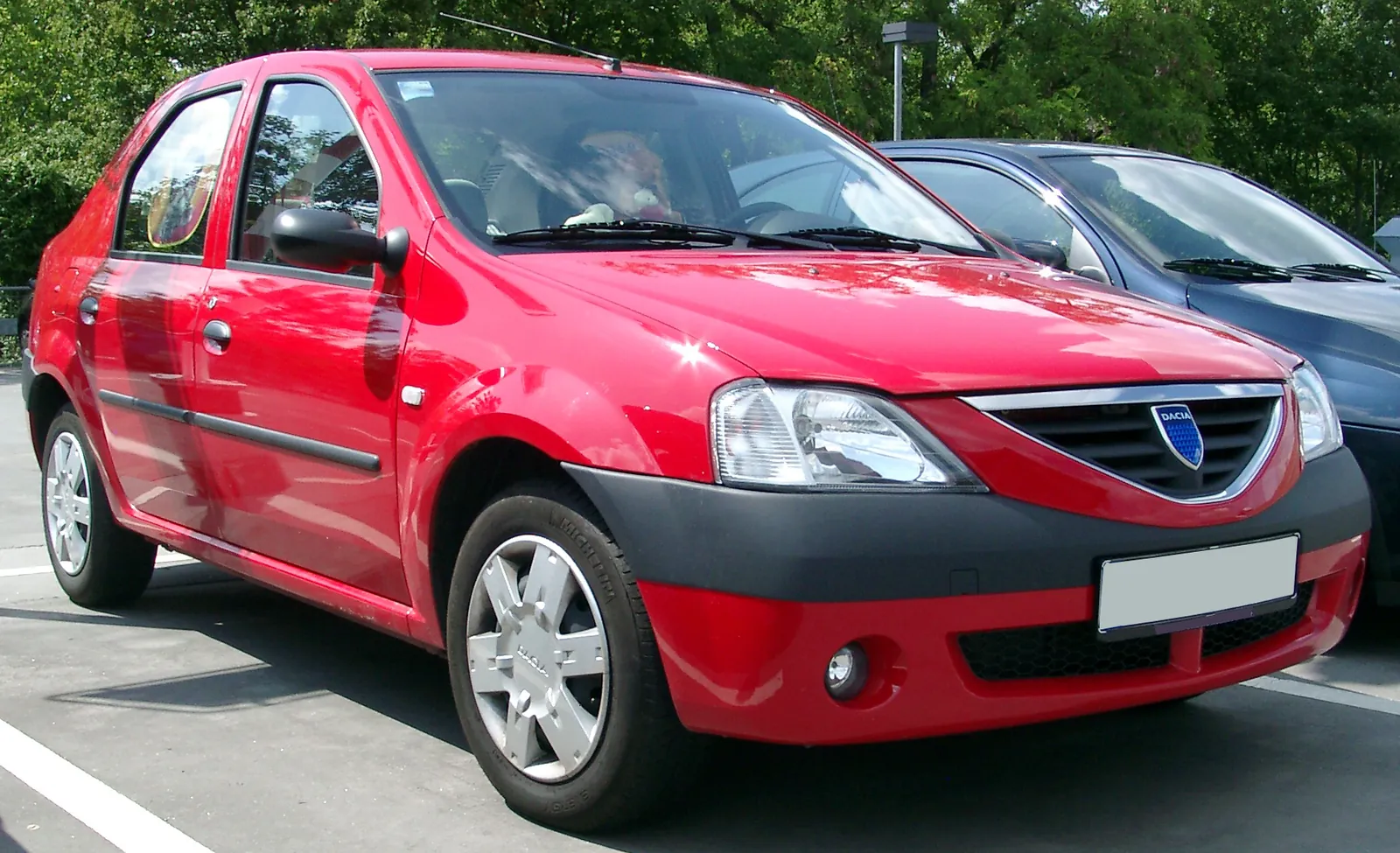
Red first-generation Dacia Logan saloon photographed from the front three-quarter angle

Image credit

File
File:Dacia Logan front 20070611.jpg
Author (attribution required)
Rudolf Stricker

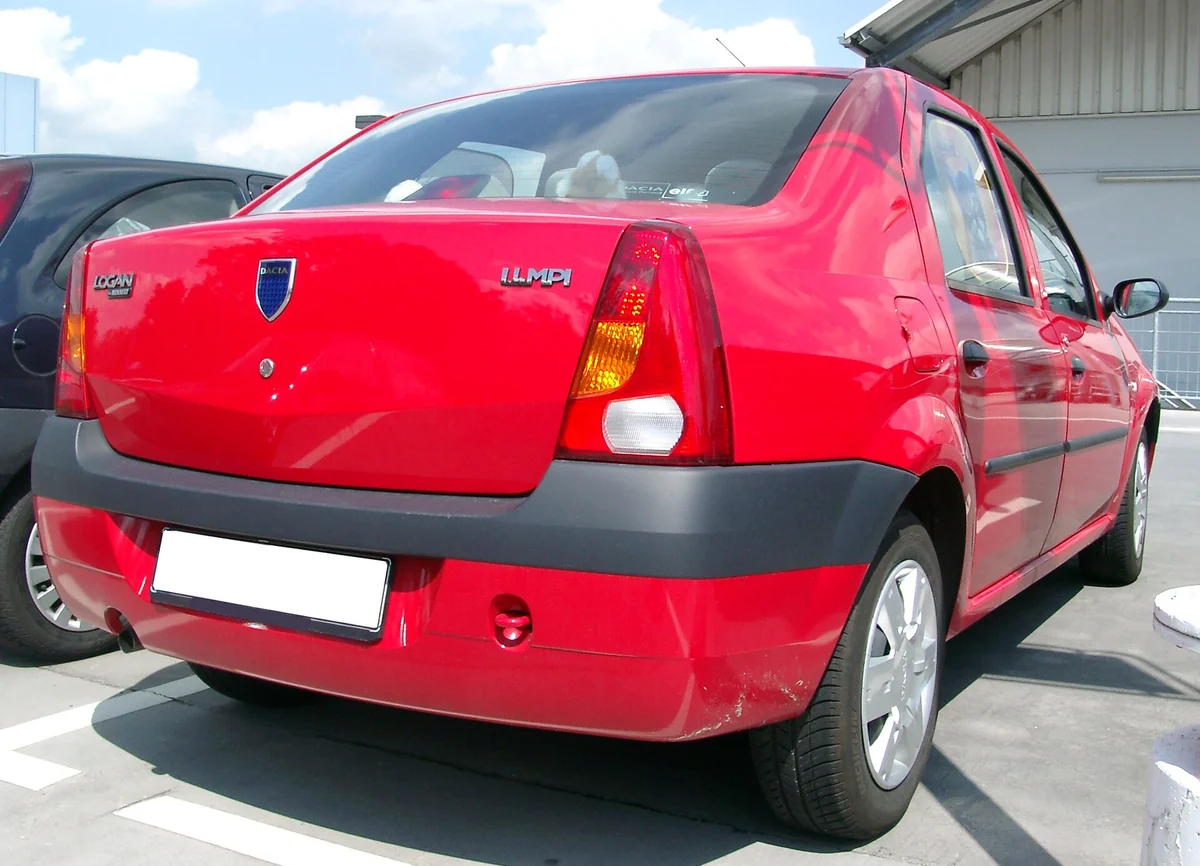
The original Logan, launched in June 2004 as the first product of Renault’s X90 project. It was a car engineered from the outset to be cheap to build and cheap to repair, with 50% fewer parts than a comparable Renault, symmetrical mirrors that fit either side of the car, and a dashboard moulded in a single piece.[1] Renault had not planned to sell it in Western Europe at all; a 2005 decision to import it anyway, at a higher price than the Romanian version, turned out to be a considerable, unplanned success.

Every power and torque figure recorded here comes directly from the manufacturer’s own published table, in kW, so none needed converting. Kerb weight is only published as a range spanning the saloon, estate, van and pickup body styles together, so the lowest figure is recorded at generation level rather than assigned to a specific trim.
Overview

Manufacturer
Dacia
Produced
2004–2012
Model code
L90/U90/F90
Designer
Renault Technocentre
Segment
B-segment (Europe) / Subcompact (US)
Positioning
Economy
Assembly
  • Mioveni, Romania
  • Sao Jose dos Pinhais, Brazil (Renault Brazil)
  • Envigado, Colombia (Sofasa)
  • Casablanca, Morocco (Somaca)
  • Tehran, Iran (Pars Khodro / IKCO)

Dimensions

Length
4,288 mm

Saloon figure; the station wagon is 4,473 mm, the panel van 4,450 mm and the pickup 4,496 mm.

[1]

Width
1,740 mm

Saloon, station wagon and panel van figure; the pickup is 1,735 mm.

[1]

Height
1,534 mm

Saloon figure; the station wagon/van are 1,640-1,674 mm and the pickup 1,554 mm.

[1]

Wheelbase
2,630 mm

Saloon figure; the station wagon and pickup are 2,905 mm and the panel van 2,900 mm.

[1]

Kerb weight
1,090 kg

Published as a 1,090-1,360 kg range across the model line-up; the lowest figure in the range is recorded here at generation level, not assigned to any one trim.

[1]

1.0 16v Hi-Flex

Trim · 2004–2012 · D4D

Power
57 kW

Published directly in kW. Hi-Flex, runs on petrol or ethanol (Brazil).

[1]

Torque
99 N⋅m

[1]

Kerb weight
Not yet available
0–100 km/h
Not yet available
Top speed
160 km/h

[1]

Fuel economy
Not yet available
CO₂
Not yet available
Drag coefficient
Not yet available
Frontal area
Not yet available
Displacement
999 cc

[1]

Boot volume
Not yet available
Engine
inline-4 SOHC 16v, flex-fuel · D4D
Drivetrain
Front-wheel drive

1.6 16v

Trim · 2004–2012 · K4M

Power
77 kW

Published directly in kW.

[1]

Torque
148 N⋅m

[1]

Kerb weight
Not yet available
0–100 km/h
Not yet available
Top speed
183 km/h

[1]

Fuel economy
7.1 L/100 km

Cycle not named in the source.

[1]

CO₂
Not yet available
Drag coefficient
Not yet available
Frontal area
Not yet available
Displacement
1,598 cc

[1]

Boot volume
Not yet available
Engine
inline-4 DOHC 16v · K4M
Drivetrain
Front-wheel drive

1.5 dCi

Trim · 2005–2012 · K9K 700

Power
48 kW

Published directly in kW. More powerful 75 kW and 90 kW tunes of the same 1.5 dCi engine (K9K 792 and K9K 796) were introduced later in the run and are not this trim.

[1]

Torque
160 N⋅m

[1]

Kerb weight
Not yet available
0–100 km/h
Not yet available
Top speed
155 km/h

[1]

Fuel economy
4.9 L/100 km

Cycle not named in the source.

[1]

CO₂
Not yet available
Drag coefficient
Not yet available
Frontal area
Not yet available
Displacement
1,461 cc

[1]

Boot volume
Not yet available
Engine
inline-4 SOHC 8v common-rail turbo-diesel · K9K 700
Drivetrain
Front-wheel drive

Sources & confidence

Every figure above carries a status. Nothing on this page is estimated without saying so, and nothing missing has been filled in with a guess.

Last verified
2026-09-24
Review status
Compiled from cited sources

Photography on this page is credited on each image. Tap theion a photograph for its author, licence and source.

References

Every sourced figure and every cited claim on this page, numbered. Wikipedia articles record the revision they were read at, because the article will have changed by the time you check it.

  1. [1]

    Dacia Logan. Wikipedia · revision 1371484338 · read 2026-09-24

    WikipediaCC BY-SA 4.0

    Single article covering all generations (L90/U90/F90, L52/K52, LJI) by section.