
.338 Lapua Magnum
Introduced 1989Nammo Lapua OyCIP standard
Also known as 8.6x70mm, .338 LM: the same cartridge under different names, all of which find this page.
Dimensions and pressure
Generated from the schema, like every specification table on this site, so a figure recorded on this entry cannot be missing from the table.
Identity
- Designed by
- Nammo Lapua Oy
- Introduced
- 1989
- Production
- not recorded
- Standards body
- C.I.P.
- Case type
- Rimless
- Case shape
- Bottleneck
Dimensions
- Bullet diameter
- 8.61 mm0.3390 insource
Cartridge maximum, dimension G1.
- Bore diameter
- not recorded
- Case length
- 69.2 mm2.724 insource
Cartridge maximum, dimension L3.
- Overall length
- 93.5 mm3.681 insource
Cartridge maximum, dimension L6.
- Rim diameter
- 14.93 mm0.5878 insource
Dimension R1.
- Neck diameter
- 9.41 mm0.3705 insource
Dimension H2.
- Base diameter
- 14.91 mm0.5870 insource
Dimension P1.
Pressure
- Maximum pressure
- 420 MPa60,916 psisource
Pmax 4200 bar.
- Pressure standard
- C.I.P.
SAAMI and C.I.P. measure pressure differently and their figures are not interchangeable, which is why the body is always named beside the figure.
Loads
Velocity is recorded per barrel length as published. A gun page interpolates between these points and never projects beyond them.
16.2 g (250 gr) Scenar
Lapua
- Bullet mass
- 16.2 g250.0 grsource
16.2 g (250 gr) as published on the product page.
- Cartridge mass
- not recorded
- Bullet type
- Scenar, Open Tip Match (GB488)
- G1 BC
- 0.648source
Published as a single figure, not banded by velocity range.
- G7 BC
- 0.322source
Published as a single figure, not banded by velocity range.
| Barrel | Velocity |
|---|---|
| 680 mm26.77 in | 905 m/s2,969 fps |
19.4 g (300 gr) Scenar
Lapua
- Bullet mass
- 19.4 g299.4 grsource
19.4 g (300 gr) as published on the product page.
- Cartridge mass
- not recorded
- Bullet type
- Scenar, Open Tip Match (GB528)
- G1 BC
- 0.736source
Published as a single figure, not banded by velocity range.
- G7 BC
- 0.368source
Published as a single figure, not banded by velocity range.
| Barrel | Velocity |
|---|---|
| 680 mm26.77 in | 820 m/s2,690 fps |
Chambered in
Computed from every entry that lists this cartridge. Nothing here is hand-maintained.
No entry on the site is chambered in it yet.
Gallery
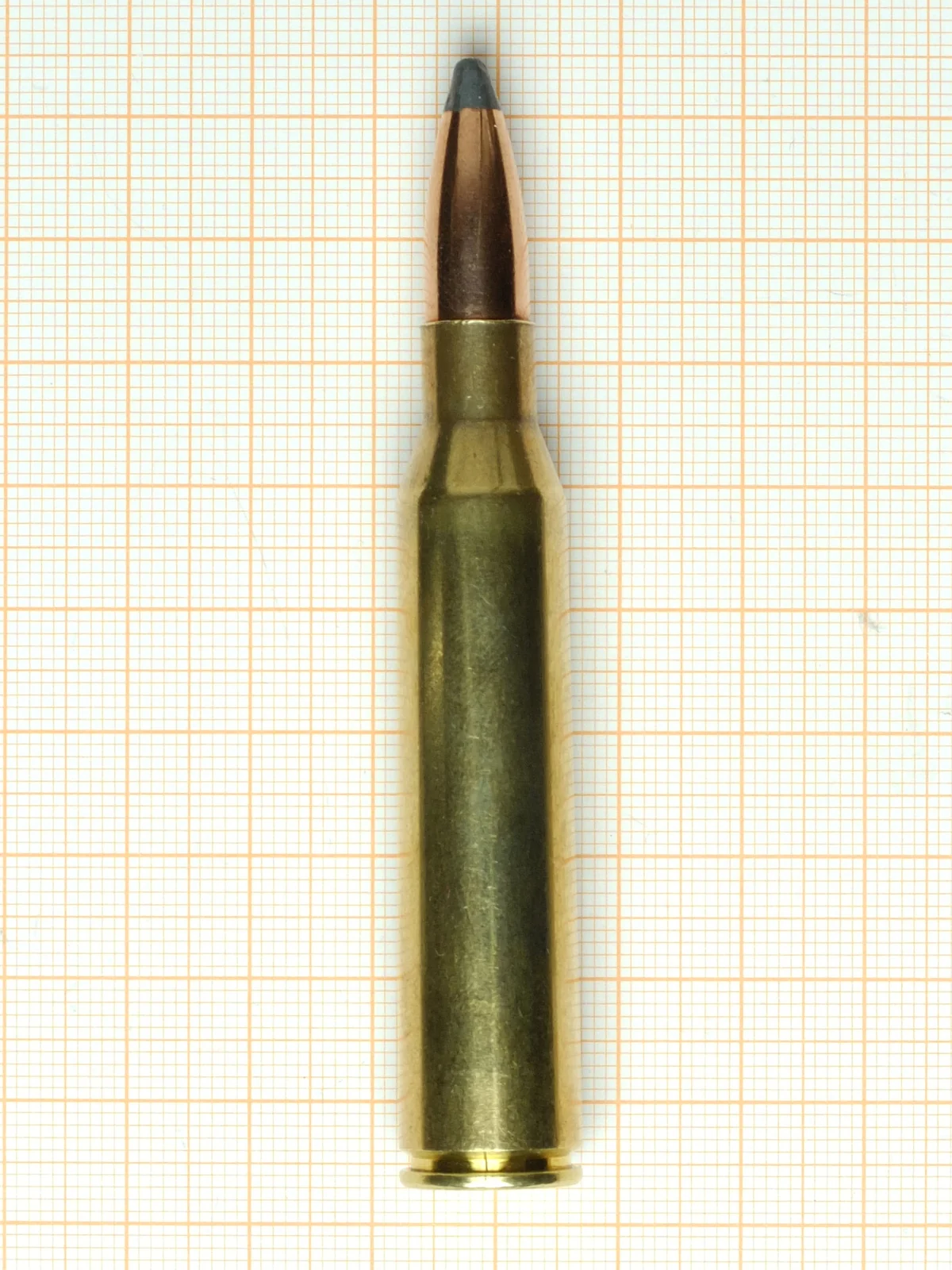
Image credit
- Title
- File:Cartridge .338 Lapua Magnum.jpg
- Author
- Grasyl(attribution required)
- Licence
- CC BY-SA 4.0
- Source
- https://commons.wikimedia.org/wiki/File:Cartridge_.338_Lapua_Magnum.jpg

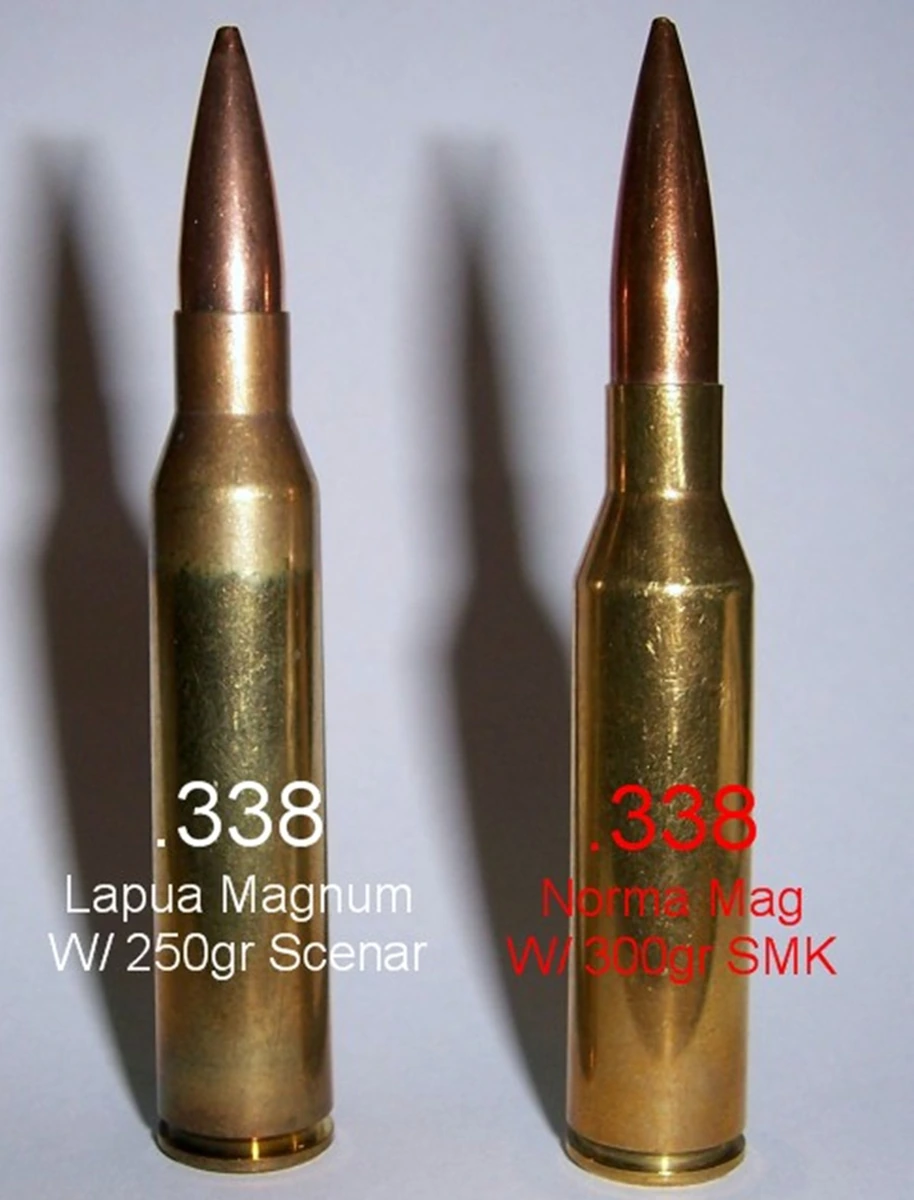
Image credit
- Title
- File:.338 Lapua Magnum vs .338 Norma Magnum.jpg
- Author
- SB Pete ( talk )
- Licence
- Public domain
- Source
- https://commons.wikimedia.org/wiki/File:.338_Lapua_Magnum_vs_.338_Norma_Magnum.jpg

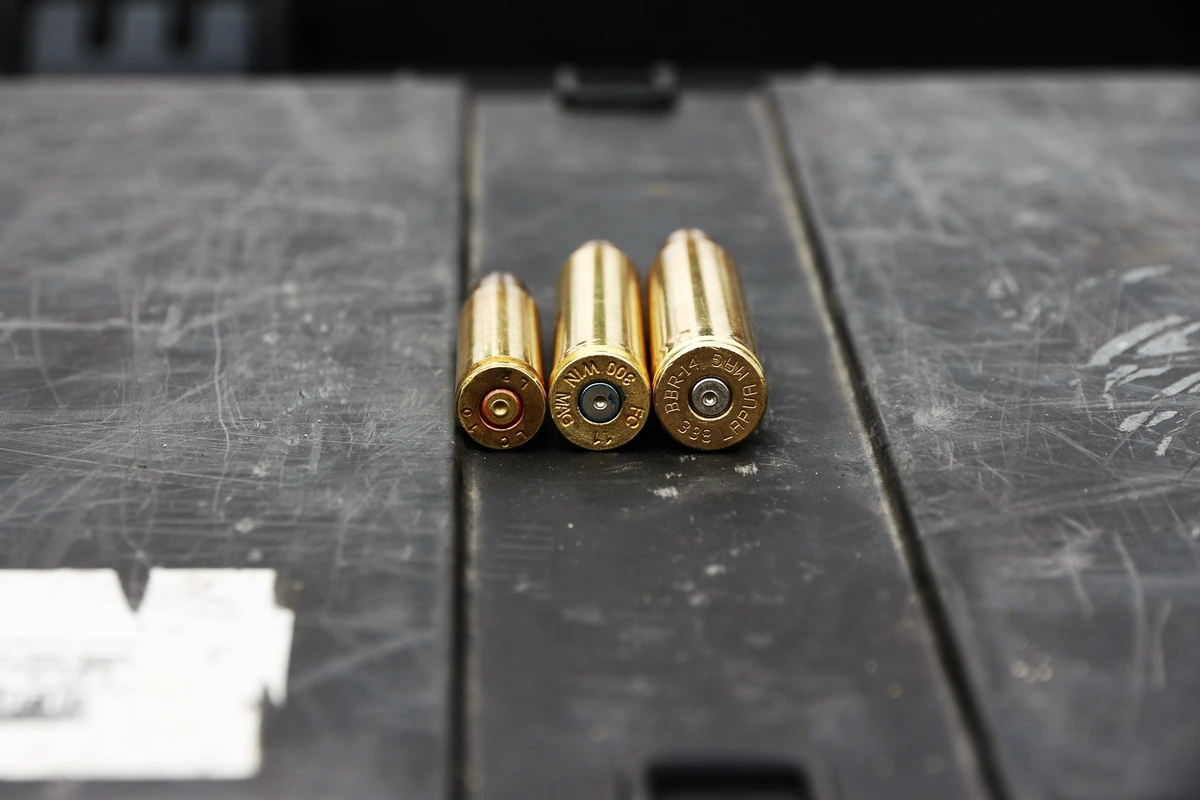
Image credit
- Title
- Aiming for a higher caliber: Developing future weapon systems for Marine Corps snipers
- Author
- Ashley Calingo
- Licence
- Public domain
- Source
- https://www.dvidshub.net/image/2754964/aiming-higher-caliber-developing-future-weapon-systems-marine-corps-snipers
- Note
- Work of the United States Government, uncopyrighted under 17 U.S.C. §105: photographed for the Marines (Marine Corps Systems Command), VIRIN 160713-M-YL753-413. DVIDS states no separate licence per asset.
Detail
The .338 Lapua Magnum was drawn up in 1983 by the US Research Armament Company as a conversion of the .416 Rigby for a US Navy long-range sniping trial, then finished and put into production by Lapua in Finland in 1989. The brief was a round that still held its accuracy and a useful share of its muzzle energy at 1,000 metres and beyond, fired from a rifle a two-man team could carry, which is a gap the belted magnums of the day did not fill and the .50 BMG filled only at several times the weight.
The case is unbelted and rimless, 69.2 mm long with a shallow 13.82-degree shoulder, holding an 8.61 mm bullet nearly 20 mm longer in overall length than a .308 Winchester round. That length is the point of the cartridge: it lets a heavy, high-ballistic-coefficient boat-tailed bullet sit without eating into powder capacity, so a rifle built around it is close in size and weight to a 7.62 mm system while retaining supersonic flight and useful energy well past where a 7.62x51mm round has gone transonic. NATO issue rifles chambered for it fire it under the reporting name 7.62x67mm.
Two Lapua factory loads are recorded here, a 16.2 g (250 gr) and a 19.4 g (300 gr) Scenar open-tip-match bullet, both tested from Lapua’s own 680 mm barrel, a rifle-length barrel, not the carbine lengths this site records for most service rifle cartridges, and consistent with the round’s role in purpose-built precision rifles rather than general-issue carbines.
Gaps on this page: no cartridge mass (loaded round, not bullet) is published by Lapua for either load. No photograph of the round chambered or fired is recorded; the gallery here is two studio specimen shots and one photograph of fired cases from a 2016 U.S. Marine Corps caliber study, rather than a picture of the cartridge in a rifle.
References
- .338 Lapua Magnum · 1358573793 · read 2026-09-01
- C.I.P. TDCC datasheet — 338 Lapua Mag. · 2016-10-18 · read 2026-09-01
- .338 Lapua Mag. / 16.2 g (250 gr) Scenar — product page · read 2026-09-01
- 8.61 cal Scenar bullet GB488, 16.2 g / 250 gr OTM — product page · read 2026-09-01
- .338 Lapua Mag. / 19.4 g (300 gr) Scenar — product page · read 2026-09-01
- Aiming for a higher caliber: Developing future weapon systems for Marine Corps snipers · read 2026-09-01
Last verified 2026-09-01 · review status: agent-populated