
.32-20 Winchester
Introduced 1882Winchester Repeating Arms CompanyCIP standard
Also known as .32 WCF, 32-20 Win.: the same cartridge under different names, all of which find this page.
Dimensions and pressure
Generated from the schema, like every specification table on this site, so a figure recorded on this entry cannot be missing from the table.
Identity
- Designed by
- Winchester Repeating Arms Company
- Introduced
- 1882
- Production
- not recorded
- Standards body
- C.I.P.
- Case type
- Rimmed
- Case shape
- Bottleneck
Dimensions
- Bullet diameter
- 7.94 mm0.3126 insource
C.I.P. G1, maximum bullet diameter.
- Bore diameter
- not recorded
- Case length
- 33.4 mm1.315 insource
C.I.P. L3, maximum case length.
- Overall length
- 40.44 mm1.592 insource
C.I.P. L6, maximum cartridge overall length.
- Rim diameter
- 10.36 mm0.4079 insource
C.I.P. R1.
- Neck diameter
- 8.3 mm0.3268 insource
C.I.P. H2.
- Base diameter
- 8.98 mm0.3535 insource
C.I.P. P1.
Pressure
- Maximum pressure
- 210 MPa30,458 psisource
C.I.P. Pmax 2100 bar; 1 bar = 0.1 MPa exactly.
- Pressure standard
- C.I.P.
SAAMI and C.I.P. measure pressure differently and their figures are not interchangeable, which is why the body is always named beside the figure.
Loads
Velocity is recorded per barrel length as published. A gun page interpolates between these points and never projects beyond them.
Chambered in
Computed from every entry that lists this cartridge. Nothing here is hand-maintained.
No entry on the site is chambered in it yet.
Gallery
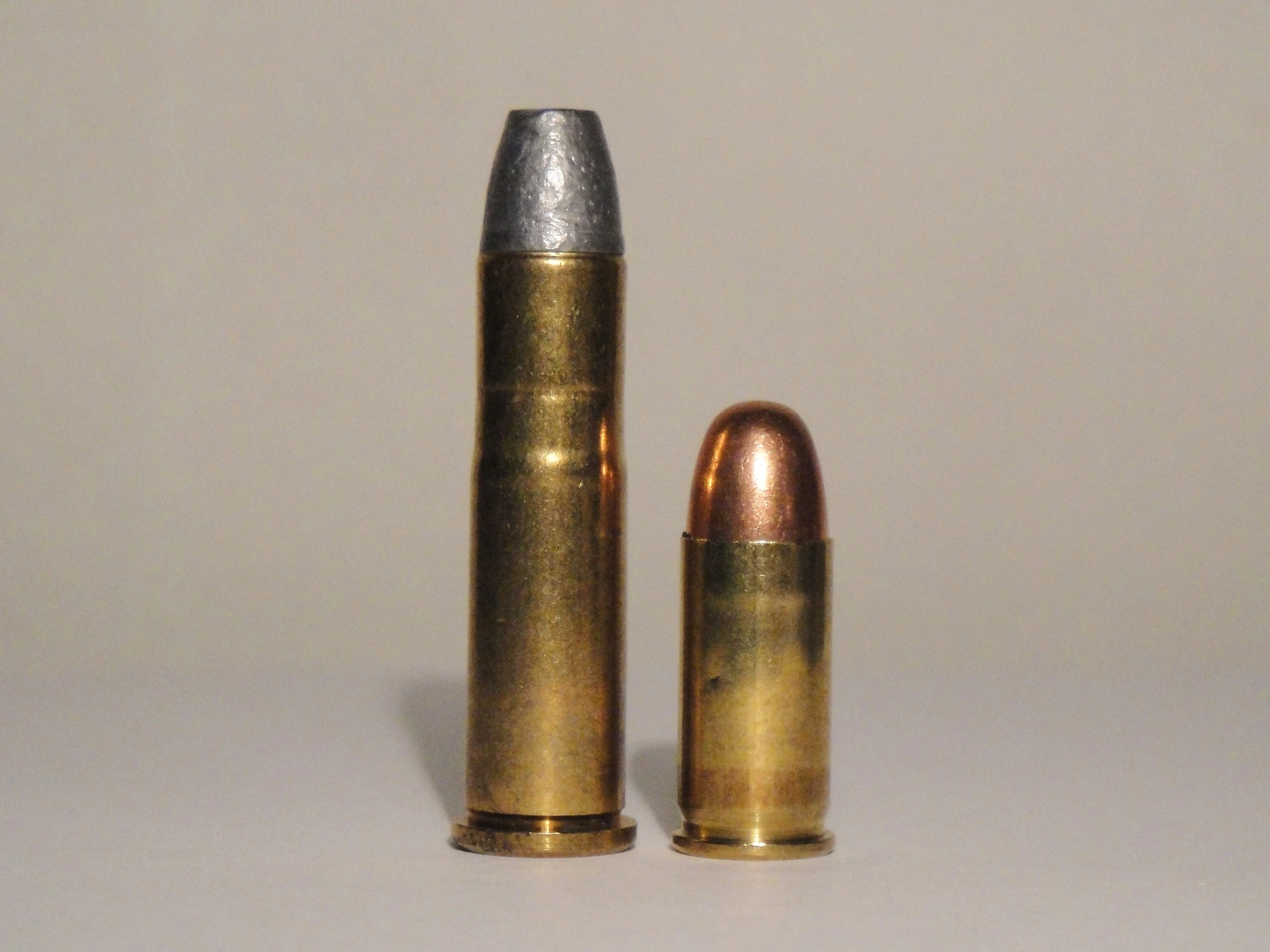
Image credit
- Title
- File:32-20--32ACP.JPG
- Author
- Dis360
- Licence
- Public domain
- Source
- https://commons.wikimedia.org/wiki/File:32-20--32ACP.JPG

Detail
Winchester introduced the .32-20 in 1882 for its Model 1873 lever-action rifle, one of a family of bottlenecked rimmed cartridges (the .38-40 and .44-40 among them), built to let a single rifle and a single revolver share the same ammunition. It necks a rimmed, bottlenecked case down to a .312-inch bullet, small enough to keep recoil light while still reaching out to rifle distances well beyond what a straight-walled revolver round of the same era could manage.
That dual-use design was the round’s real appeal: a rancher or lawman could carry one box of cartridges for both a rifle and a sidearm, at a time when that mattered more than either gun being at its individual best. Colt, Smith & Wesson and other makers chambered revolvers for it specifically so it could pair with a Winchester lever rifle. Black powder loads gave way to smokeless ones early in the twentieth century, and the cartridge has stayed in production since, now mostly for cowboy action shooting and for the older rifles and revolvers still chambered for it.
Case, bullet and pressure figures here are transcribed from the current C.I.P. datasheet and are
verified. Remington’s own product page for its 100-grain lead round-nose load states a muzzle
velocity but no test barrel length, so that figure cannot be recorded as a measurement; the page
does, however, publish a G1 ballistic coefficient directly, which is recorded here. No other
manufacturer’s page for this cartridge was found to state a test barrel length either: it is a
legacy chambering that has mostly left current manufacturers’ catalogues, and this entry reflects
that gap rather than filling it with an unsourced number.
References
- .32-20 Winchester · 1368987343 · read 2026-09-01
- C.I.P. TDCC datasheet — 32-20 Win. · 2002-05-15 · read 2026-09-01
- High Performance Rifle 32-20 Win, 100 gr Lead Round Nose · read 2026-09-01
Last verified 2026-09-01 · review status: agent-populated