
Sujeonggwa
Cinnamon and ginger simmered separately, sweetened, and chilled with dried persimmons floating in it.

CC BY 2.0 · Cropped, white-balanced, graded and re-encoded to WebP by eXir.
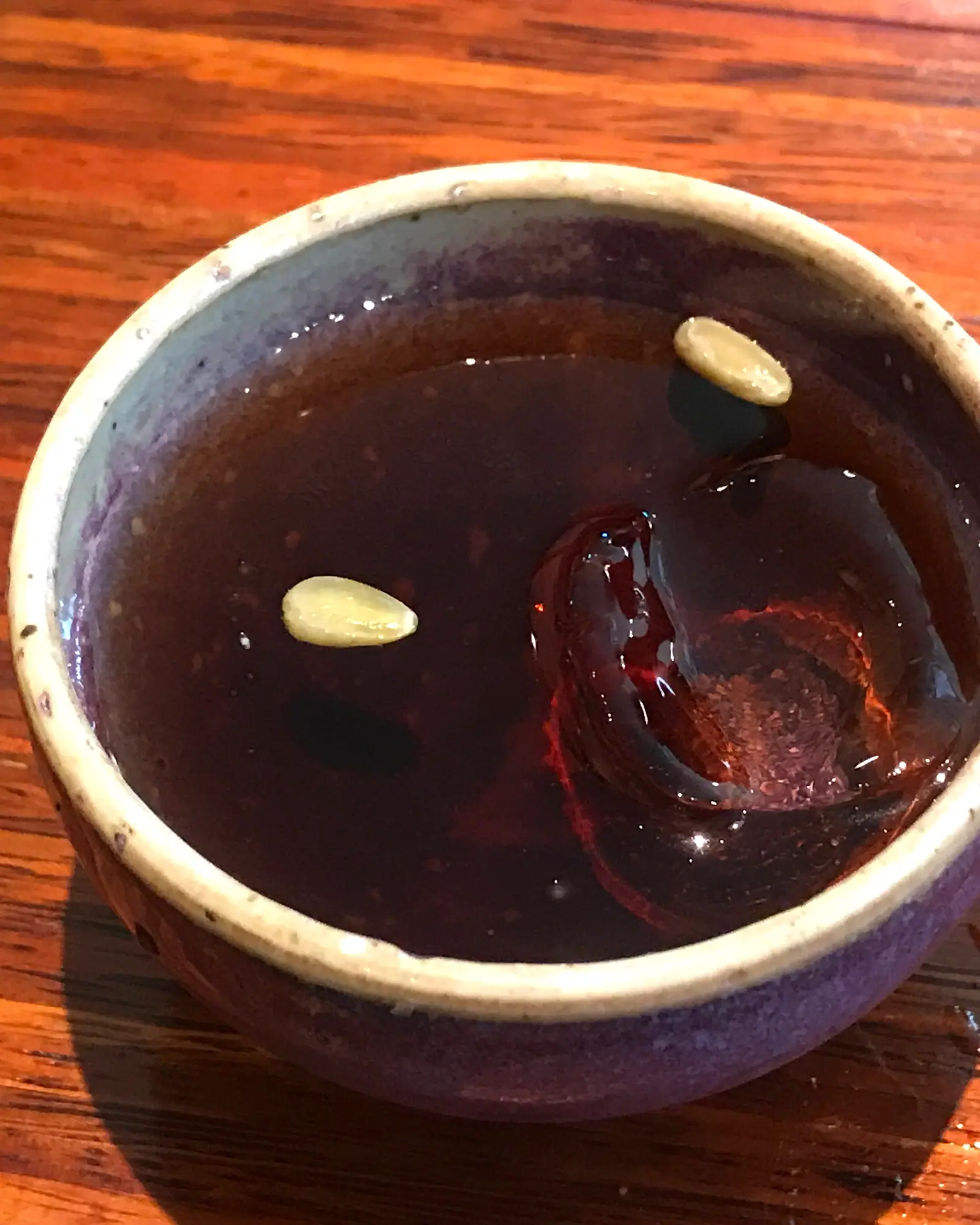
A small ceramic bowl of dark red-brown sujeonggwa with a curl of dried persimmon and a floating pine nut
Serving
Drink spec, per drink
Every figure above is per drink and does not move with the count, which is what makes the two service modes comparable. Sugar per litre, strength and standard drinks stay in the units their own authorities publish, because they are figures for comparing rather than for pouring.
Diet and allergen labels are computed from the ingredients listed on this page and nothing else. They cannot account for cross-contamination or for the particular product you buy, and they are not medical or safety guidance.
Ingredients
 20 g cinnamon bark
 1 400 ml water
 50 g fresh ginger
 120 g granulated sugar
 60 g dried persimmon
 6 g pine nuts
- 20 g cinnamon bark
- 1 400 ml water
- 50 g fresh ginger
- 120 g granulated sugar
- 60 g dried persimmon
- 6 g pine nuts
Glass
Vessel
295 ml of liquid, served without ice, inside the 300 ml the glass holds. The build fails if a recipe ever exceeds its stated vessel.
A batch needs a vessel that closes and fits a fridge shelf.
Method
4 steps · 2h 41mSimmer the 20 g cinnamon bark in the 700 ml water for 20m, until deep red-brown.
Simmer the 50 g fresh ginger in the 700 ml water for 20m, until distinctly spicy.
Strain both liquids together into one pot, stir in the 120 g granulated sugar until dissolved, and drop in the 60 g dried persimmon.
Refrigerate until fully cold, then serve with the 6 g pine nuts floating on top of each glass.
Simmering the cinnamon and ginger in separate pots rather than together keeps each flavour distinct and lets each steep for exactly as long as it needs, since ginger's heat builds faster than cinnamon's colour does.
Common pitfallA hard boil clouds the liquid and pushes cinnamon toward a bitter, astringent edge; both pots want a gentle simmer, not a rolling one.
Keeping and make-ahead
Batched ahead, this keeps sealed and cold. The water line the engine adds is the dilution figure from the spec panel, not a rule of thumb.
About
A cold Korean cinnamon and ginger punch, first clearly documented in the nineteenth century under an older name, with dried persimmons and cinnamon both later additions to a simpler original.
The earliest clear description of the drink appears in Dongguksesigi, an 1849 record of Korean seasonal customs by the scholar Hong Seok-mo, which describes a dried persimmon brew with ginger and pine nuts added 1. A later text, the 1921 Haedongjukji, traces the drink further back still, to palace women of the Goryeo era preparing a version on New Year's Day under a different name, baekjeho, meaning roughly "white milky beverage," a reference to the pale look of sugar-coated persimmons rather than to the reddish drink most people know today 1. Cinnamon, the ingredient now most associated with sujeonggwa, is a later addition still: it enters the written recipe only with a text called The Recipes of Joseon, alongside a shift from honey to sugar as the drink's sweetener 1.
Because cinnamon and ginger were both costly imported spices, the drink is generally understood to have been a palace and upper-household luxury through the Joseon dynasty rather than an everyday drink, only spreading more widely as spices became cheaper 2. It was served at the close of elaborate court meals alongside sikhye, the sweet rice punch, in a pairing that still holds today: sikhye for a milder, starch-sweetened finish and sujeonggwa for a sharper, spiced one 2. That association with marking the end of a significant meal is also why the drink remains tied to Korea's major holidays, served at New Year and at Chuseok rather than as an everyday refreshment 2.
- 1Sujeonggwaen.wikipedia.org
- 2Sujeonggwa Is The Korean Cinnamon Drink You'll Want To Sip In The Falltastingtable.com