
Salep
Milk thickened with ground orchid tuber, served hot and dusted with cinnamon.
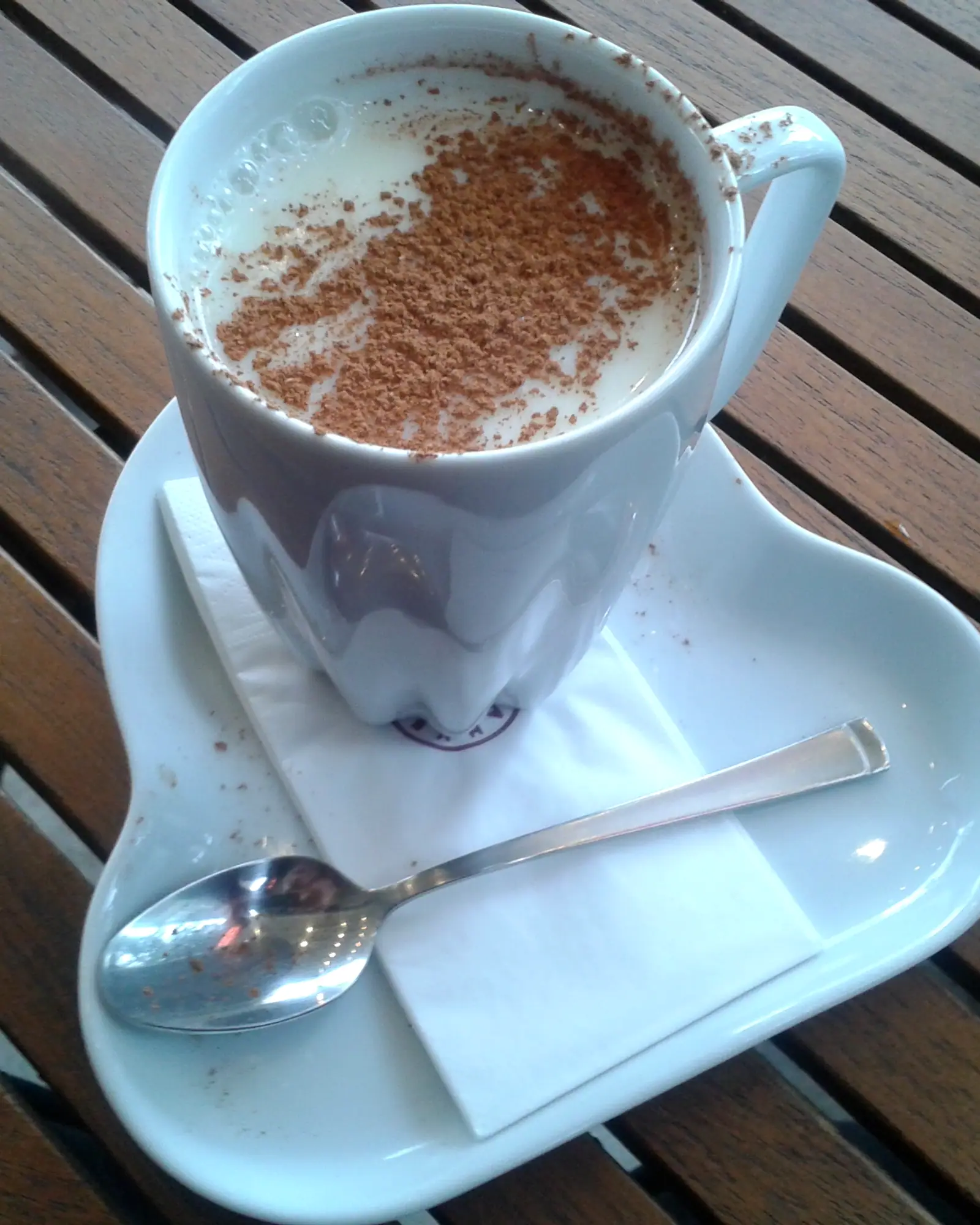
CC BY-SA 4.0 · Cropped, white-balanced, graded and re-encoded to WebP by eXir.
A white mug of salep, warm milky drink with a thick dusting of cinnamon across the surface, on a saucer with a spoon
Serving
Drink spec, per drink
Every figure above is per drink and does not move with the count, which is what makes the two service modes comparable. Sugar per litre, strength and standard drinks stay in the units their own authorities publish, because they are figures for comparing rather than for pouring.
Diet and allergen labels are computed from the ingredients listed on this page and nothing else. They cannot account for cross-contamination or for the particular product you buy, and they are not medical or safety guidance.
Ingredients


Glass
Vessel
239 ml of liquid, served without ice, inside the 350 ml the glass holds. The build fails if a recipe ever exceeds its stated vessel.
A batch needs a vessel that closes and fits a fridge shelf.
Method
3 steps · 4m 30sWhisk the 4 g salep powder with a small spoonful of the cold 230 ml whole milk to a smooth paste.
Warm the rest of the milk with the 15 g granulated sugar over 4m, whisking in the paste, until thickened to a texture that coats the back of a spoon.
The milk is brought up slowly, whisking the whole time, because salep thickens through a long, gentle swell rather than a quick gelling; rushed over high heat it clumps before it has had time to dissolve evenly.
Pour into a warmed mug and dust the surface with finely grated 1 g cinnamon bark.
Common pitfallA pinch of salep more than the recipe calls for sets the drink to a spoonable paste rather than a thick, pourable one; the tuber's starch is far stronger than cornflour by weight and does not forgive being guessed at.
Keeping and make-ahead
Heated and thickened to order. It sets as it cools, so it is served straight from the pan rather than held.
About
Milk thickened with ground wild-orchid tuber, an Ottoman-era drink still made in Turkey with the root itself rather than the starch substitutes used further south.
The powder comes from the tubers of wild orchids, ground into a flour whose starch, glucomannan, is what gives it its thickening power. Glucomannan is a substance strong enough that only a small spoonful sets a whole pot of milk 1. Its use as a drink long predates the Ottoman period it is most associated with: Roman and Greek writers described similar orchid-root preparations, called satyrion and priapiscus, which they credited with restorative and aphrodisiac powers rather than valuing them as a simple hot drink 1.
The word itself is generally traced to Turkish, and salep held a settled place in Ottoman food culture, including a folk reputation as something fed to young women before marriage to help them gain weight 2. From there it travelled further than most hot drinks of its era did: salep reached England and Germany by the seventeenth century, sold in London as "saloop" from street stalls to working Londoners as a cheaper alternative before coffee and tea became the everyday choice 1.
The orchid tubers the drink depends on are slow to harvest and now increasingly restricted for conservation reasons, which is the practical reason this page and the Levantine sahlab page next to it have diverged in practice as much as in name: where the tuber remains available, as it does in parts of Turkey, the drink is still made from real salep flour, ground cinnamon dusted over the top rather than any fruit flavouring 1. Sahlab, covered separately on this site, keeps the name and the texture but substitutes a starch that does not carry the same supply pressure.
- 1Salepen.wikipedia.org
- 2Salepmillerstreetpress.co