
Milkshake
Vanilla ice cream blended with milk and a little vanilla extract until it pours through a straw.
Vanilla ice cream blended with milk and cocoa powder, sweetened by the ice cream alone.
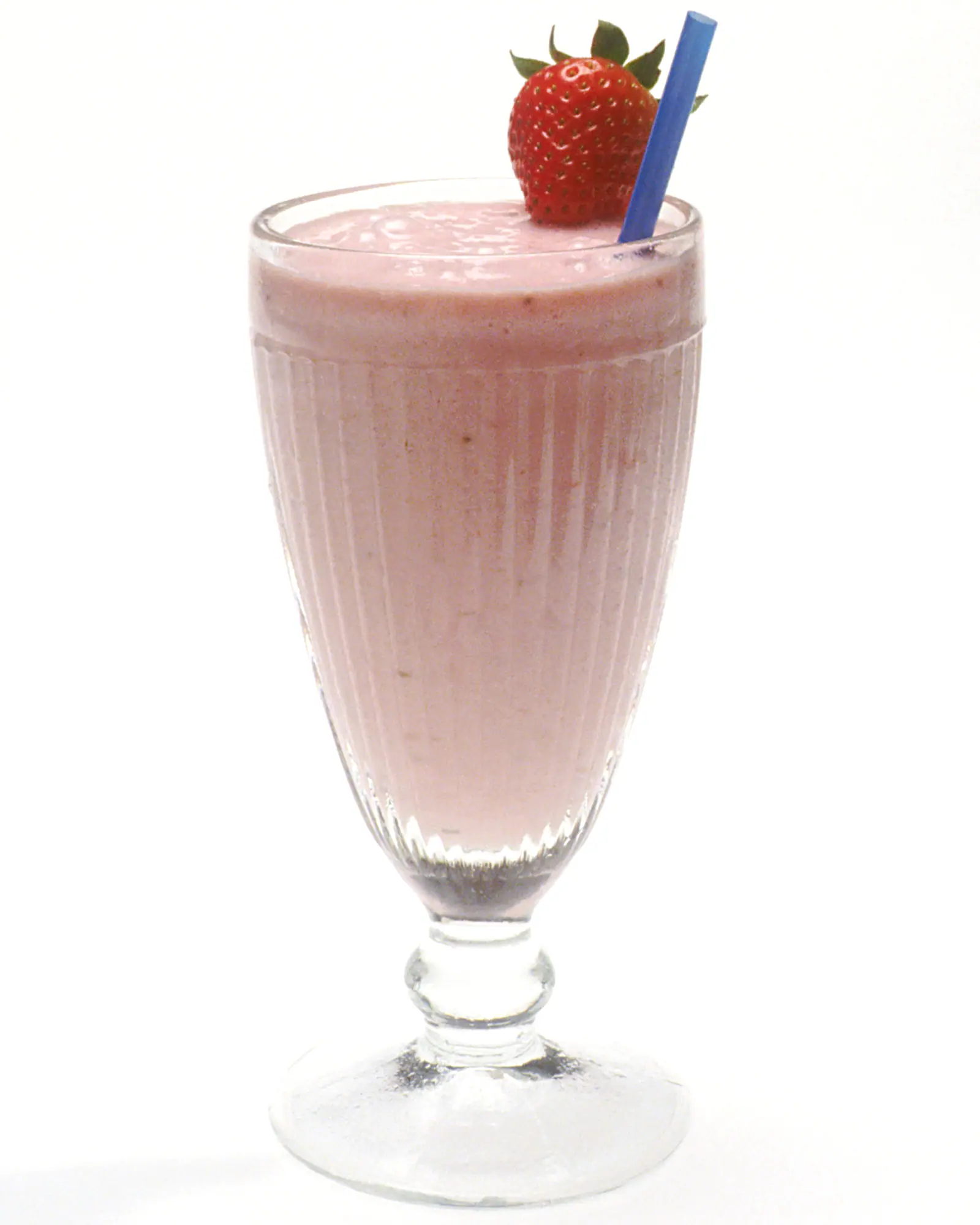
Vanilla ice cream blended with milk and fresh strawberries, sweetened by the ice cream alone.

Public domain · Cropped, white-balanced, graded and re-encoded to WebP by eXir.
A pink strawberry milkshake in a fluted glass with a straw and a fresh strawberry garnish
Serving
Drink spec, per drink
Every figure above is per drink and does not move with the count, which is what makes the two service modes comparable. Sugar per litre, strength and standard drinks stay in the units their own authorities publish, because they are figures for comparing rather than for pouring.
Always dairy. Some vanilla ice cream is churned from an egg-yolk custard base (the French style) and some is egg-free (the Philadelphia style); which one a given tub is depends on the maker.
Diet and allergen labels are computed from the ingredients listed on this page and nothing else. They cannot account for cross-contamination or for the particular product you buy, and they are not medical or safety guidance.
Ingredients
 90 ml whole milk
 200 g vanilla ice cream
 2.5 ml vanilla extract
- 90 ml whole milk
- 200 g vanilla ice cream
- 2.5 ml vanilla extract
Glass
Vessel
287 ml of liquid, served without ice, inside the 470 ml the glass holds. The build fails if a recipe ever exceeds its stated vessel.
A batch needs a vessel that closes and fits a fridge shelf.
Drink spec, per drink
Every figure above is per drink and does not move with the count, which is what makes the two service modes comparable. Sugar per litre, strength and standard drinks stay in the units their own authorities publish, because they are figures for comparing rather than for pouring.
Always dairy. Some vanilla ice cream is churned from an egg-yolk custard base (the French style) and some is egg-free (the Philadelphia style); which one a given tub is depends on the maker.
Diet and allergen labels are computed from the ingredients listed on this page and nothing else. They cannot account for cross-contamination or for the particular product you buy, and they are not medical or safety guidance.
Ingredients
- 90 ml whole milk
 12 g cocoa powder
- 200 g vanilla ice cream
- 90 ml whole milk
- 12 g cocoa powder
- 200 g vanilla ice cream
Glass
Vessel
296 ml of liquid, served without ice, inside the 470 ml the glass holds. The build fails if a recipe ever exceeds its stated vessel.
A batch needs a vessel that closes and fits a fridge shelf.
Drink spec, per drink
Every figure above is per drink and does not move with the count, which is what makes the two service modes comparable. Sugar per litre, strength and standard drinks stay in the units their own authorities publish, because they are figures for comparing rather than for pouring.
Always dairy. Some vanilla ice cream is churned from an egg-yolk custard base (the French style) and some is egg-free (the Philadelphia style); which one a given tub is depends on the maker.
Diet and allergen labels are computed from the ingredients listed on this page and nothing else. They cannot account for cross-contamination or for the particular product you buy, and they are not medical or safety guidance.
Ingredients
 100 g fresh strawberries
- 90 ml whole milk
- 200 g vanilla ice cream
- 100 g fresh strawberries
- 90 ml whole milk
- 200 g vanilla ice cream
Glass
Vessel
379 ml of liquid, served without ice, inside the 470 ml the glass holds. The build fails if a recipe ever exceeds its stated vessel.
A batch needs a vessel that closes and fits a fridge shelf.
Method
3 steps · 1mAdd the 90 ml whole milk to the blender jug first, then the 200 g vanilla ice cream straight from the freezer and the 2.5 ml vanilla extract.
The ice cream is the frozen solid slot here, not an addition to a liquid base: the milk exists to give the blade a vortex to work with, and a milkshake carries far less of it than a smoothie does because the ice cream itself is already most of the volume.
The extract is held to half a teaspoon for a reason the label does not explain: vanilla extract is a spirit, bottled at about the strength of a light rum, and a full teaspoon in a shake this size takes the finished drink past the strength at which it stops being non-alcoholic. It reads as flavouring and it is measured like flavouring, but it is the only alcohol in the glass.
Blend for 25s, just long enough for the ice cream to break down into an even, thick shake with no unmelted lumps left.
Pour into a chilled milkshake glass.
Common pitfallIce cream left to soften before it goes in blends smoother but comes back thin, because it has already lost the air and structure that made it a solid rather than a flavoured milk.
Keeping and make-ahead
This drink is made to order.
Method
3 steps · 1mBlend the 90 ml whole milk and the 12 g cocoa powder briefly to dissolve the powder, then add the 200 g vanilla ice cream straight from the freezer.
Unsweetened cocoa powder is used rather than a sweetened drinking chocolate, whose own sugar could not be adjusted separately from the chocolate flavour. The ice cream carries enough sugar on its own to cover a small amount of cocoa without turning bitter.
Blend for 25s, until the ice cream has broken down into an even, thick shake with no unmelted lumps or dry cocoa left.
Pour into a chilled milkshake glass.
Common pitfallCocoa powder dropped straight onto ice cream tends to clump rather than disperse; blending it with the milk before the ice cream goes in keeps it from sitting as a dry pocket at the base of the jug.
Keeping and make-ahead
This drink is made to order.
Method
3 steps · 1m 5sHull and roughly chop the 100 g fresh strawberries and blend briefly with the 90 ml whole milk, then add the 200 g vanilla ice cream straight from the freezer.
Fresh strawberries carry far less sugar than the ice cream they are going into, but blending the two together lets the ice cream's own sweetness carry the fruit rather than adding a separate syrup that would dilute its colour.
Blend for 30s, until the ice cream and berries have broken down into an even, thick shake with no unmelted lumps or fruit skin left.
Pour into a chilled milkshake glass.
Common pitfallWhole strawberries thrown in with the ice cream can leave visible flecks of skin at this blend time; hulling and roughly chopping them first cuts down what the blade has to fully break apart.
Keeping and make-ahead
This drink is made to order.
About
The word predates the drink by decades: it named an alcoholic tonic in the 1880s and only became the iced, ice-cream drink of today at a Chicago Walgreens in 1922.
"Milkshake" first appeared in print in 1885, naming a drink that had nothing in common with the one served under that name today: whiskey, eggs and cream, served as a tonic rather than a treat 1 2. By around 1900 the name had shifted to a sweeter, non-alcoholic drink flavoured with chocolate, strawberry or vanilla syrup, and customers were already asking soda fountains to add ice cream to it 1.
A second ingredient arrived in between: malted milk powder, a mix of malted barley, wheat flour and dried milk that William Horlick had patented in 1897 as a health tonic rather than a drink 1. Soda fountains and pharmacies took up "malted milk" as a standard order well before ice cream entered it.
The version recognisable today dates to a specific counter: in 1922, Ivar "Pop" Coulson, working the soda fountain at a Walgreens in Chicago, added two scoops of vanilla ice cream, made in the chain's own plant, to the standard malted milk drink 1 2. The combination sold under the name Horlick's Malted Milk, and the thickness the ice cream gave it is what separated the drink from the thinner malted it was built on 2. Automating the result took longer: Earl Prince's Multimixer, introduced in 1936, could turn out five milkshakes from one motor at once, and mechanised a drink that had until then been mixed and shaken by hand at the counter 1.
- 1Milkshakeen.wikipedia.org
- 2The History of the Milkshakehankeringforhistory.com