
Mango Lassi
Yoghurt and mango blended with ice and sugar to a thick, cold, pourable drink.
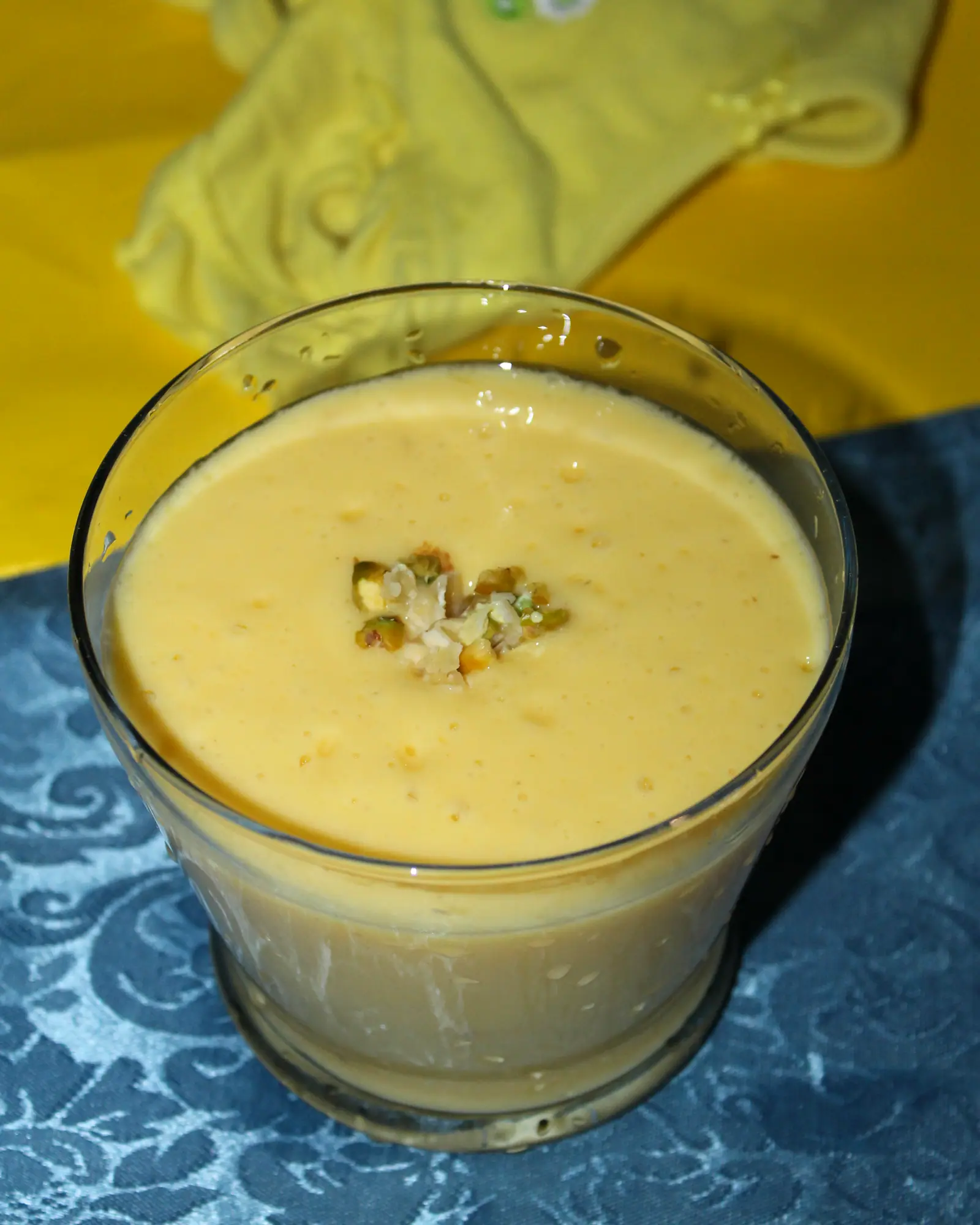

CC BY-SA 4.0 · Cropped, white-balanced, graded and re-encoded to WebP by eXir.
A glass of pale orange mango lassi topped with chopped pistachio
Serving
Drink spec, per drink
Every figure above is per drink and does not move with the count, which is what makes the two service modes comparable. Sugar per litre, strength and standard drinks stay in the units their own authorities publish, because they are figures for comparing rather than for pouring.
Diet and allergen labels are computed from the ingredients listed on this page and nothing else. They cannot account for cross-contamination or for the particular product you buy, and they are not medical or safety guidance.
Ingredients
 160 g plain yoghurt
 130 g ripe mango
 15 g granulated sugar
 40 g water
- 160 g plain yoghurt
- 130 g ripe mango
- 15 g granulated sugar
- 40 g water
Glass
Vessel
329 ml of liquid, served without ice, inside the 350 ml the glass holds. The build fails if a recipe ever exceeds its stated vessel.
A batch needs a vessel that closes and fits a fridge shelf.
Method
3 steps · 1m 5sCombine the 160 g plain yoghurt, the peeled 130 g ripe mango and the 15 g granulated sugar in a blender jug, then add the 40 g water.
Blend for 30s, until the mango is fully broken down and the ice is worked through into an even, pourable thickness.
The ice is there for chill and body rather than to stretch the drink, which is why it is a small fraction of the jug next to the yoghurt and fruit; too much and a lassi thins into a milkshake with none of its own character left.
Pour into a chilled lassi glass.
Common pitfallYoghurt straight from the fridge is thick enough to stall a blender before the mango has broken down; the mango's own water content is what gets the blade moving, so it never goes in after the ice.
Keeping and make-ahead
This drink is made to order.
About
A modern fruit variation on lassi, a Punjabi yoghurt drink whose own age is asserted far more confidently in popular writing than the historical record actually supports.
Lassi is a yoghurt drink from Punjab, traditionally made by thinning yoghurt with water rather than milk 1. Food writing routinely dates it to around 1000 BCE 2, but the word itself is documented far more recently: the earliest attestation on record is from 1882, and its own derivation is disputed between two Sanskrit roots, one meaning stickiness and the other juice 1. The gap between the popular date and the linguistic one is typical of drinks assumed to be as old as the food culture around them, without a text or a name to fix the assumption to.
The mango version is a later addition to an older base rather than a separate tradition. Mango is native across South and Southeast Asia, which is usually given as the reason it became an early and lasting flavour once fruit started being blended into lassi at all 2, though no source dates that step specifically. Plain and salted lassi remain the everyday forms across the region; the sweetened mango version is the one that travelled furthest outside it and is now the most widely recognised abroad 2.
Both forms share the same practical origin as a way of using yoghurt before refrigeration, and the same traditional role: a cooling drink in a hot climate, taken as a snack or after a spiced meal rather than with one 2.
- 1Lassien.wikipedia.org
- 2The History Behind India's Refreshing Mango Lassi Drinktastingtable.com