
Milk Kefir
Whole milk fermented overnight with live grains into a tangy, faintly fizzy drink.
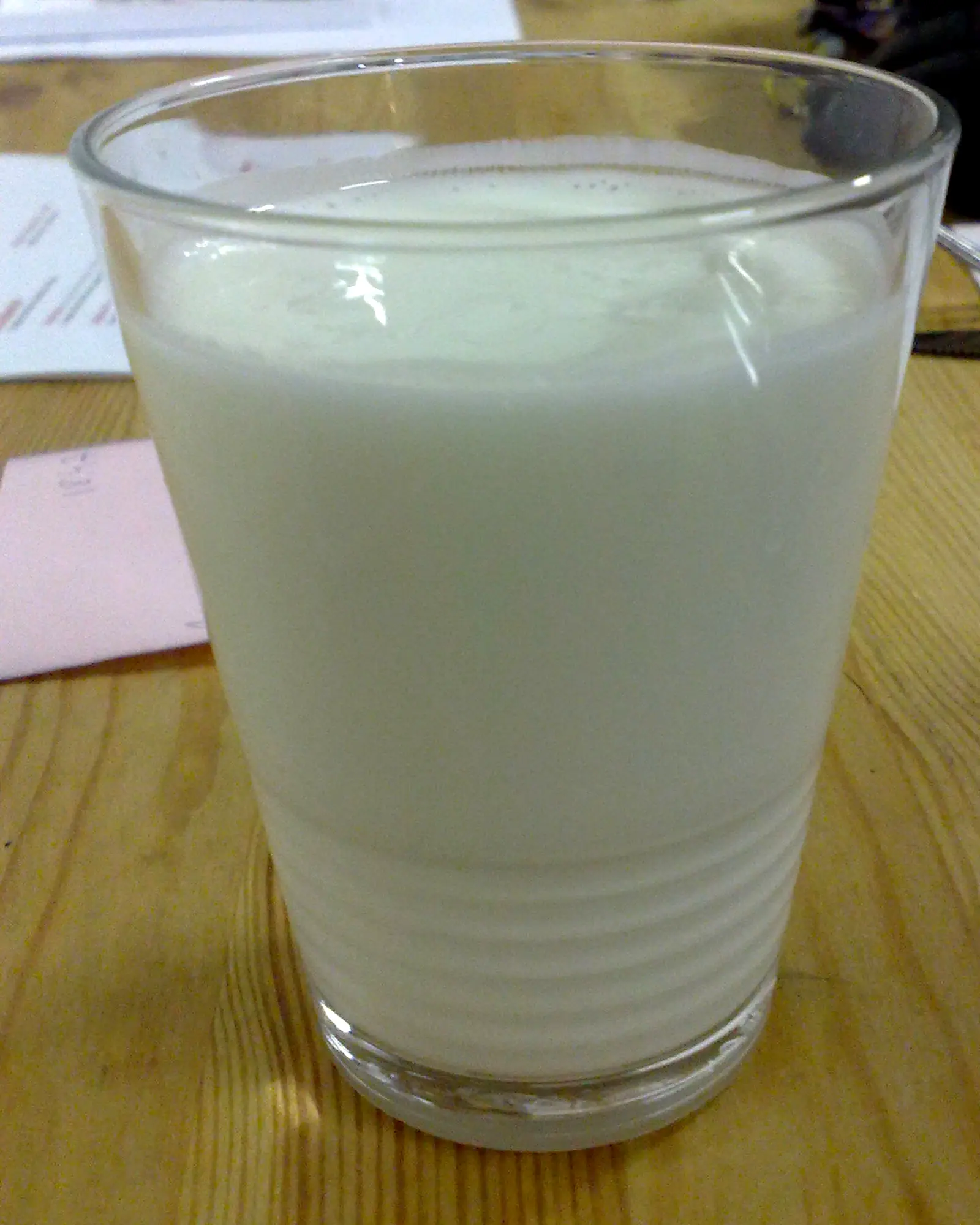

CC BY-SA 2.0 · Cropped, white-balanced, graded and re-encoded to WebP by eXir.
A glass of pale, thick white milk kefir
Serving
Drink spec, per drink
Every figure above is per drink and does not move with the count, which is what makes the two service modes comparable. Sugar per litre, strength and standard drinks stay in the units their own authorities publish, because they are figures for comparing rather than for pouring.
Diet and allergen labels are computed from the ingredients listed on this page and nothing else. They cannot account for cross-contamination or for the particular product you buy, and they are not medical or safety guidance.
Ingredients
 350 ml whole milk
 15 g kefir grains
- 350 ml whole milk
- 15 g kefir grains
Glass
Vessel
350 ml of liquid, served without ice, inside the 400 ml the glass holds. The build fails if a recipe ever exceeds its stated vessel.
A batch needs a vessel that closes and fits a fridge shelf.
Method
3 steps · 24h 1mCombine the 350 ml whole milk and 15 g kefir grains in a clean jar and stir gently to distribute them.
Cover loosely and leave at room temperature for 24h, away from direct light.
The jar is covered loosely rather than sealed, because the yeast in the grains produces real carbon dioxide as it works; a tight lid on a full jar left overnight is how a kitchen ferment turns into a mess on the counter.
Strain out the grains, reserving them for the next batch, and refrigerate the kefir before serving.
Common pitfallLeft well past a day at room temperature the ferment keeps souring and separates into a layer of whey under a thickened curd; it is still usable stirred back together, but it has moved past the mild tang this recipe is timed for.
SafetyCover the jar loosely rather than sealing it, since a hard seal lets pressure build as the ferment produces gas. A ferment that smells sharply of solvent or shows pink, orange or fuzzy growth on the surface has gone wrong and should be discarded rather than tasted.
Keeping and make-ahead
Each batch is its own ferment; the grains are strained out and go straight into the next batch rather than being portioned across several.
About
Milk fermented overnight with live grains from the North Caucasus, kept as a closely guarded family culture for centuries before an elaborate, partly involuntary scheme carried it into Russia at the start of the twentieth century.
The culture is older in the region than any written record of the drink. Mountain communities of the North Caucasus are said to have fermented milk with the grains (a living, gelatinous culture of bacteria and yeast) for close to two millennia, traditionally in a milk-filled skin bag hung by a doorway and knocked by anyone passing through to keep it moving 1. Families guarded their own grains as a kind of heirloom, and legend credited their origin to a gift from Muhammad, which is why they were sometimes called grains of the prophet 1. The word itself entered Russian only in the 1870s and English shortly after, in the 1880s 2. This is evidence of how late the wider world caught up with a practice already old in its home region.
That secrecy is central to how the drink reached the rest of Russia at all. Russian physicians in the nineteenth century, following theories tying Bulgarian longevity to fermented milk, wanted to study kefir, but Caucasus communities would not part with their grains 1. Two cheese-factory owners, the Blandov brothers, are reported to have sent an employee to approach a local prince for a supply; when the prince is said to have kidnapped her instead, her escape and appeal to the court of Tsar Nicholas II ended with the prince ordered to pay her in kefir grains 1. The Blandovs began commercial production in Russia by 1908, and the drink was in wide production across the country within a few decades 1.
The living culture is also what makes kefir genuinely fermented rather than merely cultured the way yoghurt is: small-scale Russian dairies of the early twentieth century produced kefir carrying one to two percent alcohol, a by-product of the yeast in the grains rather than of any added spirit, though that level of alcohol is uncommon in kefir made today 2. The same grains, strained out and reused rather than consumed, are what separate this drink from any yoghurt-based one on this site: yoghurt is a single bacterial culture, and kefir's grains carry yeast alongside it.
- 1The Surprisingly Dark History of Kefir, the Fermented Milk Beverage of the Caucasusmatadornetwork.com
- 2Kefiren.wikipedia.org