
Ginger Tea
Fresh root simmered rather than steeped, sweetened with honey.

CC BY-SA 4.0 · Cropped, white-balanced, graded and re-encoded to WebP by eXir.
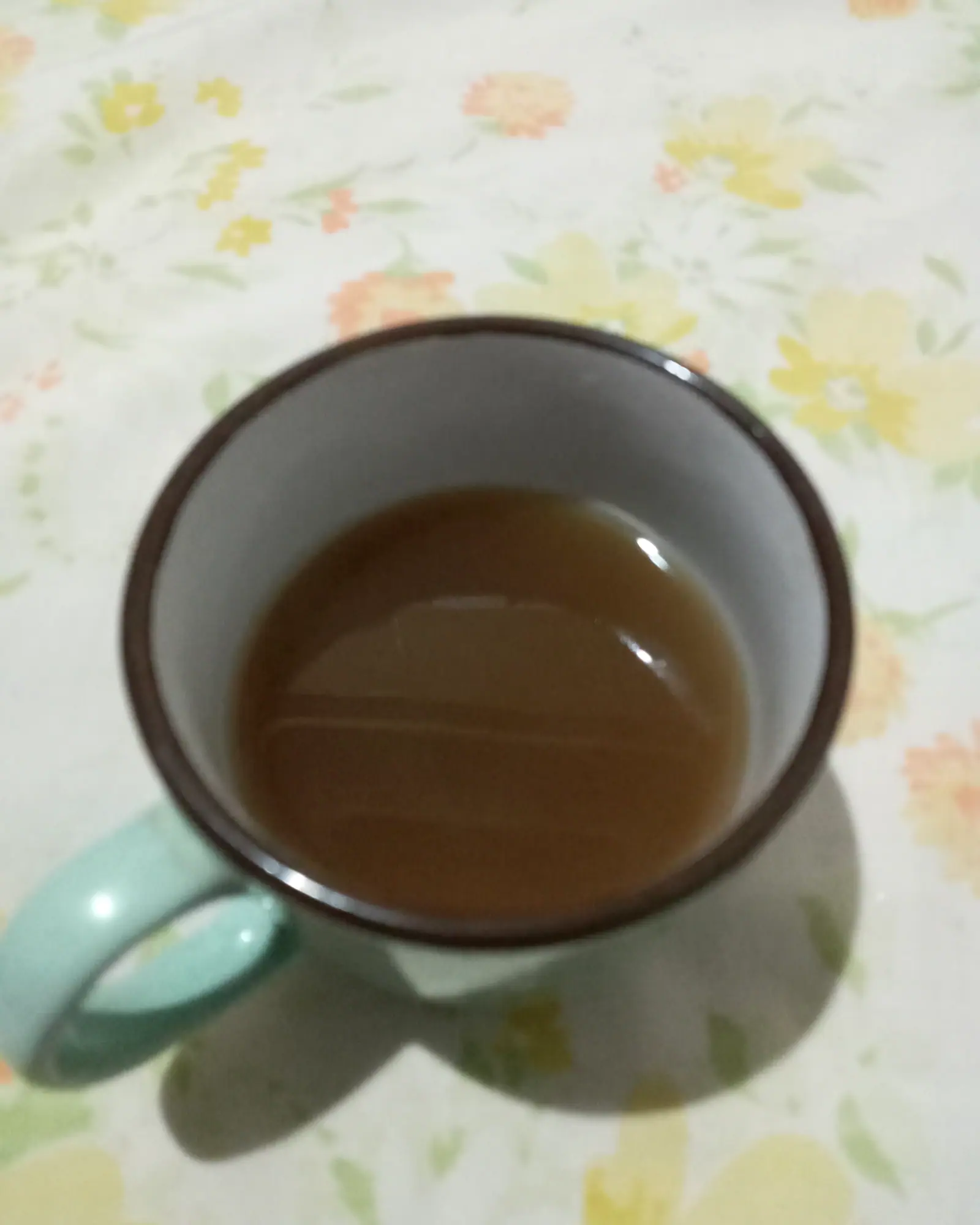
A mug of amber ginger tea, viewed from above
Serving
Drink spec, per drink
Every figure above is per drink and does not move with the count, which is what makes the two service modes comparable. Sugar per litre, strength and standard drinks stay in the units their own authorities publish, because they are figures for comparing rather than for pouring.
Diet and allergen labels are computed from the ingredients listed on this page and nothing else. They cannot account for cross-contamination or for the particular product you buy, and they are not medical or safety guidance.
Extraction
This brew works out at 71.4 g of coffee per litre of water, against the 49.5 to 60.5 g/L the standard allows, so it is stronger than it. The comparison is made in grams per litre and not on the ratio, because a ratio is the reciprocal of a strength and a symmetric band on one is an asymmetric band on the other. The water temperature also sits outside the standard. Source: Golden Cup Standard, Specialty Coffee Association.
No extraction yield is shown. It needs a measured dissolved-solids figure from the finished cup, nothing on a bag of coffee supplies one, and estimating it from the method would be inventing the single number the calculation exists to establish.
Ingredients
 25 g fresh ginger
 350 ml water
 15 g honey
 10 ml fresh lemon juice
- 25 g fresh ginger
- 350 ml water
- 15 g honey
- 10 ml fresh lemon juice
Glass
Vessel
320 ml of liquid, served without ice, inside the 350 ml the glass holds. The build fails if a recipe ever exceeds its stated vessel.
A batch needs a vessel that closes and fits a fridge shelf.
Method
3 steps · 10mAdd the sliced 25 g fresh ginger to the 350 ml water in a small pan, bring to a boil, then lower the heat and simmer for 10m.
Ginger's heat sits in oils that need real time in contact with boiling water to come out, which is why this is simmered rather than steeped off the heat the way a leaf would be: the family's boiled branch, not its steeped one, even without milk in it.
Strain into a mug and discard the spent root.
Let the liquid cool for a moment off the heat, then stir in the 15 g honey and the 10 ml fresh lemon juice.
Common pitfallStirring the 15 g honey in while the liquid is still at a full boil scorches its aroma into something flatter and darker than honey should taste of.
Keeping and make-ahead
Simmered to order. Reheating a made batch drives off the aromatics that carry the heat, leaving a flatter cup behind.
About
Fresh root simmered in water rather than steeped, a remedy older than the tea leaf itself in the region where both plants grow.
Ginger is indigenous to southern China 1, and Chinese use of the root as a digestive remedy is reckoned in thousands of years rather than centuries, treated in traditional medicine as a warming ingredient for ailments brought on by cold and damp 1. Its pairing with tea is documented specifically to the Tang dynasty, when ginger was one of several strong flavourings (alongside onion, orange peel, cloves and peppermint) added to counteract the bitterness of the tea of the period 2. That places the combination of ginger and tea leaf earlier than most of the world's now-familiar tea traditions, though a ginger infusion made without any tea leaf at all, closer to what this page describes, has an equally long and separate history as a plain medicinal drink.
The root's spread out of China long predates any of its modern preparations. Trade carried it across Asia and eventually to Europe, where it was worked into bread and confections for its digestive effect by the medieval period 1, and colonial trade carried it further still: Spanish growers had established ginger plantations in Jamaica by the 1600s 1, seeding the Caribbean ginger tradition that produces ginger beer today.
The plain ginger infusion (root simmered in water, taken with honey or sugar and no tea leaf at all) now has independent, parallel names across most of the region ginger came from and beyond it: adrak ki chai in India, made instead with milk and black tea, sits alongside standalone versions such as Japan's shōgayu, Korea's saenggang-cha, Indonesia's wedang jahe and the Philippines' salabat 2. None of these is a variant of another; they are separate regional answers to the same plant, which is also why this page describes the root simmered plain rather than steeped alongside a tea leaf.
- 1Gingermccormickscienceinstitute.com
- 2Ginger teaen.wikipedia.org