
Ginger Beer
A wild ginger bug grown from scratch, then used to ferment fresh ginger and sugar into a sharp, naturally fizzy drink.
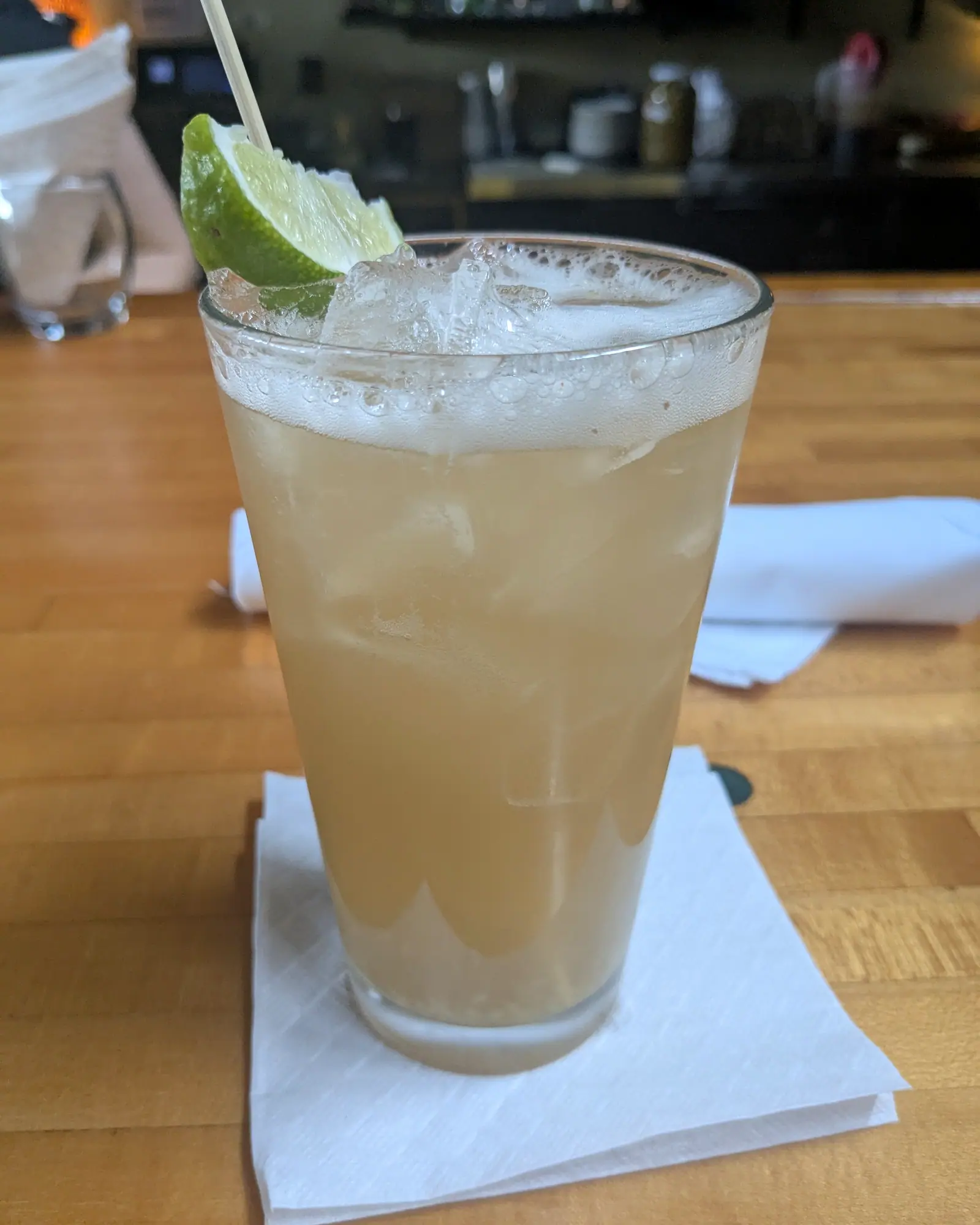

CC BY 4.0 · Cropped, white-balanced, graded and re-encoded to WebP by eXir.
Cloudy, pale-amber homemade ginger beer over ice in a glass, garnished with a lime wheel
Serving
Drink spec, per drink
Every figure above is per drink and does not move with the count, which is what makes the two service modes comparable. Sugar per litre, strength and standard drinks stay in the units their own authorities publish, because they are figures for comparing rather than for pouring.
Diet and allergen labels are computed from the ingredients listed on this page and nothing else. They cannot account for cross-contamination or for the particular product you buy, and they are not medical or safety guidance.
Ingredients
 60 g fresh ginger
 150 g granulated sugar
 1 950 ml water
 100 ml fresh lemon juice
- 60 g fresh ginger
- 150 g granulated sugar
- 1 950 ml water
- 100 ml fresh lemon juice
Glass
Vessel
357 ml of liquid, served without ice, inside the 400 ml the glass holds. The build fails if a recipe ever exceeds its stated vessel.
A batch needs a vessel that closes and fits a fridge shelf.
Method
6 steps · 4dStir the first portion of the 30 g fresh ginger and 30 g granulated sugar into the 250 ml water in a clean jar, cover loosely, and leave at room temperature.
A ginger bug is grown before the beer itself: grated ginger and sugar fed daily to a jar of water catch wild yeast from the ginger's own skin and the kitchen air, and only once that starter is reliably bubbling is it used to ferment a full batch.
Feed the bug daily with a spoonful more grated ginger and sugar from the same portions until it reliably fizzes within a few hours of feeding.
Stir the 30 g fresh ginger and the 120 g granulated sugar into the 1 700 ml water and the 100 ml fresh lemon juice, then strain in the whole active bug.
Cover loosely and leave at room temperature for 2d, until it tastes sharp and faintly fizzy.
Strain into bottles rated for carbonation, leaving headspace, and cap tightly.
Leave the sealed bottles at room temperature for 2d, burping each once a day, then refrigerate until cold before serving.
Common pitfallA warm room speeds the second ferment up considerably, and a bottle checked only after several days in summer heat can already be badly over-pressured by the time it is opened; daily burping is how you find that out before the glass does.
SafetyThe bug itself ferments loosely covered, but the finished beer is bottled sealed to carbonate, and that is a real pressure hazard: use bottles rated for carbonation, leave headspace, and "burp" each one once a day by cracking the cap briefly. Left sealed and unchecked in a warm spot, a bottle can build enough pressure to burst.
Keeping and make-ahead
Batched ahead, this keeps sealed and cold. The water line the engine adds is the dilution figure from the spec panel, not a rule of thumb.
About
An English home-fermented drink whose live culture, the "ginger beer plant," was misdiagnosed as a plant for decades before a botanist identified what it actually was, and whose alcohol content was legislated down in the Victorian era rather than brewed down.
Brewed ginger beer is generally traced to Yorkshire in the mid-eighteenth century, part of a much older English tradition of home brewing that already used ginger in various drinks 1. Jamaican ginger, exported in vast quantities once England controlled the island from 1655, made the spice cheap and reliable enough in Britain to become a drink ingredient in its own right rather than only a costly seasoning 2.
The starter culture responsible for the ferment, popularly called the "ginger beer plant," was for a long time exactly that to the people who kept it: a gelatinous, translucent lump passed from household to household and treated as a single living thing. The botanist Harry Marshall Ward received samples in 1887 and, after several years studying them, published a description in 1892 showing it was not a plant at all but a symbiotic culture of a yeast and a bacterium growing together, work that also resolved competing folk theories about where the culture had come from 1. Traditional ginger beer carried real alcohol, reportedly as much as eleven percent, until the British Parliament imposed a tax in 1855 on drinks above two percent, after which brewers deliberately shortened fermentation to stay under the new threshold 12.
English ginger beer travelled well in the stoneware bottles it was sold in, and export to North America from the 1790s onward built a market there that outlasted the drink's popularity at home 2. American Prohibition then pushed drinkers toward ginger ale and other soft drinks instead, and commercial ginger beer increasingly moved to plain yeast fermentation or to no fermentation at all, carbonated and flavoured rather than brewed 1. The version made from a home-grown ginger bug, as on this page, is the older method rather than a modern invention returning to it.
- 1Ginger beeren.wikipedia.org
- 2Thirsty Throwback Thursday: A History of Ginger Beercampusarch.msu.edu