
Eggnog
A stirred custard cooked gently to set the eggs safely, then chilled and spiked.
Raw egg cured by a high proportion of spirit and weeks of cold rest rather than heat.
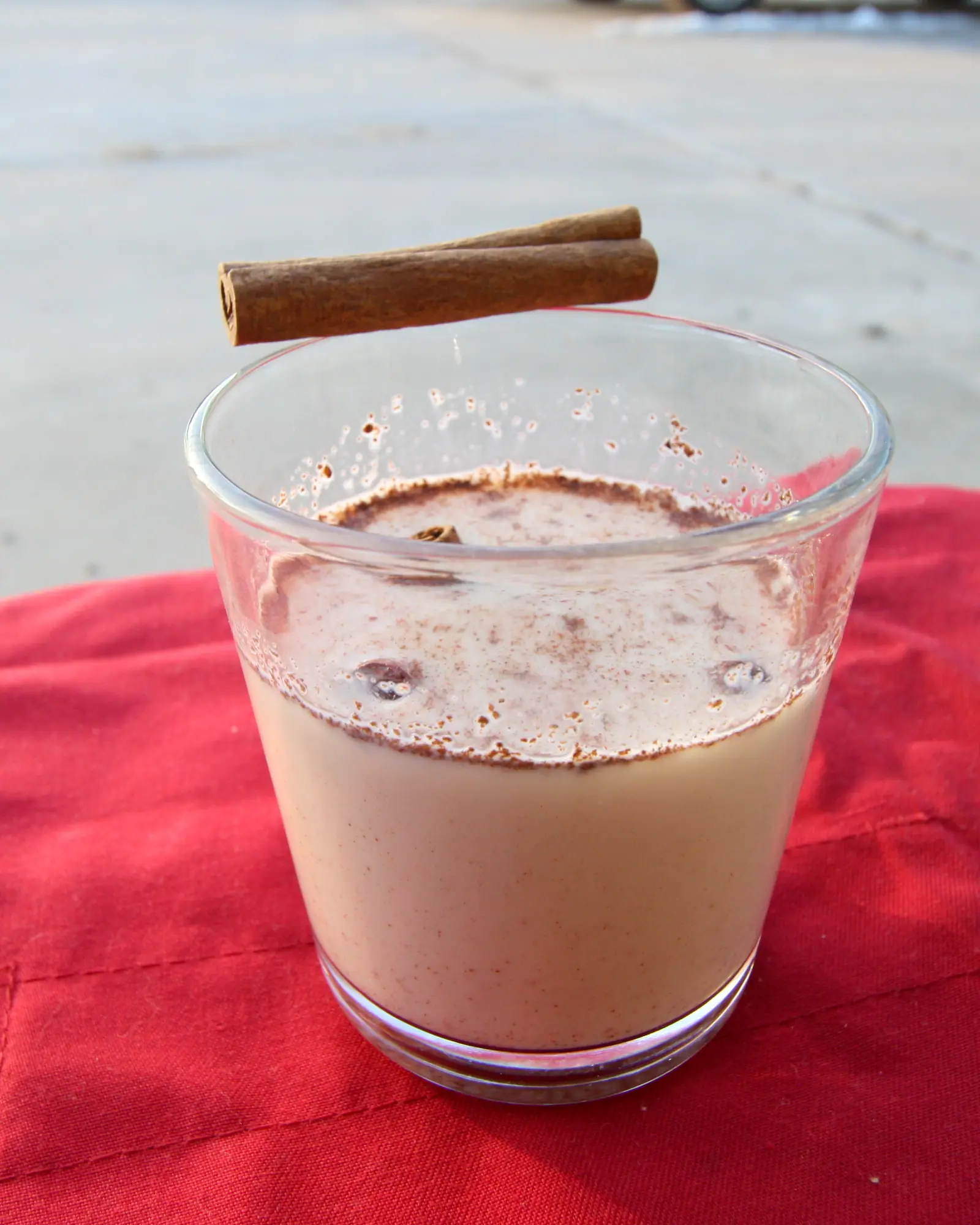

CC BY 2.0 · Cropped, white-balanced, graded and re-encoded to WebP by eXir.
A glass of pale tan eggnog dusted with cinnamon, a cinnamon stick resting across the rim
Serving
Drink spec, per drink
Every figure above is per drink and does not move with the count, which is what makes the two service modes comparable. Sugar per litre, strength and standard drinks stay in the units their own authorities publish, because they are figures for comparing rather than for pouring.
Diet and allergen labels are computed from the ingredients listed on this page and nothing else. They cannot account for cross-contamination or for the particular product you buy, and they are not medical or safety guidance.
Ingredients
 1½ whites egg white (48 ml)
- 1½ yolks egg yolk (25 ml)
 40 g granulated sugar
 155 ml whole milk
 45 ml bourbon
 45 ml heavy cream
 2 ml vanilla extract
 0.3 g freshly grated nutmeg
- 1½ whites egg white (48 ml)
- 1½ yolks egg yolk (25 ml)
- 40 g granulated sugar
- 155 ml whole milk
- 45 ml bourbon
- 45 ml heavy cream
- 2 ml vanilla extract
- 0.3 g freshly grated nutmeg
Glass
Vessel
173 ml of liquid, served without ice, inside the 350 ml the glass holds. The build fails if a recipe ever exceeds its stated vessel.
A batch needs a vessel that closes and fits a fridge shelf.
Drink spec, per drink
Every figure above is per drink and does not move with the count, which is what makes the two service modes comparable. Sugar per litre, strength and standard drinks stay in the units their own authorities publish, because they are figures for comparing rather than for pouring.
Diet and allergen labels are computed from the ingredients listed on this page and nothing else. They cannot account for cross-contamination or for the particular product you buy, and they are not medical or safety guidance.
Ingredients
- 1 white egg white (32 ml)
- 1 yolk egg yolk (17 ml)
- 45 g granulated sugar
- 120 ml bourbon
 60 ml dark rum
- 60 ml whole milk
- 30 ml heavy cream
- 0.3 g freshly grated nutmeg
- 1 white egg white (32 ml)
- 1 yolk egg yolk (17 ml)
- 45 g granulated sugar
- 120 ml bourbon
- 60 ml dark rum
- 60 ml whole milk
- 30 ml heavy cream
- 0.3 g freshly grated nutmeg
Glass
Vessel
116 ml of liquid, served without ice, inside the 350 ml the glass holds. The build fails if a recipe ever exceeds its stated vessel.
A batch needs a vessel that closes and fits a fridge shelf.
Method
5 steps · 1h 8mWhisk the 1½ whites egg white (48 ml) and 1½ yolks egg yolk (25 ml) with the 40 g granulated sugar together until pale.
Warm the 155 ml whole milk until it steams, then pour it into the egg mixture in a thin stream while whisking, so the eggs come up to temperature gradually rather than scrambling on contact.
Return everything to the pan and cook over low heat, stirring constantly, until it thickens enough to coat the back of a spoon.
Cooking the custard to a bare simmer, never a boil, is what pasteurises the whisked eggs without scrambling them; a thermometer reading 71 °C is the target, well short of the point eggs curdle.
Stir in the 45 ml bourbon, the 45 ml heavy cream and the 2 ml vanilla extract, then cover and refrigerate until fully cold.
Pour into mugs and grate the 0.3 g freshly grated nutmeg over the top.
Common pitfallA custard heated too fast scrambles at the edges of the pan before the centre catches up, which is why it wants a double boiler or the lowest direct heat and constant stirring rather than a hot pan left unattended.
Keeping and make-ahead
Batched ahead, this keeps sealed and cold. The water line the engine adds is the dilution figure from the spec panel, not a rule of thumb.
Method
4 steps · 21dWhisk the 1 white egg white (32 ml), the 1 yolk egg yolk (17 ml) and the 45 g granulated sugar together until the sugar has dissolved.
Whisk in the 120 ml bourbon, the 60 ml dark rum, the 60 ml whole milk and the 30 ml heavy cream until fully combined.
Seal and refrigerate for three weeks before tasting. The mixture thickens and mellows over the rest; do not open and stir it in the meantime.
The mixture is whisked once, sealed and left cold and undisturbed rather than stirred again during the rest; the alcohol needs uninterrupted contact with the egg over that whole time to do the curing the heat does in the cooked version.
Pour into mugs and grate the 0.3 g freshly grated nutmeg over the top.
Common pitfallThis version is made with raw egg rather than a cooked custard, and it is the spirit and the rest that make it safe rather than heat: published guidance on the style credits an alcohol-heavy mixture, refrigerated and left undisturbed for about three weeks, with rendering raw egg safe to drink. Made fresh and drunk unrested, it carries the same raw-egg risk as any other uncooked egg drink and should not be served that way.
Keeping and make-ahead
Batched ahead, this keeps sealed and cold. The water line the engine adds is the dilution figure from the spec panel, not a rule of thumb.
About
A spiced, spirited milk-and-egg drink descended from the medieval English posset, given its modern form on colonial American farms where milk, eggs and cheap Caribbean rum were all abundant.
The drink descends from posset, a hot milk-and-alcohol drink curdled with wine or ale and known in England since the Middle Ages; by the 13th century monks were already recorded drinking a version made with eggs and figs 1. Egg-enriched posset later became fashionable enough among the English aristocracy to serve as a display of wealth, since the sherry that spiked it was imported and expensive 2.
The drink took its familiar form in Britain's American colonies during the 1700s. Brandy and wine both carried heavy import taxes there, while rum shipped cheaply from the Caribbean did not, and colonial farms kept milk and eggs in ready supply; the combination made a rum-spiked version of the old posset far more affordable in the colonies than the sherry-based drink had ever been in England 1. George Washington is recorded as having served visitors a version of his own, made with rye whiskey, rum and sherry together 1. Regional preference later split the American drink by spirit: rum stayed the base in the north while whiskey or bourbon became more common further south 2.
The name's origin has no settled account. Proposed explanations tie "nog" to a strong beer once brewed in East Anglia, to "noggin," a small wooden mug used to serve it, or to a blend of colonial slang for rum with that same mug, though no version of the story is confirmed 1.
Raw egg in a drink meant to be aged rather than served immediately is a real food-safety question rather than a folk detail. Modern institutional guidance recommends pasteurised eggs for any eggnog served fresh 2, while separate analysis of the aged style has found that a mixture alcoholic enough and rested cold for roughly three weeks effectively sterilises itself even when made with contaminated eggs 1. This is the basis for treating the long-rested version and the cooked custard as two distinct ways of making the same drink safe, rather than one being a shortcut of the other.
- 1Eggnogen.wikipedia.org
- 2EggNog in History, Health, and Hospitalitycirculatingnow.nlm.nih.gov