
Coquito
Coconut, condensed and evaporated milk blended with rum and raw egg yolk.
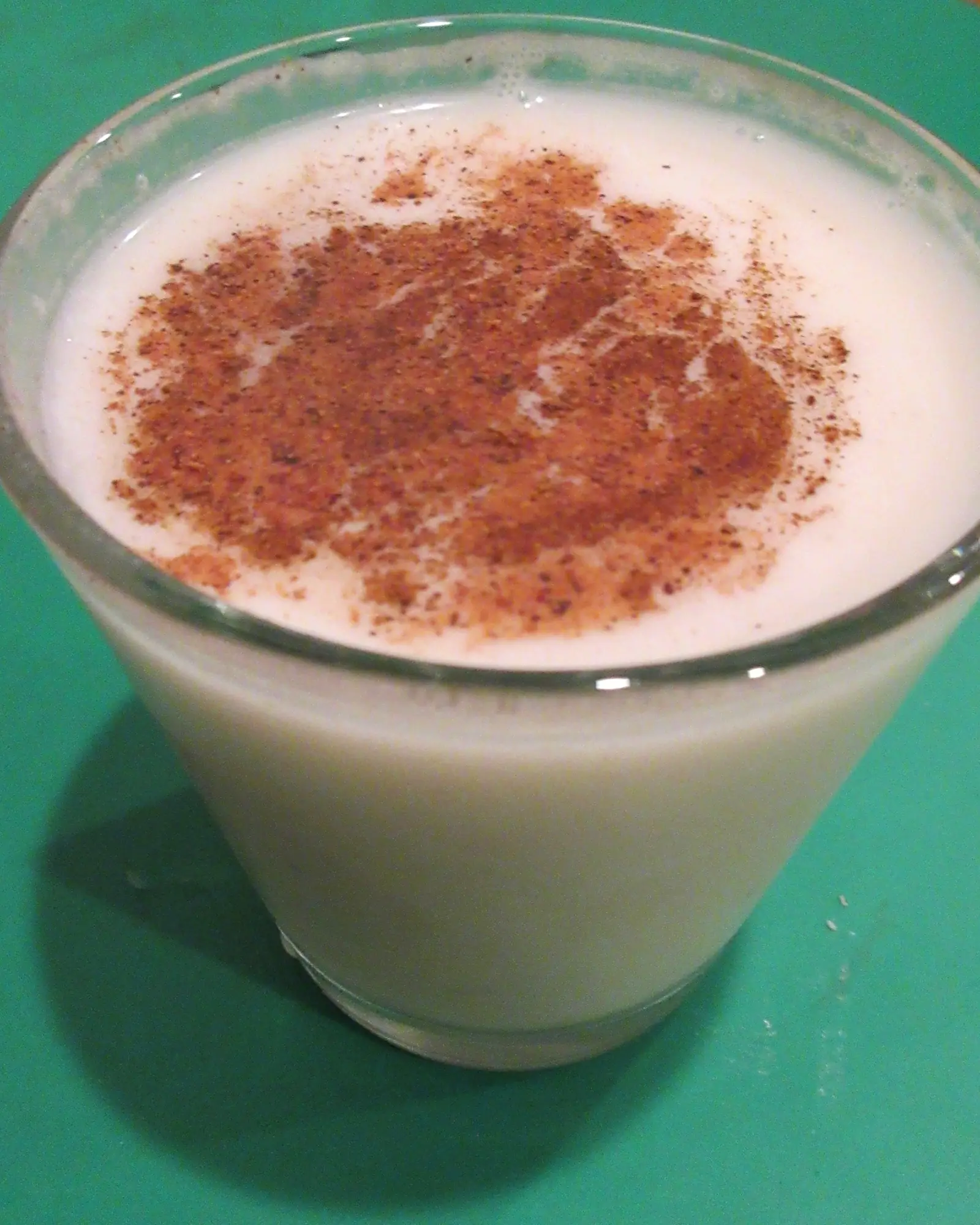
CC BY-SA 4.0 · Cropped, white-balanced, graded and re-encoded to WebP by eXir.
Creamy white coquito in a glass, dusted with ground cinnamon
Serving
Drink spec, per drink
Every figure above is per drink and does not move with the count, which is what makes the two service modes comparable. Sugar per litre, strength and standard drinks stay in the units their own authorities publish, because they are figures for comparing rather than for pouring.
Diet and allergen labels are computed from the ingredients listed on this page and nothing else. They cannot account for cross-contamination or for the particular product you buy, and they are not medical or safety guidance.
Ingredients


Glass
Vessel
134 ml of liquid, served without ice, inside the 150 ml the glass holds. The build fails if a recipe ever exceeds its stated vessel.
A batch needs a vessel that closes and fits a fridge shelf.
Method
3 steps · 8h 6mWarm the 25 ml coconut milk with the 3 g cinnamon bark for 5m, then remove the cinnamon and let the milk cool.
Blend the cooled coconut milk with the 20 ml cream of coconut, 20 ml condensed milk, 20 ml evaporated milk, 17 g egg yolk, 2 ml vanilla extract and 30 ml dark rum for 45s, until completely smooth.
The egg yolk is blended in raw rather than cooked, which is what gives coquito its body without turning it into a custard; a cooked yolk would set rather than emulsify into the rest of the liquid.
Bottle and refrigerate for 8h before serving ice-cold.
Because the yolk stays raw, a fresh, well-refrigerated egg matters more here than it would in a cooked custard, and the finished bottle is kept cold throughout its rest rather than left at room temperature.
Common pitfallServing straight from the blender skips the overnight chill the coconut and spice need to fully marry, and a fresh batch tastes flat and separated compared with one rested a full day.
Keeping and make-ahead
Batched ahead, this keeps sealed and cold. The water line the engine adds is the dilution figure from the spec panel, not a rule of thumb.
About
Puerto Rico's coconut answer to eggnog, blending Spanish colonial milk punch with local rum and coconut into a drink with no settled inventor.
Coquito's name is straightforward ("little coconut" in Spanish 1) but its origin is not documented with anything like the same precision. Both sources agree on the broad shape of the story: Spanish colonists in Puerto Rico brought their own milk-and-spirit punch, in the general lineage of British and American eggnog, and combined it with coconut milk and locally distilled rum to produce something distinct from either 1 2. Neither source names an inventor or a date, and one states plainly that who created it and how the recipe began are simply not known 2.
The rum most associated with older versions of the drink is pitorro, an unaged, high-proof Puerto Rican cane spirit distilled well above standard commercial strength, though modern recipes commonly substitute a standard dark or spiced rum instead 1. What has more clearly shifted over time is the dairy: today's standard build layers coconut milk, cream of coconut, sweetened condensed milk and evaporated milk together, the latter two being manufactured products that entered Puerto Rican kitchens once American food companies had a commercial presence on the island, rather than ingredients available to whoever first combined coconut with a milk punch 1.
Egg is the one ingredient that splits current practice rather than history. Stovetop versions of coquito, cooked briefly before the rum and coconut are added, more often include egg yolk for body; recipes built entirely in a blender frequently leave it out 1. Both are called coquito, and the difference is a matter of household preference rather than a documented regional split.
- 1Coquitoen.wikipedia.org
- 2Coquito, the Puerto Rican Coconut Noghispanicfoodnetwork.com