
Clover Club
Gin, lemon and raspberry syrup, rounded by an egg white into a drink built to hold a head of foam.
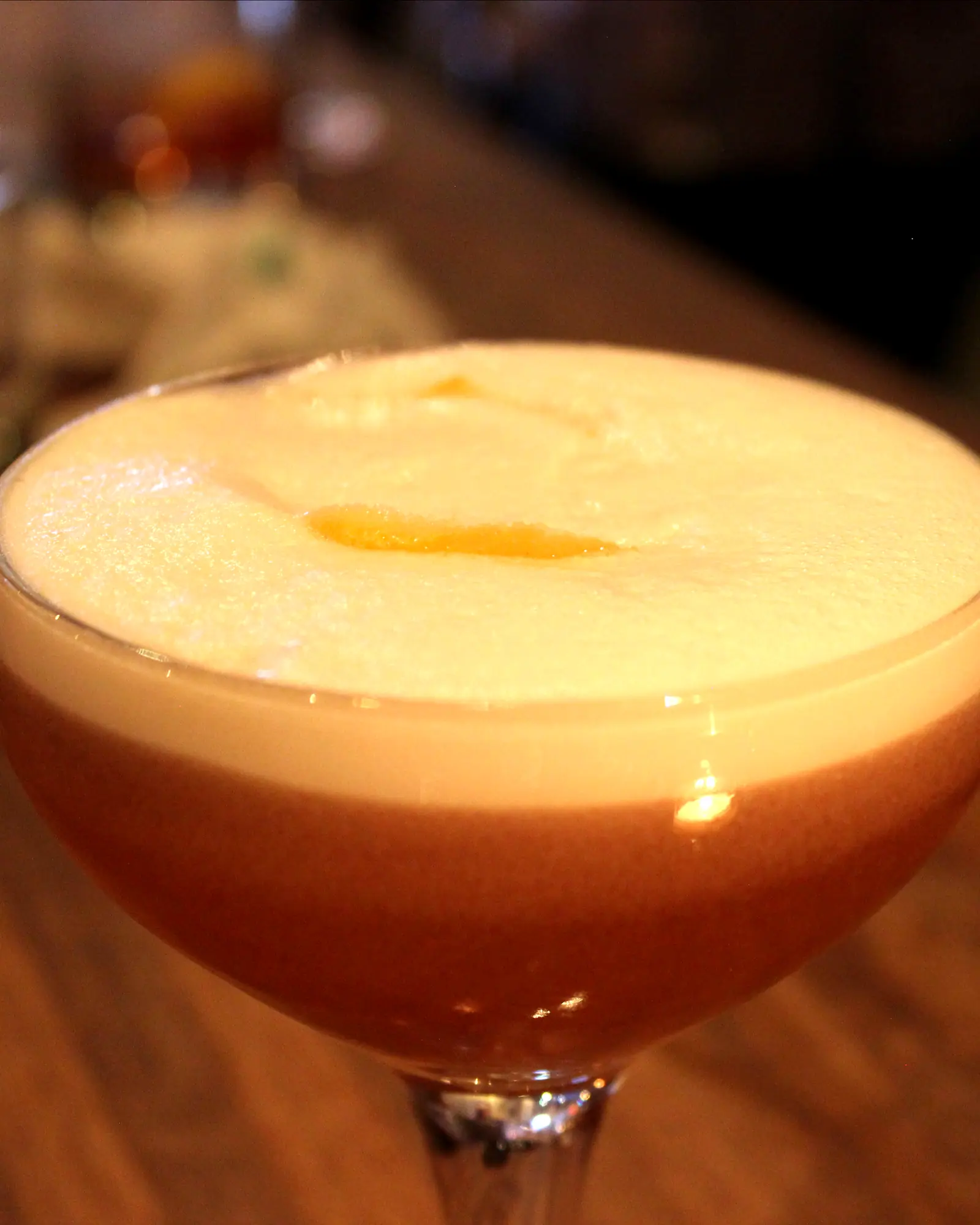

CC BY-SA 3.0 · Cropped, white-balanced, graded and re-encoded to WebP by eXir.
A Clover Club cocktail in a coupe, layered pink beneath a dense white foam, garnished with a raspberry on the surface
Serving
Drink spec, per drink
Every figure above is per drink and does not move with the count, which is what makes the two service modes comparable. Sugar per litre, strength and standard drinks stay in the units their own authorities publish, because they are figures for comparing rather than for pouring. Dilution is modelled rather than measured, as a fraction of the poured volume before any ice; dotted figures descend from that estimate.
Diet and allergen labels are computed from the ingredients listed on this page and nothing else. They cannot account for cross-contamination or for the particular product you buy, and they are not medical or safety guidance.
Ingredients
 15 ml fresh lemon juice
 45 ml London dry gin
 15 ml raspberry syrupBoth are sugar syrups near the same strength, so the arithmetic barely moves, but grenadine is pomegranate rather than raspberry: the drink loses the seedy, slightly tart fruit note the Clover Club is named around and gains a plainer, more purely sweet-tart one.flavour: significant change · strength: no change · sweetness: no change
 1 white egg white (32 ml)
 10 g raspberries
- 15 ml fresh lemon juice
- 45 ml London dry gin
- 15 ml raspberry syrup
- 1 white egg white (32 ml)
- 10 g raspberries
- ~59 ml water
Glass
Vessel
166 ml of liquid, served without ice, inside the 180 ml the glass holds. The build fails if a recipe ever exceeds its stated vessel.
A batch needs a vessel that closes and fits a fridge shelf.
Method
6 steps · 2m 24sSqueeze the 15 ml fresh lemon juice and strain out the pips and pulp.
Combine the 45 ml London dry gin, the 15 ml fresh lemon juice, the 15 ml raspberry syrup and the 1 white egg white (32 ml) in a shaker, with no ice yet.
Shake hard for 20s with no ice, so the egg white has room to whip into a stable foam before any water is added to it.
Shaken once without ice before the ice ever goes in. Cold, diluted liquid resists whipping into a foam; the dry shake builds the emulsion while the drink is still warm and full strength, and the second shake only has to chill and finish what the first one started.
Add cubed ice and shake again for 14s to chill the drink and finish the emulsion.
Fine strain into a chilled coupe, so none of the ice shards from the second shake reach the glass to break the foam.
Set a raspberry or two on a pick laid across the rim, resting on the foam rather than sinking into it.
Common pitfallA short or timid dry shake leaves a thin, fast-collapsing foam rather than the dense head this drink is built around, and it is the step most often rushed because nothing in the shaker seems to be happening yet.
Keeping and make-ahead
Batched ahead, this keeps sealed and cold. The water line the engine adds is the dilution figure from the spec panel, not a rule of thumb.
About
A gin sour built around raspberry syrup and egg white, named for a Philadelphia press club rather than for anything in the glass.
The name comes from the Clover Club, a men's club of Philadelphia journalists and professionals chartered in 1882 and based at the Bellevue-Stratford Hotel 1. The drink is named after the club rather than by it: no member is credited with inventing it, and the connection is the venue where it was drunk rather than a recipe the club itself produced.
A close relative appears in print earlier than the name does. J. A. Grohusko's 1908 Jack's Manual lists a drink called the Clover Leaf, built from gin, sugar, raspberry syrup and egg white, and describes it as popular "in the city of brotherly love" with a soft orchid colour and a rim of white foam 1. It was garnished with a sprig of mint, which later fell away from the recipe. The name Clover Club Cocktail is first recorded two years later, in Raymond Sullivan's 1910 The Barkeeper's Manual, still with the mint garnish attached 1.
Raspberry syrup and egg white are the two features that define the drink across every version of it, the syrup giving it colour and the egg white giving it the dense, long-lived foam that made it recognisable on sight 1. Its popularity fell away by the 1930s, a decline attributed to drinkers' growing wariness of raw egg alongside the complexity of getting the foam right 1.
- 1Clover Club cocktailen.wikipedia.org