
Chocolate Caliente
Milk, cocoa, sugar and cinnamon whisked with a molinillo until it foams.
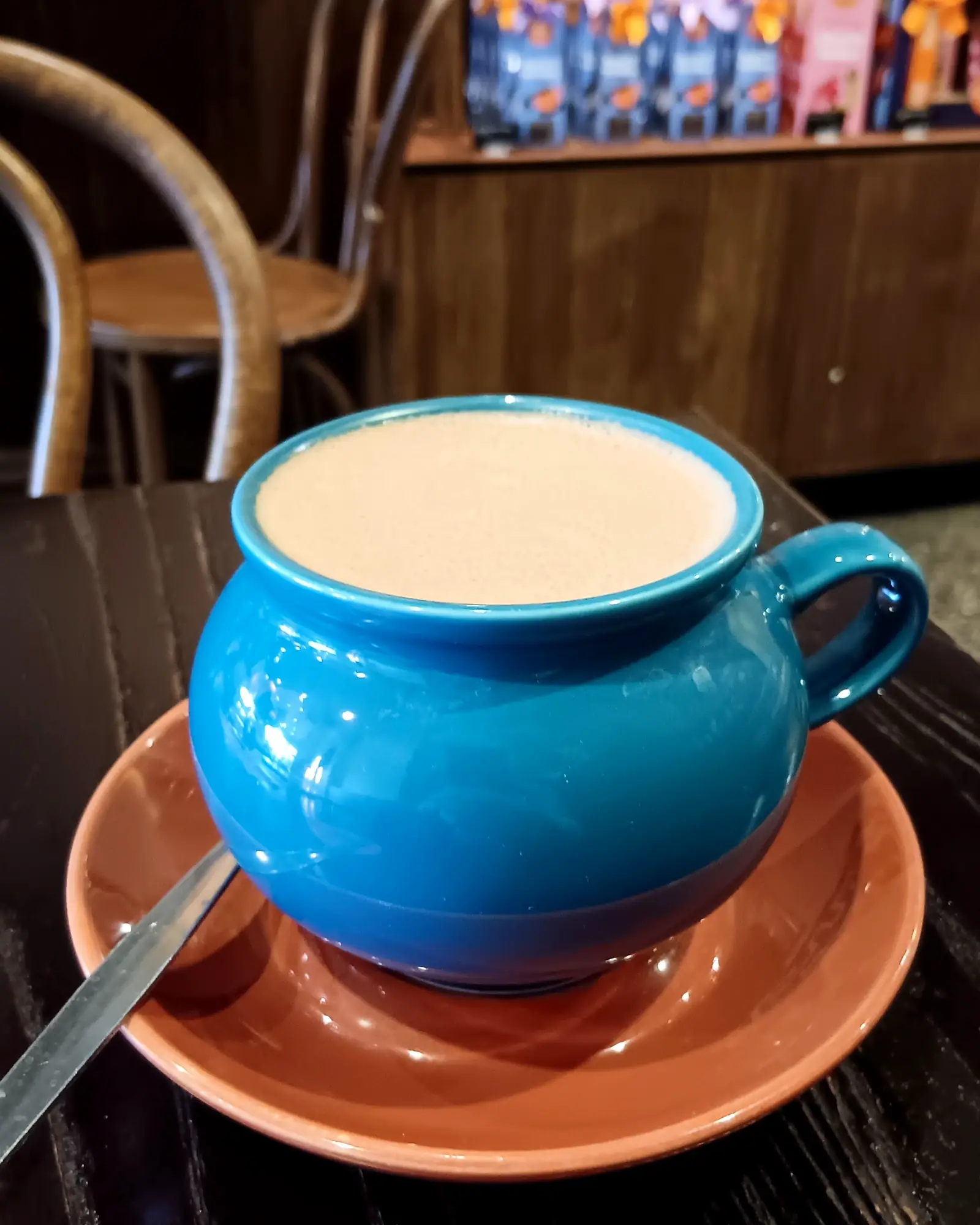

CC BY-SA 4.0 · Cropped, white-balanced, graded and re-encoded to WebP by eXir.
Frothy hot chocolate filling a blue ceramic mug on a terracotta saucer
Serving
Drink spec, per drink
Every figure above is per drink and does not move with the count, which is what makes the two service modes comparable. Sugar per litre, strength and standard drinks stay in the units their own authorities publish, because they are figures for comparing rather than for pouring.
Diet and allergen labels are computed from the ingredients listed on this page and nothing else. They cannot account for cross-contamination or for the particular product you buy, and they are not medical or safety guidance.
Ingredients
 250 ml whole milk
 2 g cinnamon bark
 15 g cocoa powder
 20 g granulated sugar
- 250 ml whole milk
- 2 g cinnamon bark
- 15 g cocoa powder
- 20 g granulated sugar
Glass
Vessel
277 ml of liquid, served without ice, inside the 350 ml the glass holds. The build fails if a recipe ever exceeds its stated vessel.
A batch needs a vessel that closes and fits a fridge shelf.
Method
2 steps · 4mWarm the 250 ml whole milk with the 2 g cinnamon bark over 3m, without letting it boil, then remove the cinnamon.
Add the 15 g cocoa powder and 20 g granulated sugar and whisk vigorously with a molinillo for 1m, until dissolved and lightly foamed.
The molinillo is spun between the palms rather than stirred in a circle, which drives air into the drink from underneath and raises a genuine foam rather than just dissolving the cocoa into the milk.
Common pitfallBoiling the milk hard rather than heating it gently scorches the milk solids on the bottom of the pan, which no amount of whisking afterward removes from the taste.
Keeping and make-ahead
Whisked to order. The foam a molinillo raises collapses within a couple of minutes of standing, so there is nothing to hold ahead of serving.
About
Milk, cocoa, cinnamon and sugar whisked to a foam, joining a Mesoamerican chocolate drink to a whisk whose own origin is more contested than its use.
Chocolate as a drink is far older in Mexico than the whisk it is now made with. Cacao residue in Olmec earthenware has been dated to around 1750 BC, prepared as a sour, stimulating ritual drink long before the Maya refined it with cornmeal and chilies into a bitter, foamy beverage and the Aztecs adopted their own cold version, valuing cacao beans highly enough to use them as currency 1. The word chocolate itself is widely traced to the Nahuatl xocolatl, "bitter water" 1.
The molinillo (the carved wooden whisk spun between the palms to raise a foam) is popularly treated as a continuation of that pre-Columbian tradition, and one account of Mexican chocolate history describes it that way without qualification 1. A closer, source-based argument disputes this directly: pre-Columbian texts describe raising foam by pouring chocolate repeatedly between two vessels rather than whisking it, no molinillo appears in surviving pre-conquest writing, and the tool is absent even from the first Nahuatl-Spanish dictionary, compiled in 1571. This is evidence that points to the molinillo as a Spanish-introduced tool from around the sixteenth century rather than an Aztec one, with at least one later engraving mistakenly placing it in a pre-conquest scene and helping cement the myth 2. That reading treats the molinillo as a genuinely mestizo object: a colonial-era tool built for an indigenous drink, not a survival of one.
What is not disputed is what the Spanish added once chocolate reached Europe's colonial households: cinnamon, milk and sugar, worked into a drink that had previously run on water, cornmeal and chile 1. That combination, whisked to a foam, is the hot chocolate served in Mexico today, and the same molinillo technique carries over into atole and champurrado, the corn-based drinks chocolate is added to rather than replaces.
- 1The History of Chocolate in Mexiconaatikmexico.org
- 2A Mestizo Tradition in Cacao — The Introduction and Incorporation of Molinilloschocolateclass.wordpress.com