
Atole
Masa harina whisked into simmering milk and water until it thickens.

CC0 · Cropped, white-balanced, graded and re-encoded to WebP by eXir.
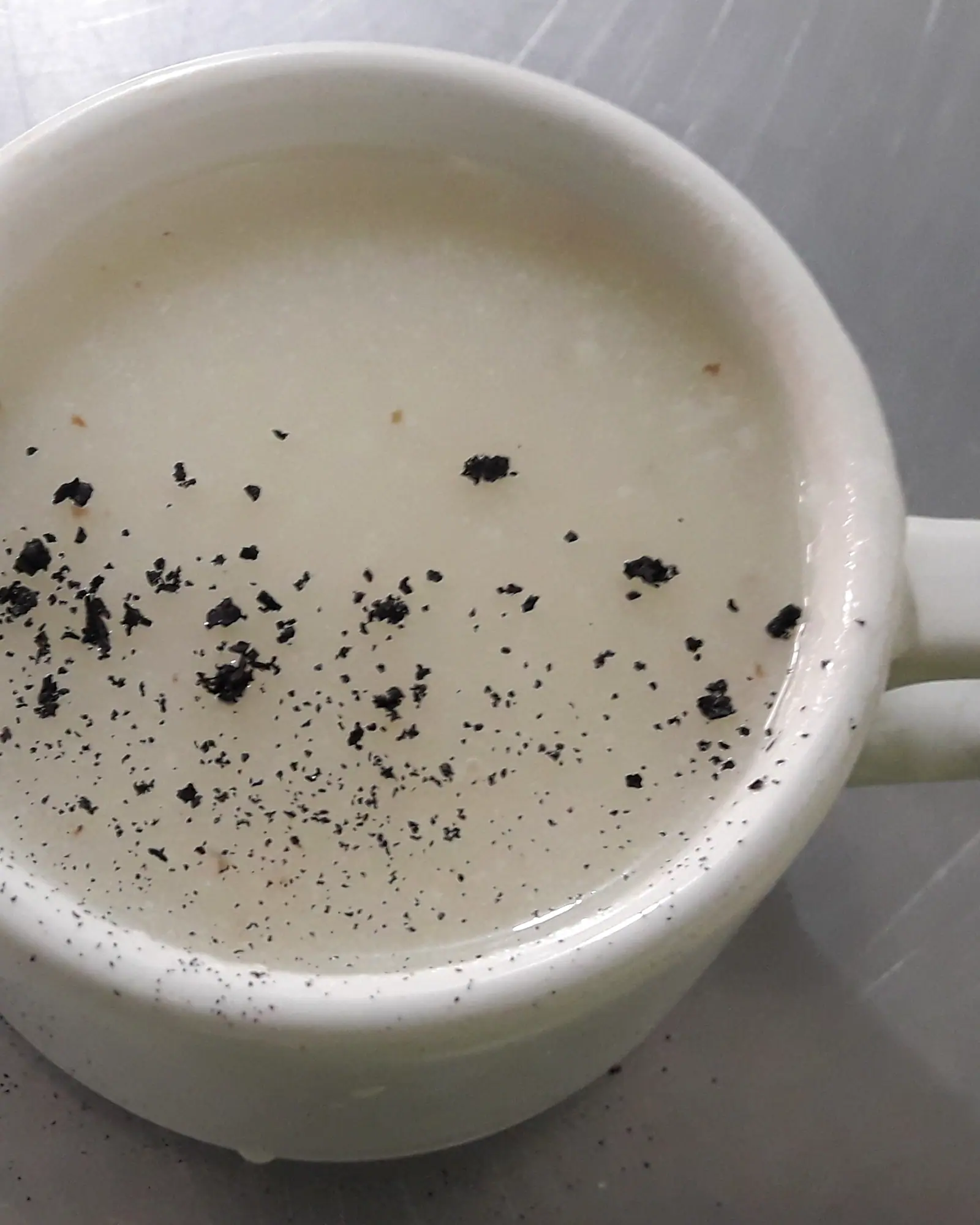
Pale, thick atole in a white mug, dusted with dark ground spice
Serving
Drink spec, per drink
Every figure above is per drink and does not move with the count, which is what makes the two service modes comparable. Sugar per litre, strength and standard drinks stay in the units their own authorities publish, because they are figures for comparing rather than for pouring.
Diet and allergen labels are computed from the ingredients listed on this page and nothing else. They cannot account for cross-contamination or for the particular product you buy, and they are not medical or safety guidance.
Ingredients
 25 g masa harina
 150 ml water
 150 ml whole milk
 25 g piloncillo
 3 g cinnamon bark
- 25 g masa harina
- 150 ml water
- 150 ml whole milk
- 25 g piloncillo
- 3 g cinnamon bark
Glass
Vessel
316 ml of liquid, served without ice, inside the 350 ml the glass holds. The build fails if a recipe ever exceeds its stated vessel.
A batch needs a vessel that closes and fits a fridge shelf.
Method
3 steps · 6mWhisk the 25 g masa harina into the 150 ml water until completely smooth, with no dry lumps left.
The masa is whisked into cold water before anything is heated, because dry masa dropped straight into a hot pan seizes into lumps that never fully smooth out, however long the pot is stirred afterward.
Combine the masa slurry with the 150 ml whole milk, 25 g piloncillo and 3 g cinnamon bark in a pot and simmer over 5m, whisking constantly, until visibly thickened.
Remove the cinnamon stick and pour hot into the serving mug.
Common pitfallSimmering without stirring lets the thickened masa catch and scorch on the bottom of the pot, and a scorched atole tastes of the pot rather than of the corn.
Keeping and make-ahead
Cooked and thickened to order. Held hot and reheated, the masa keeps thickening and the drink turns gluey rather than staying pourable.
About
Corn masa whisked into hot water or milk until it thickens, a drink old enough to appear in Maya inscriptions beside cacao.
The name comes directly from Nahuatl: ātōlli, meaning roughly "watered down" or "slurry," a description of the drink's texture rather than a brand or a place 1. It is old enough to appear in the painted inscriptions on Classic Maya vessels, where atole is named alongside cacao among the primary ingredients recorded, which is evidence that the drink held enough ceremonial and everyday weight in pre-Columbian Mesoamerica to be worth writing on pottery 2.
What made atole possible at all was nixtamalization, the pre-Hispanic technique of treating dried corn with an alkaline solution before grinding it. The process breaks down the kernel's hardened outer shell and makes its niacin available to the body, and without it a corn-dependent diet risks pellagra; both sources treat the corn used for atole as this treated masa rather than raw ground grain 1. The earliest version was masa dissolved directly in water and sweetened with honey or agave syrup, sometimes flavoured with fruit, chile or cacao 1.
The drink changed rather than disappeared after the Spanish conquest. Milk, refined and unrefined cane sugar, cinnamon and vanilla were folded into recipes that had previously run on water, honey and native spices, and the modern standard (masa thickened in milk with piloncillo, cinnamon and vanilla) is a colonial-era hybrid built on a pre-Hispanic base rather than either tradition on its own 1. Atole's place at Day of the Dead altars and at Las Posadas gatherings continues a use the drink is recorded as having long before either Spanish holiday existed to attach it to.
- 1Atole – A Corn-Based Beveragemysliceofmexico.ca
- 2Atoleen.wikipedia.org