
Aperol Spritz
Aperol and Prosecco over ice, lengthened with a splash of soda.

CC BY 4.0 · Cropped, white-balanced, graded and re-encoded to WebP by eXir.
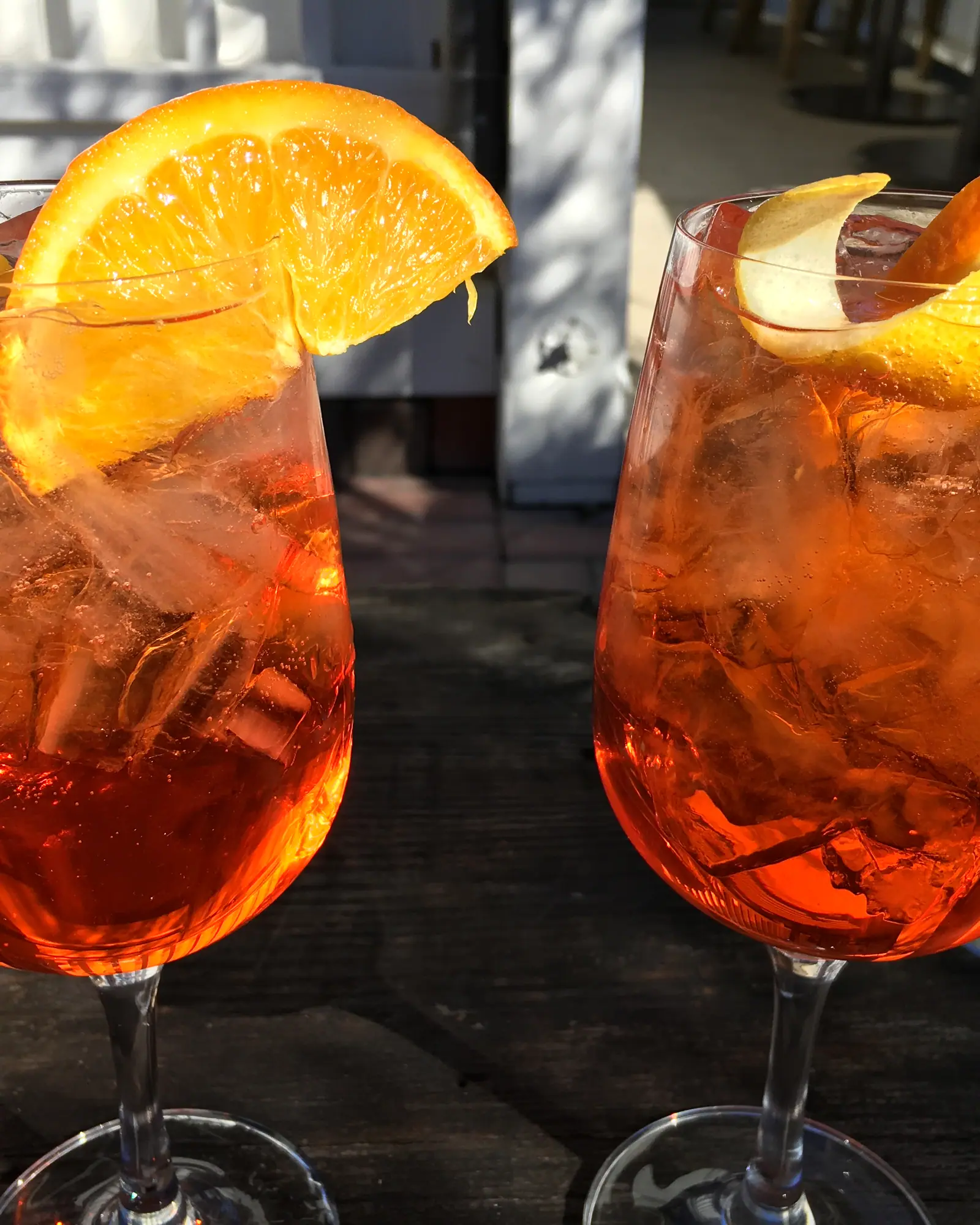
Two Aperol Spritz cocktails in large wine glasses over ice, garnished with orange slices
Serving
Drink spec, per drink
Every figure above is per drink and does not move with the count, which is what makes the two service modes comparable. Sugar per litre, strength and standard drinks stay in the units their own authorities publish, because they are figures for comparing rather than for pouring. Dilution is modelled rather than measured, as a fraction of the poured volume before any ice; dotted figures descend from that estimate.
Wine is routinely fined with isinglass, gelatine or casein, and a producer rarely states whether a given bottle was.
Diet and allergen labels are computed from the ingredients listed on this page and nothing else. They cannot account for cross-contamination or for the particular product you buy, and they are not medical or safety guidance.
Ingredients
 60 ml AperolProprietary
 90 ml brut sparkling wine
 20 ml soda water
 1 orange (140 g)
- 60 ml AperolProprietary
- 90 ml brut sparkling wine
- 20 ml soda water
- 1 orange (140 g)
Glass
Vessel
170 ml of liquid plus 170 ml of cubed ice occupies about 340 ml, inside the 600 ml the glass holds. The build fails if a recipe ever exceeds its stated vessel.
A batch needs a vessel that closes and fits a fridge shelf.
Method
4 steps · 1m 20sFill a large wine glass with ice.
Pour the 60 ml Aperol over the ice.
Top with the 90 ml brut sparkling wine and then the 20 ml soda water, and give the drink one gentle lift with a bar spoon rather than a stir.
The Prosecco and soda go in after the ice is already sitting in the glass, not into a shaker or a mixing glass, so neither one is diluting against the ice for as long as the Aperol underneath it; the drink is built to be finished before that gap matters.
Drop in a half-wheel of orange.
Common pitfallPoured in the wrong order, the Prosecco goes in first and loses half its bead by the time the soda lands on top of it. Aperol first, then Prosecco, then soda, keeps the most delicate part of the drink on top and briefly in the glass.
Keeping and make-ahead
The Prosecco and soda are both poured to order for their bubbles; batching either flattens the drink before it reaches the glass.
About
A Habsburg-era habit of splashing Veneto wine with water, carried forward first onto Aperol after its 1919 invention and then, in the 2000s, into a branded three-two-one recipe.
The word spritz comes from the German spritzen, to splash, and names a habit rather than a recipe: 19th-century Veneto was under Habsburg administration, and Austrian soldiers and officials who found the local still wines too strong for their taste asked bartenders to lighten them with a splash of water 1. That habit long predates Aperol itself.
Aperol was introduced in 1919 by the brothers Luigi and Silvio Barbieri, from their family distillery in Padua 2. Its low strength and citrus-forward, bittersweet profile made it a natural fit for the existing spritz format, and it gradually displaced plain water and still wine in the glass over the following decades 1. Prosecco entered the drink around the 1970s, replacing still wine and giving the modern version its bead 1.
The specific three-two-one proportion now printed on the bottle (three parts Prosecco, two parts Aperol, one part soda) is not the original folk recipe but a formula the Campari Group set after acquiring Aperol in 2003, promoted as a branded campaign that helped carry the drink from a regional Italian aperitivo into an international one, particularly in the United States 2. Regional and pre-campaign versions of the same drink use looser, closer-to-equal proportions of wine and bitter liqueur 1.
- 1Spritz (cocktail)en.wikipedia.org
- 2The History and Rise of the Aperol Spritzprovi.com