
Skip to content
Markey
Theme: System (currently light)
Toyota emblem

Generation

Toyota Supra (A40/A50)

Toyota Celica Supra (A40/A50), 1978-1981

Produced
1978–1981
Code
A40/A50
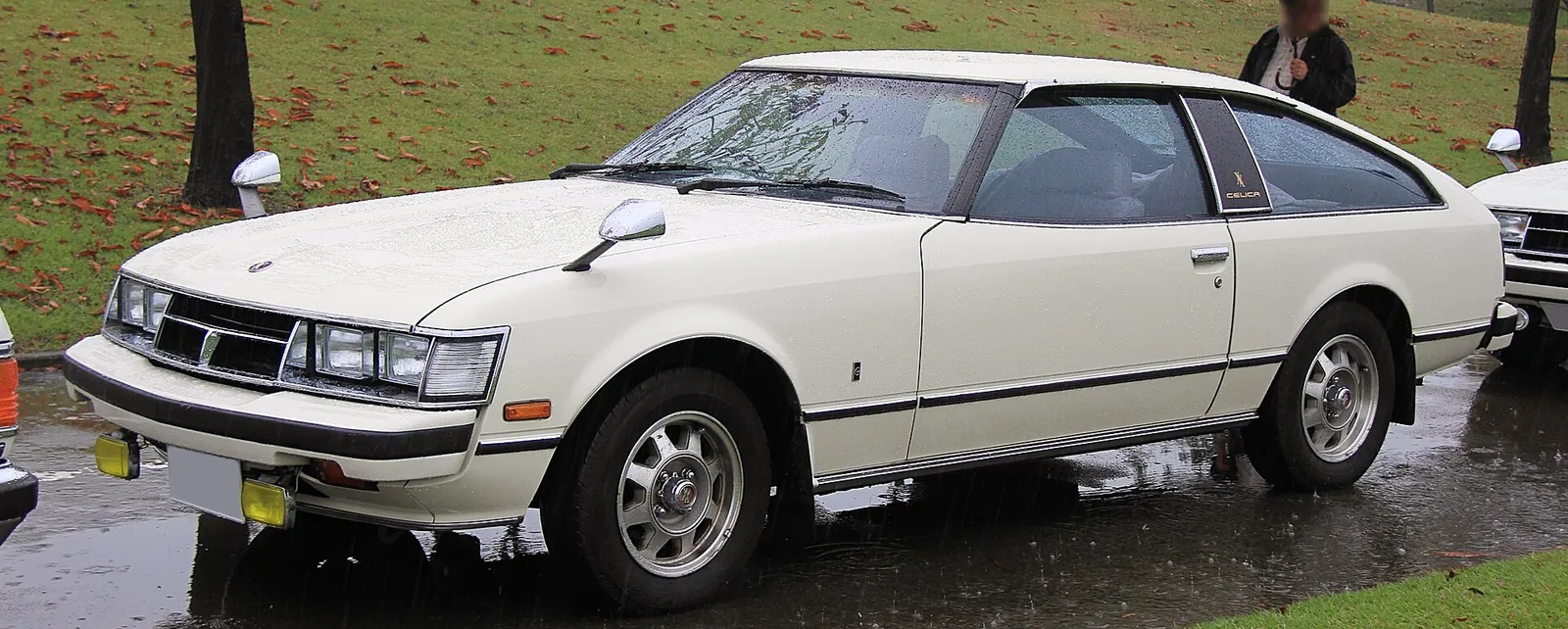
Cream 1979 Toyota Celica XX 2000G photographed in side profile

Image credit

File
File:1979 Toyota Celica XX 2000G.jpg
Author
TTTNIS

Body style

Powertrain

The first Supra shared its doors and rear section with the contemporary Celica liftback, but its front panels were stretched 129.5 mm to fit an inline-six where the Celica had a four-cylinder engine. The car was sold in Japan as the Celica XX, and everywhere else as the Celica Supra.[1]

The two trims recorded here bracket the generation’s engine range: the launch Japanese-market MA45 with the smallest 2.0-litre six, and the final-year MA47 with the largest 2.8-litre unit sold worldwide, including North America. Both carry the generation’s weight range rather than an engine-specific figure (the infobox gives only one 1,150-1,270 kg span for the whole generation), so the lighter and heavier ends are assigned to the smallest and largest engines respectively, a reasonable mapping rather than a manufacturer-confirmed per-engine weight.

Overview

Manufacturer
Toyota
Produced
1978–1981
Model code
A40/A50
Segment
S-segment (Europe) / Sports car (US)
Positioning
Premium
Assembly
Tahara, Aichi, Japan (Tahara plant)

Dimensions

Length
4,600 mm

Infobox gives a 4,600-4,615 mm range without attributing each figure to a trim. The lower figure is recorded here.

[1]

Width
1,650 mm

[1]

Height
1,290 mm

Infobox gives a 1,290-1,310 mm range without attributing each figure to a trim. The lower figure is recorded here.

[1]

Wheelbase
2,630 mm

[1]

Kerb weight
1,150 kg

Infobox gives a 1,150-1,270 kg range without attributing each figure to a trim. The lower figure is recorded here.

[1]

MA45

Trim · 1978–1980 · M-EU

Power
92 kW

125 PS, converted at 1 PS = 0.73549875 kW. Japanese-market engine.

[1]

Torque
184 N⋅m

136 lb-ft, converted at 1 lb-ft = 1.3558179483 Nm.

[1]

Kerb weight
1,150 kgEstimated

Low end of the generation's published weight range, applied here to the lightest, smallest-engined trim.

[1]

0–100 km/h
Not yet available
Top speed
Not yet available
Fuel economy
Not yet available
CO₂
Not yet available
Drag coefficient
Not yet available
Frontal area
Not yet available
Displacement
1,988 cc

[1]

Boot volume
Not yet available
Seats
4
Engine
inline-6 · M-EU
Drivetrain
Rear-wheel drive

MA47

Trim · 1980–1981 · 5M-E

Power
87 kW

116 hp, converted at 1 hp = 0.745699872 kW. World-market engine, including North America.

[1]

Torque
197 N⋅m

145 lb-ft, converted at 1 lb-ft = 1.3558179483 Nm.

[1]

Kerb weight
1,270 kgEstimated

High end of the generation's published weight range, applied here to the largest-engined trim.

[1]

0–100 km/h
Not yet available
Top speed
Not yet available
Fuel economy
Not yet available
CO₂
Not yet available
Drag coefficient
Not yet available
Frontal area
Not yet available
Displacement
2,759 cc

[1]

Boot volume
Not yet available
Seats
4
Engine
inline-6 · 5M-E
Drivetrain
Rear-wheel drive

Sources & confidence

Every figure above carries a status. Nothing on this page is estimated without saying so, and nothing missing has been filled in with a guess.

Last verified
2026-09-08
Review status
Compiled from cited sources

Photography on this page is credited on each image. Tap theion a photograph for its author, licence and source.

References

Every sourced figure and every cited claim on this page, numbered. Wikipedia articles record the revision they were read at, because the article will have changed by the time you check it.

  1. [1]

    Toyota Supra. Wikipedia · revision 1371249961 · read 2026-09-08

    WikipediaCC BY-SA 4.0

    Covers generations one through four in depth; the fifth generation is a summary transcluding the dedicated Toyota GR Supra article.