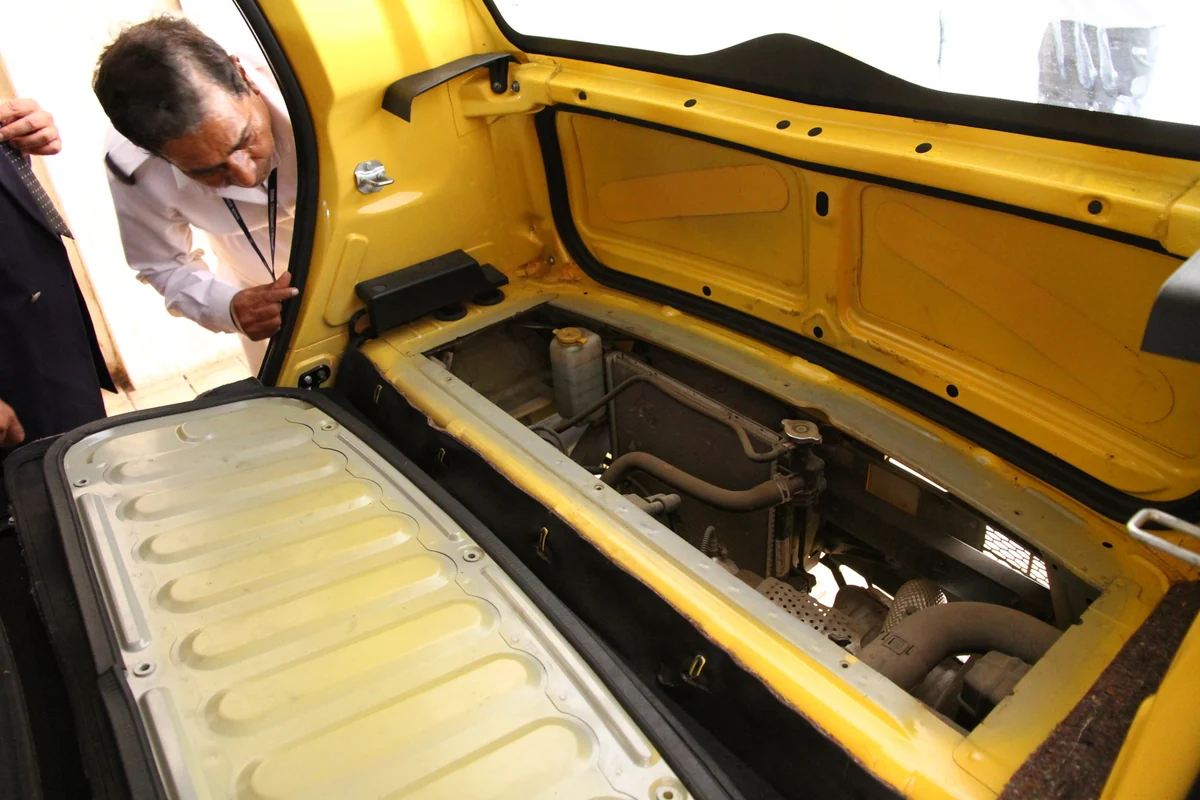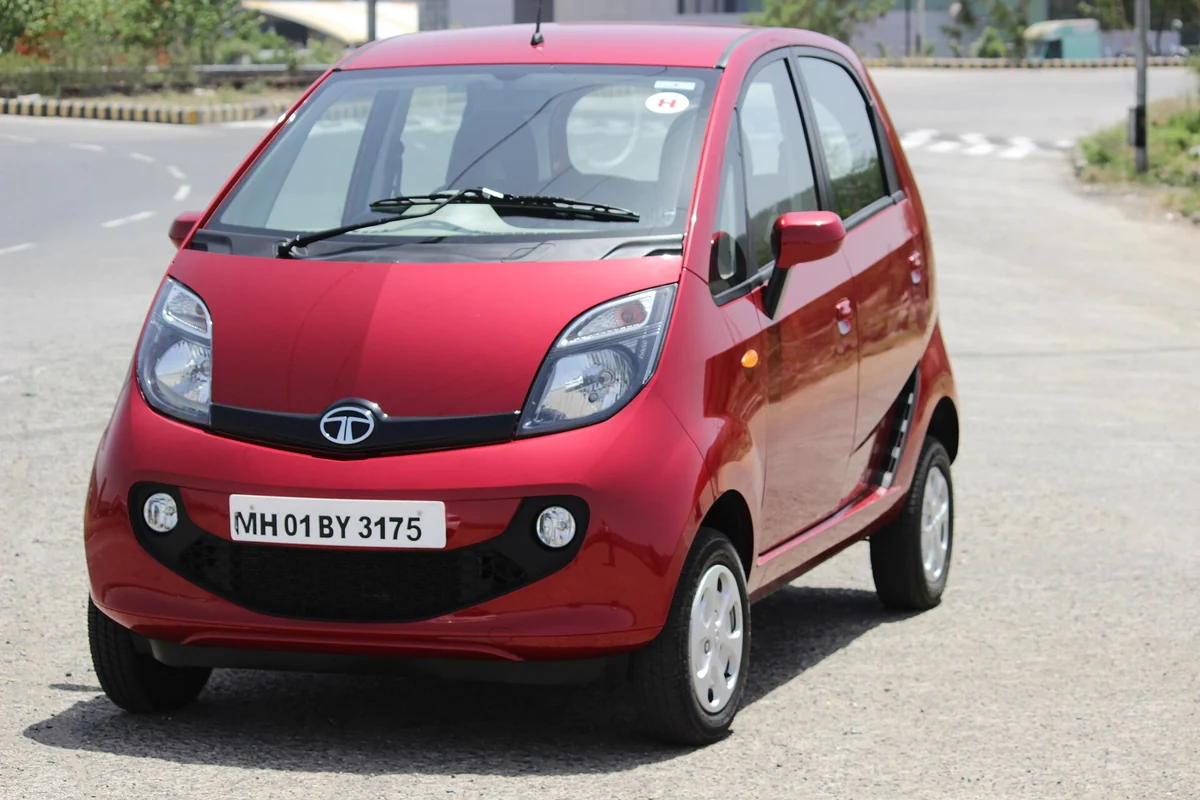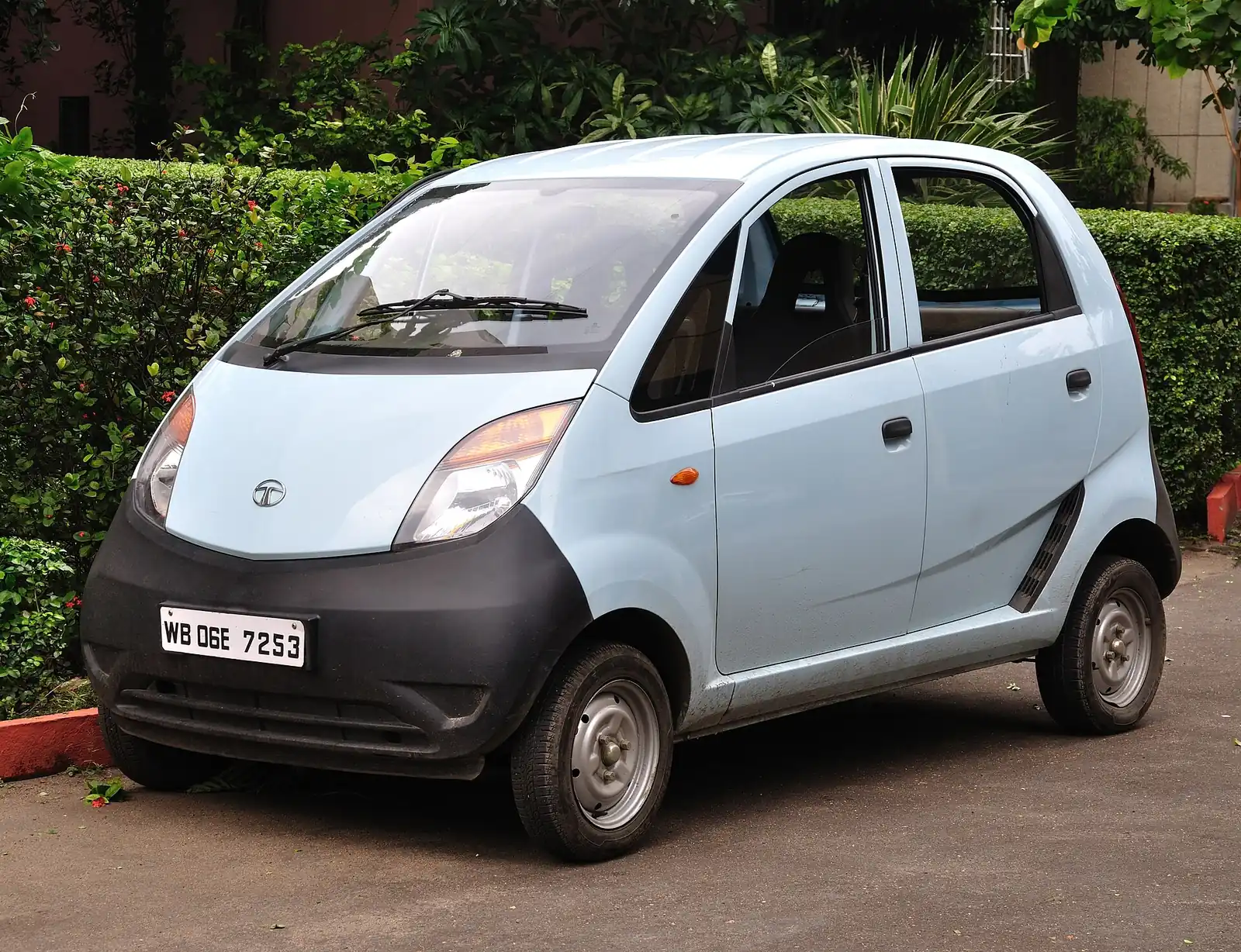
The Nano never had a second generation, so this entry spans its whole production run, 2008 to 2018.[1] The car barely changed mechanically (the same 624 cc rear-mounted twin powered it from launch to withdrawal), but the 2015 GenX facelift added a rear hatch that actually opened (the original car’s rearmost panel didn’t open at all; the boot was reachable only by folding the back seats) and offered a 5-speed automated manual alongside the standard 4-speed. Wikipedia treats the whole run as one article rather than splitting out GenX as its own generation, and this entry follows that: GenX is recorded here as a trim.
Two figures needed particular care. The petrol engine’s 38 PS converts cleanly to kW, but the CNG bi-fuel version’s rating is published only as “33 horsepower,” with nothing to say whether that means mechanical or metric horsepower; it is converted here as 33 PS, on the strength of every other figure for this engine being metric, and the field’s note says so rather than presenting it as settled. And the article’s own published fuel-economy line, “25.35 kilometres per litre (4.24 L/100 km)”, doesn’t actually convert: 25.35 km/L is 3.94 L/100 km, not 4.24. That looks like an error already present in the source rather than two figures in real conflict, and the entry keeps the direct conversion of the stated rate while recording the mismatch rather than picking a number silently.
Being a car sold almost entirely in one market, the usual US and Canadian cross-checks (EPA, NHTSA’s Canadian Vehicle Specifications, the Dutch RDW register) return nothing for it, which is why weight distribution is absent here rather than filled in with a generic rear-engine layout average, and frontal area is estimated rather than measured.