
Skip to content
Markey
Theme: System (currently light)
Hyundai badge: a stylised, slanted letter H inside an oval

Generation

Hyundai i30 (PD)

Hyundai i30 (PD), 2016-present

Produced
2016–present
Code
PD
Designer
Peter Schreyer
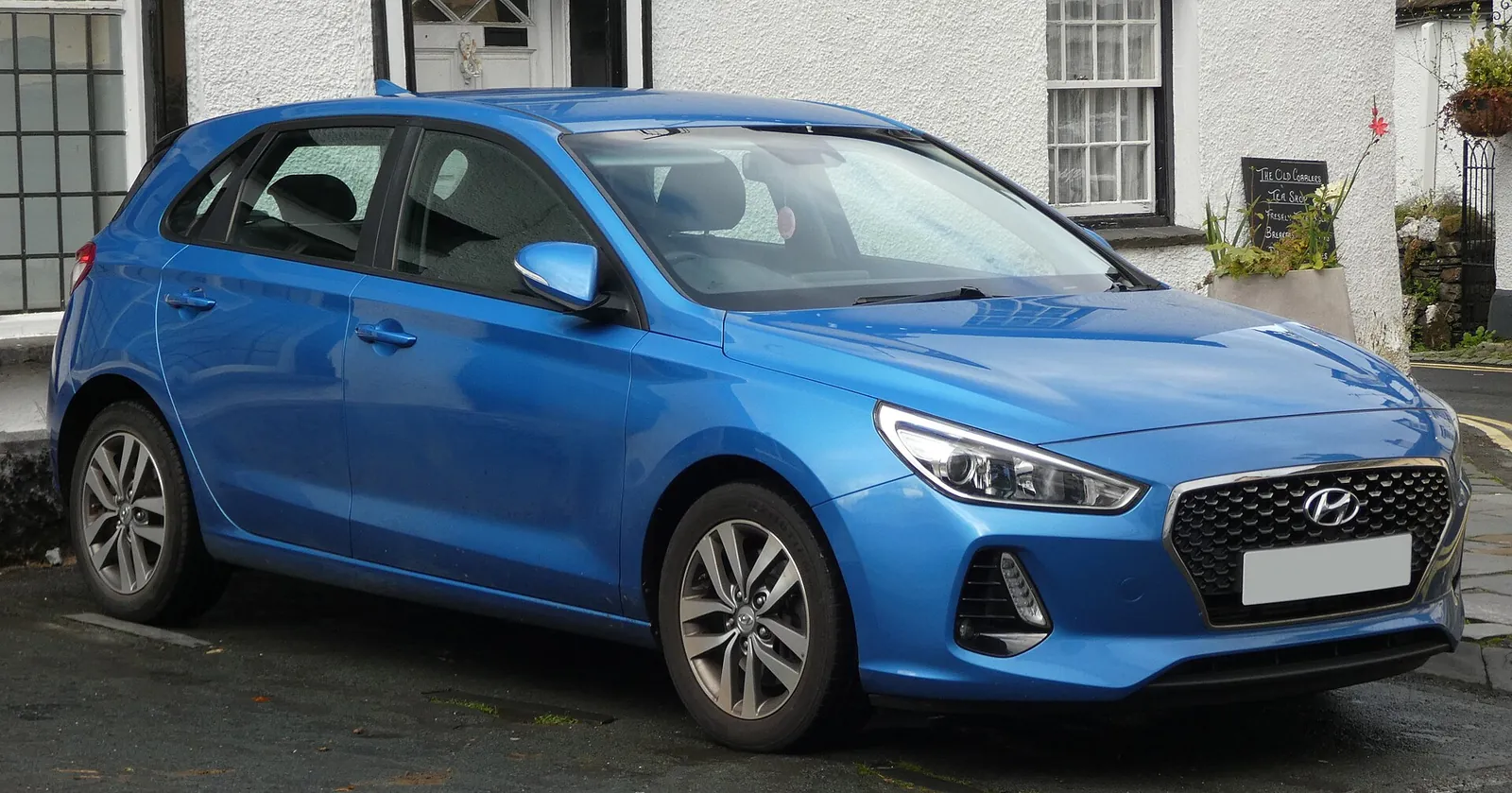
Blue third-generation Hyundai i30 five-door hatchback photographed from the front three-quarter angle

Image credit

File
File:2017 Hyundai i30 SE T-GDi - 998cc 1.0 (120PS) Petrol - Ara Blue - 10-2024, Front.jpg
Author
Harvey Bold

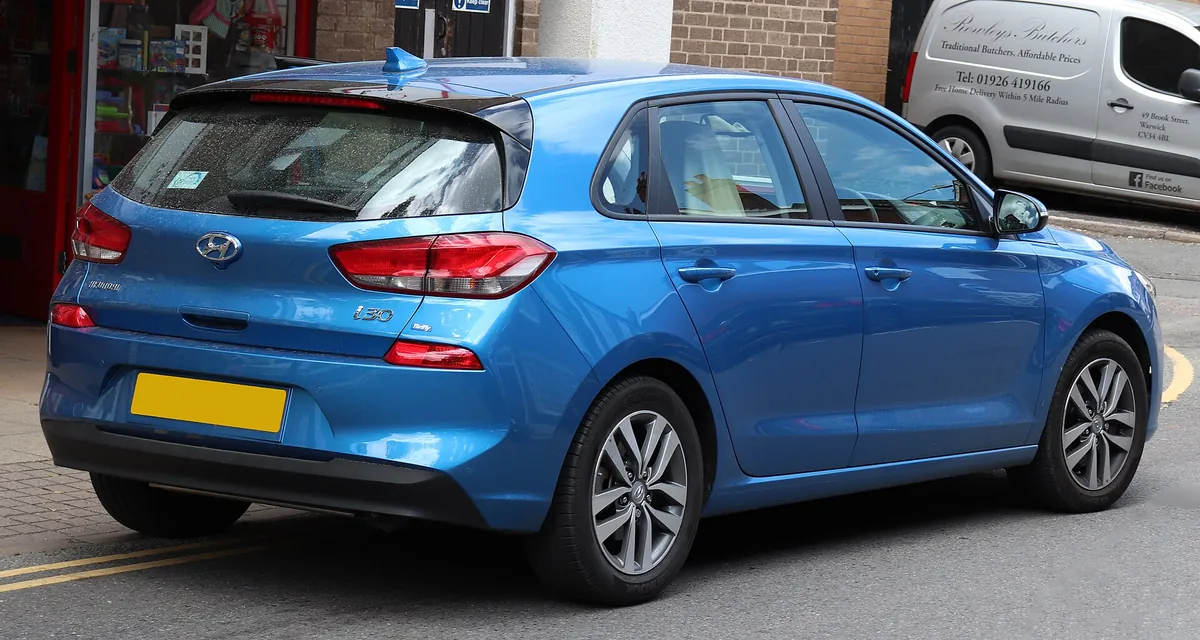
The third and current generation, unveiled at the 2016 Paris Motor Show with a new “cascading grille” that has since defined Hyundai’s whole range.[1] It comes in more body styles than any i30 before it: hatchback, estate (“Wagon”) and a fastback liftback. Once again, it wears an entirely different name in North America, sold there as the Elantra GT.

Two petrol engines are recorded here, a 1.0-litre three-cylinder and a 1.4-litre four-cylinder turbo; the performance-focused i30 N and its substantially different chassis and outputs are left for a future pass rather than folded in as another trim of this one. Dimensions and kerb weight are both published as ranges spanning body style and trim (kerb weight even spans up to the 275 PS N model), so the lowest figure in each range is recorded at generation level, not assigned to a specific trim.
Overview

Manufacturer
Hyundai
Produced
2016–present
Model code
PD
Designer
Peter Schreyer
Segment
C-segment (Europe) / Compact (US)
Positioning
Mainstream
Assembly
  • Ulsan, South Korea (2016-2023)
  • Nosovice, Czech Republic
  • Tiaret, Algeria

Dimensions

Length
4,340 mm

Hatchback figure; the Wagon is 4,585 mm and the Fastback liftback is 4,455 mm.

[1]

Width
1,795 mm

[1]

Height
1,450 mm

Published as a 1,450-1,455 mm range for the hatchback depending on trim; the Wagon is 1,475 mm and the Fastback is 1,425 mm. Lowest hatchback figure recorded here.

[1]

Wheelbase
2,650 mm

[1]

Kerb weight
1,197 kg

Published as a 1,197-1,520 kg range across the entire line-up, including the N performance model; the lowest figure is recorded here at generation level, not assigned to any one trim.

[1]

1.0 Kappa II T-GDi

Trim · 2016–present · G3LC

Power
88 kW

120 PS at 6,000 rpm, converted at 1 PS = 0.73549875 kW (88.3 kW, rounded to 88).

[1]

Torque
171 N⋅m

17.4 kgf-m at 1,500-4,500 rpm, converted at 9.80665 N per kgf (170.6 N-m, rounded to 171).

[1]

Kerb weight
Not yet available
0–100 km/h
11.1 s

[1]

Top speed
190 km/h

[1]

Fuel economy
Not yet available
CO₂
Not yet available
Drag coefficient
Not yet available
Frontal area
Not yet available
Displacement
998 cc

[1]

Boot volume
Not yet available
Engine
inline-3 turbocharged, Kappa II T-GDi · G3LC
Drivetrain
Front-wheel drive

1.4 Kappa II T-GDi

Trim · 2016–present · G4LD

Power
103 kW

140 PS at 6,000 rpm, converted at 1 PS = 0.73549875 kW (103.0 kW).

[1]

Torque
242 N⋅m

24.7 kgf-m at 1,500-3,200 rpm, converted at 9.80665 N per kgf (242.2 N-m, rounded to 242).

[1]

Kerb weight
Not yet available
0–100 km/h
8.9 s

Manual gearbox; the DCT version is quoted at 9.2s.

[1]

Top speed
210 km/h

[1]

Fuel economy
Not yet available
CO₂
Not yet available
Drag coefficient
Not yet available
Frontal area
Not yet available
Displacement
1,353 cc

[1]

Boot volume
Not yet available
Engine
inline-4 turbocharged, Kappa II T-GDi · G4LD
Drivetrain
Front-wheel drive

Sources & confidence

Every figure above carries a status. Nothing on this page is estimated without saying so, and nothing missing has been filled in with a guess.

Last verified
2026-09-24
Review status
Compiled from cited sources

Photography on this page is credited on each image. Tap theion a photograph for its author, licence and source.

References

Every sourced figure and every cited claim on this page, numbered. Wikipedia articles record the revision they were read at, because the article will have changed by the time you check it.

  1. [1]

    Hyundai i30. Wikipedia · revision 1375363372 · read 2026-09-24

    WikipediaCC BY-SA 4.0

    Single article covering all generations (FD, GD, PD) by section.