
Skip to content
Markey
Theme: System (currently light)
Hyundai badge: a stylised, slanted letter H inside an oval

Generation

Hyundai i10 (PA)

Hyundai i10 (PA), 2007-2015

Produced
2007–2015
Code
PA
Designer
Thomas Burkle
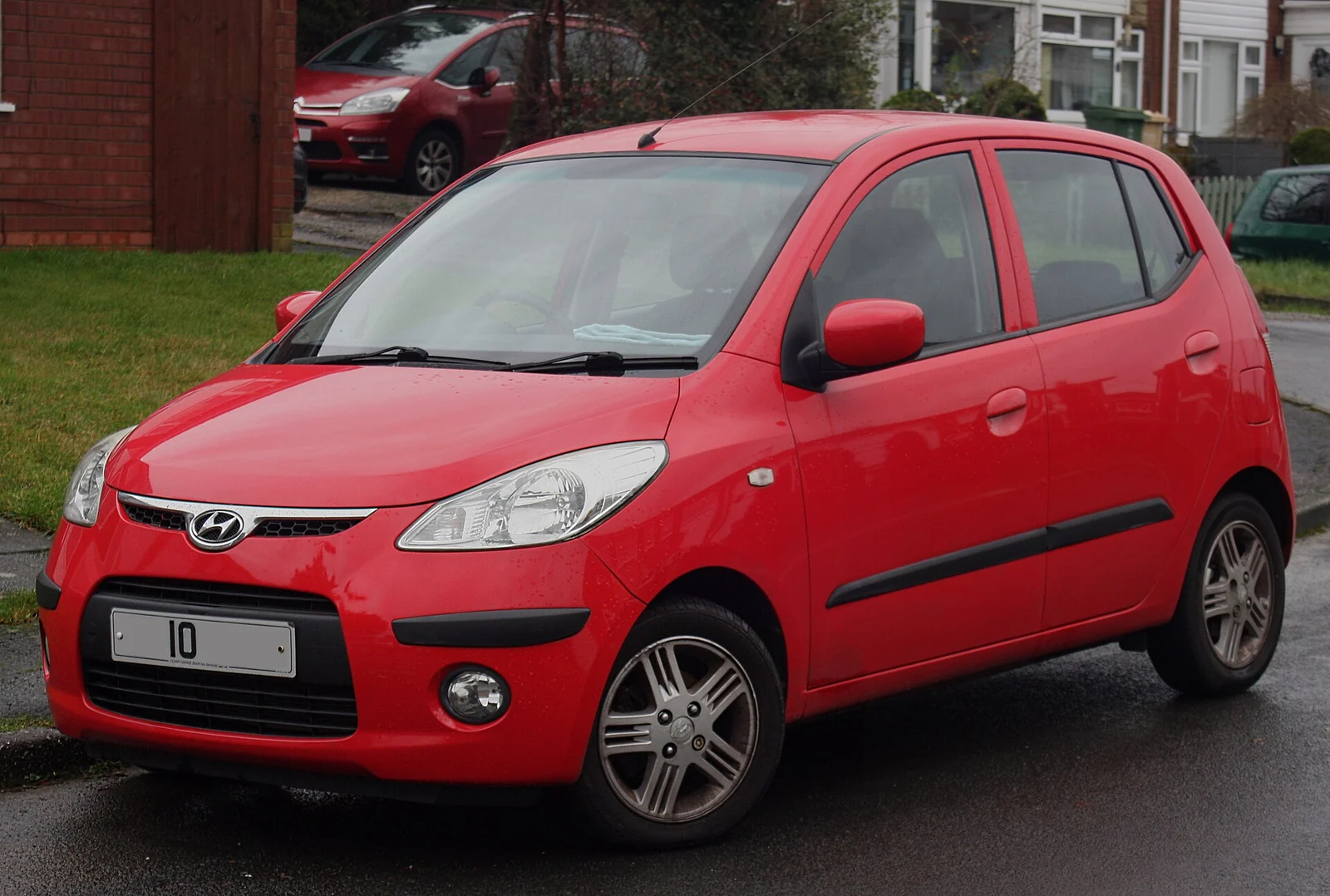
Red first-generation Hyundai i10 five-door hatchback photographed from the front three-quarter angle

Image credit

File
File:2010 Hyundai i10 Comfort - 1248cc 1.2 (85PS) Petrol - Electric Red - 12-12-2023, Front Left.jpg
Author (attribution required)
DieselFordMondeo

Body style

Powertrain

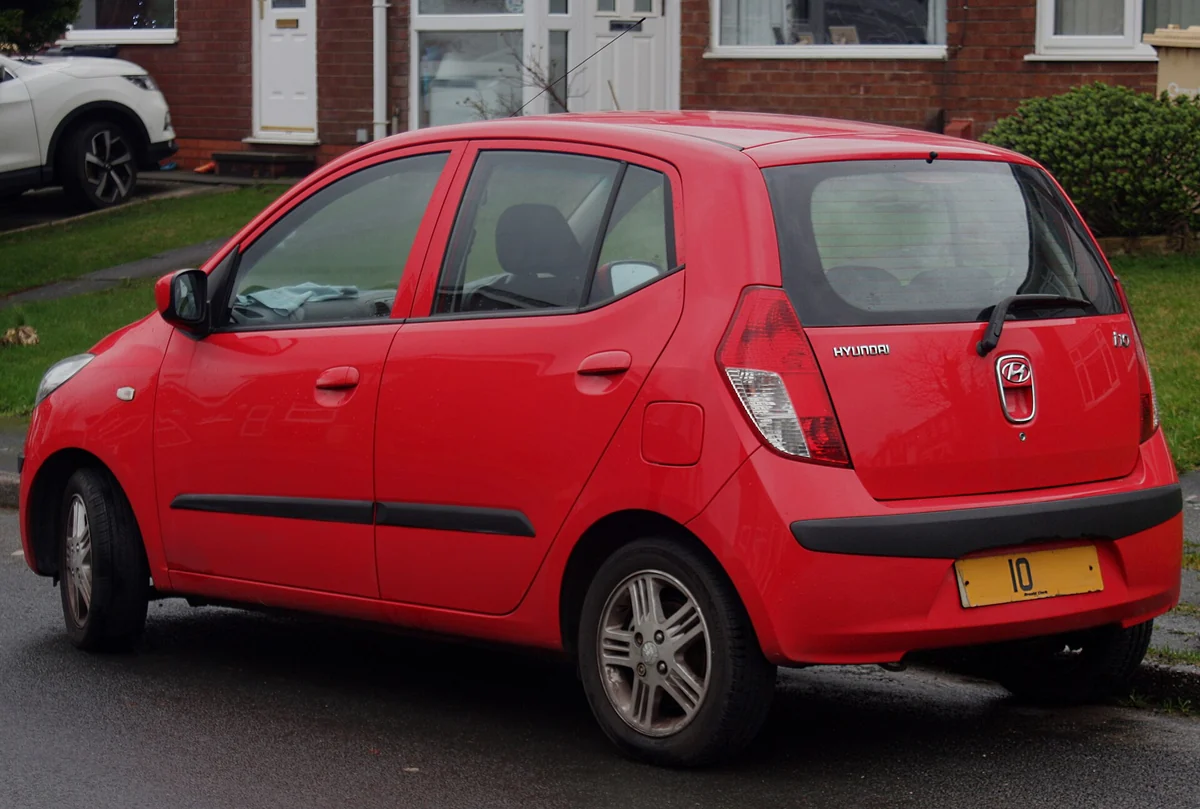
The original i10, unveiled in New Delhi in October 2007 as a replacement for the ageing Atos and developed primarily with the Indian market in mind.[1] It shared its length and wheelbase almost exactly with the Atos it replaced, but was wider and lower, and it went on to be built and sold well beyond India: in Malaysia as an Inokom, in Mexico as a Dodge, and across Europe under its own name.

Only one trim’s figures are recorded with confidence here: the 1.1-litre petrol engine’s 48 kW is stated directly in the source. A 1.2-litre Kappa engine and a 1.1-litre diesel were also offered, but the article does not give power or torque figures for either specifically enough to attach to a trim without guessing, so they are left as a gap rather than approximated from later Kappa-engine cars.
Overview

Manufacturer
Hyundai
Produced
2007–2015
Model code
PA
Designer
Thomas Burkle
Segment
A-segment (Europe) / Minicompact (US)
Positioning
Economy
Assembly
  • Chennai, India (Hyundai Motor India)
  • Ninh Binh, Vietnam (Hyundai Thanh Cong Manufacturing Vietnam)
  • Kulim, Malaysia (Inokom)

Dimensions

Length
3,565 mm

[1]

Width
1,595 mm

[1]

Height
1,550 mm

[1]

Wheelbase
2,380 mm

[1]

Kerb weight
925 kg

Published as a 925-1,040 kg range across the model line-up; the lowest figure in the range is recorded here at generation level, not assigned to any one trim.

[1]

1.1 iRDE

Trim · 2007–2013 · Epsilon

Power
48 kW

Published directly in kW; the same engine as used in the Kia Picanto and Hyundai Atos Prime/Santro Xing, tuned here for lower CO2 emissions.

[1]

Torque
Not yet available
Kerb weight
Not yet available
0–100 km/h
Not yet available
Top speed
Not yet available
Fuel economy
Not yet available
CO₂
Not yet available
Drag coefficient
Not yet available
Frontal area
Not yet available
Displacement
Not yet available
Boot volume
225 L

Stated directly in the article body; measurement basis (VDA or otherwise) is not specified.

[1]

Engine
inline-4 · Epsilon
Drivetrain
Front-wheel drive

Sources & confidence

Every figure above carries a status. Nothing on this page is estimated without saying so, and nothing missing has been filled in with a guess.

Last verified
2026-09-24
Review status
Compiled from cited sources

Photography on this page is credited on each image. Tap theion a photograph for its author, licence and source.

References

Every sourced figure and every cited claim on this page, numbered. Wikipedia articles record the revision they were read at, because the article will have changed by the time you check it.

  1. [1]

    Hyundai i10. Wikipedia · revision 1374782192 · read 2026-09-24

    WikipediaCC BY-SA 4.0

    Single article covering all generations (PA, IA/BA, AC3/AI3) by section.