
Skip to content
Markey
Theme: System (currently light)
Citroën double-chevron badge

Generation

Citroën DS

Citroën DS/ID, 1955-1975

Produced
1955–1975
Designer
Flaminio Bertoni and Andre Lefebvre; Robert Opron (1967 facelift)
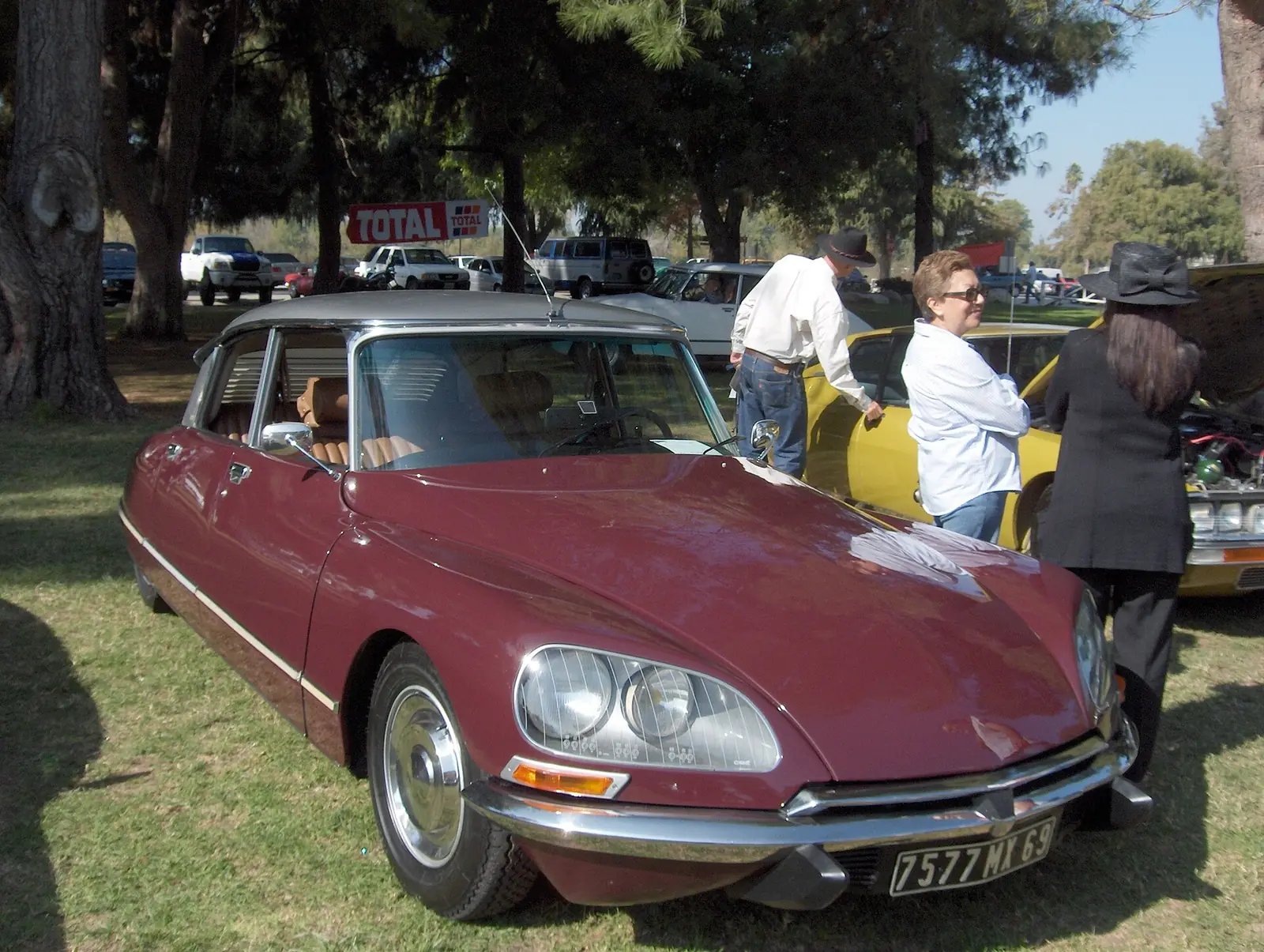
Maroon Citroën DS23 Pallas saloon photographed from the front three-quarter angle, showing its low, sculpted nose and covered rear wheel arches

Image credit

File
File:1974 Citroen DS23 Pallas.jpg
Author
PLawrence99cx
Licence
Public domain

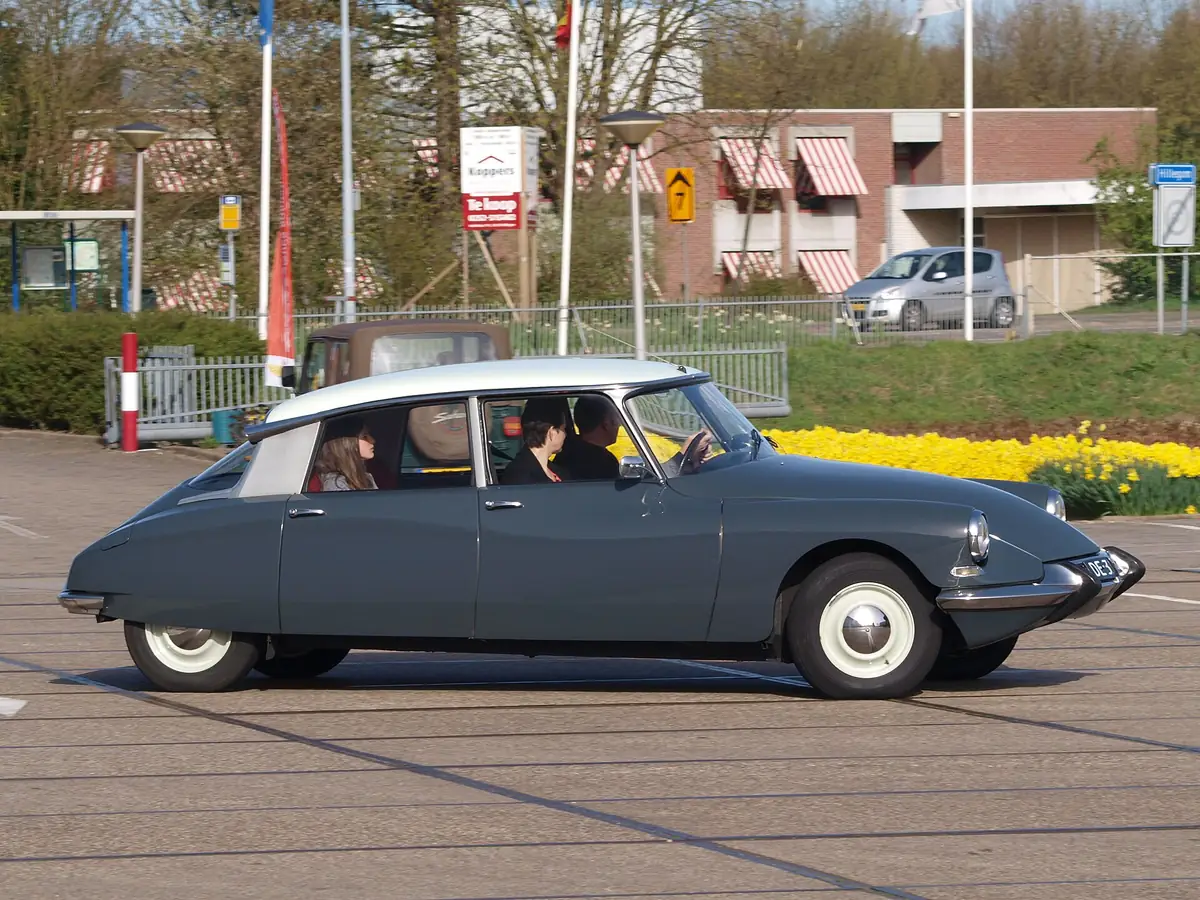
Announced in October 1955 and startling enough that Citroën reportedly took 743 orders in the first fifteen minutes of the Paris Motor Show, the DS paired a hydropneumatic suspension system (self-levelling, driver-adjustable ride height, powering the brakes, steering and clutch as well as the suspension) with a body shape so aerodynamic it still ranks well ahead of most cars built decades later on Wikipedia’s own drag-coefficient list.[1] A cheaper submodel, the ID, arrived in 1957 with the same body but a conventional clutch and less power, aimed at buyers the DS itself had priced out.

The horsepower figures recorded here span two different measurement standards without being a genuine conflict: European sources quote DIN (metric) horsepower throughout the car’s life, while the DS23’s fuel-injected engine is separately quoted at 141 hp under the American SAE gross standard for the same physical output. The DIN figure is used consistently here, matching the German-market convention this catalogue applies elsewhere. Production ran for twenty years without a true second generation (what changed was the engine, the electronics and the trim, not the car underneath), so this one entry, with its evolution recorded as trims, covers the whole run from 1955 to 1975.
Overview

Manufacturer
Citroën
Produced
1955–1975
Designer
Flaminio Bertoni and Andre Lefebvre; Robert Opron (1967 facelift)
Segment
E-segment (Europe) / Full-size (US)
Positioning
Premium
Assembly
  • Paris, France (Quai de Javel / Quai Andre-Citroen)
  • Slough, United Kingdom
  • Mangualde, Portugal
  • Heidelberg, Victoria, Australia
  • Johannesburg, South Africa
  • Koper, Yugoslavia (Cimos)

Dimensions

Length
4,826 mm

Saloon figure; the Safari estate is 4,991 mm.

[1]

Width
1,791 mm

[1]

Height
1,464 mm

Saloon figure; the Safari estate is 1,537 mm.

[1]

Wheelbase
3,124 mm

[1]

Kerb weight
1,270 kg

Saloon figure; the Safari estate is 1,384 kg.

[1]

ID 19

Trim · 1957–1969

Power
51 kW

69 hp (DIN, i.e. metric PS), converted at 1 PS = 0.73549875 kW (50.7 kW, rounded to 51). A cheaper, less powerful submodel of the DS, sharing its body but with a conventional, non-hydraulic clutch and no power steering.

[1]

Torque
Not yet available
Kerb weight
Not yet available
0–100 km/h
Not yet available
Top speed
Not yet available
Fuel economy
Not yet available
CO₂
Not yet available
Drag coefficient
0.36

Listed for the DS body shape generally, not the ID submodel specifically; the two share the same body.

[2]

Frontal area
Not yet available
Displacement
1,911 cc

[1]

Boot volume
Not yet available
Engine
inline-4
Drivetrain
Front-wheel drive

DS 19

Trim · 1955–1968

Power
55 kW

75 hp (DIN, i.e. metric PS) as claimed at launch, converted at 1 PS = 0.73549875 kW (55.2 kW, rounded to 55). A 1961 update with a Weber twin-choke carburettor and higher compression raised this to a claimed 83 hp DIN (61.0 kW), which is not this figure.

[1]

Torque
Not yet available
Kerb weight
Not yet available
0–100 km/h
Not yet available
Top speed
Not yet available
Fuel economy
Not yet available
CO₂
Not yet available
Drag coefficient
0.36

[2]

Frontal area
Not yet available
Displacement
1,911 cc

[1]

Boot volume
Not yet available
Engine
inline-4
Drivetrain
Front-wheel drive

DS 21

Trim · 1965–1972

Power
78 kW

106 hp DIN (metric PS) for the carburetted version at introduction, converted at 1 PS = 0.73549875 kW (78.0 kW). Power increased again from 1970 with the option of Bosch electronic fuel injection, one of the first mass-market applications of the technology; that later figure is not recorded here.

[1]

Torque
Not yet available
Kerb weight
Not yet available
0–100 km/h
Not yet available
Top speed
Not yet available
Fuel economy
Not yet available
CO₂
Not yet available
Drag coefficient
0.36

[2]

Frontal area
Not yet available
Displacement
2,175 cc

[1]

Boot volume
Not yet available
Engine
inline-4
Drivetrain
Front-wheel drive

DS 23 ie

Trim · 1973–1975

Power
96 kW

The most powerful production DS: 130 hp DIN (metric PS), converted at 1 PS = 0.73549875 kW (95.6 kW, rounded to 96). The same engine is also quoted at 141 hp SAE gross, a different measurement standard for the same physical engine, not a disagreement between sources; the DIN figure is used here as the European home-market standard.

[1]

Torque
Not yet available
Kerb weight
Not yet available
0–100 km/h
Not yet available
Top speed
Not yet available
Fuel economy
Not yet available
CO₂
Not yet available
Drag coefficient
0.36

[2]

Frontal area
Not yet available
Displacement
2,347 cc

[1]

Boot volume
Not yet available
Engine
inline-4, Bosch electronic fuel injection
Drivetrain
Front-wheel drive

Sources & confidence

Every figure above carries a status. Nothing on this page is estimated without saying so, and nothing missing has been filled in with a guess.

Last verified
2026-09-24
Review status
Compiled from cited sources

Photography on this page is credited on each image. Tap theion a photograph for its author, licence and source.

References

Every sourced figure and every cited claim on this page, numbered. Wikipedia articles record the revision they were read at, because the article will have changed by the time you check it.

  1. [1]

    Citroën DS. Wikipedia · revision 1374322339 · read 2026-09-24

    WikipediaCC BY-SA 4.0

  2. [2]

    List of automobile drag coefficients. Wikipedia · revision 1360737555 · read 2026-08-17

    WikipediaCC BY-SA 4.0Cited by the specifications

    The aerodynamic source named in several hundred production and concept vehicles, 1921 to 2024.