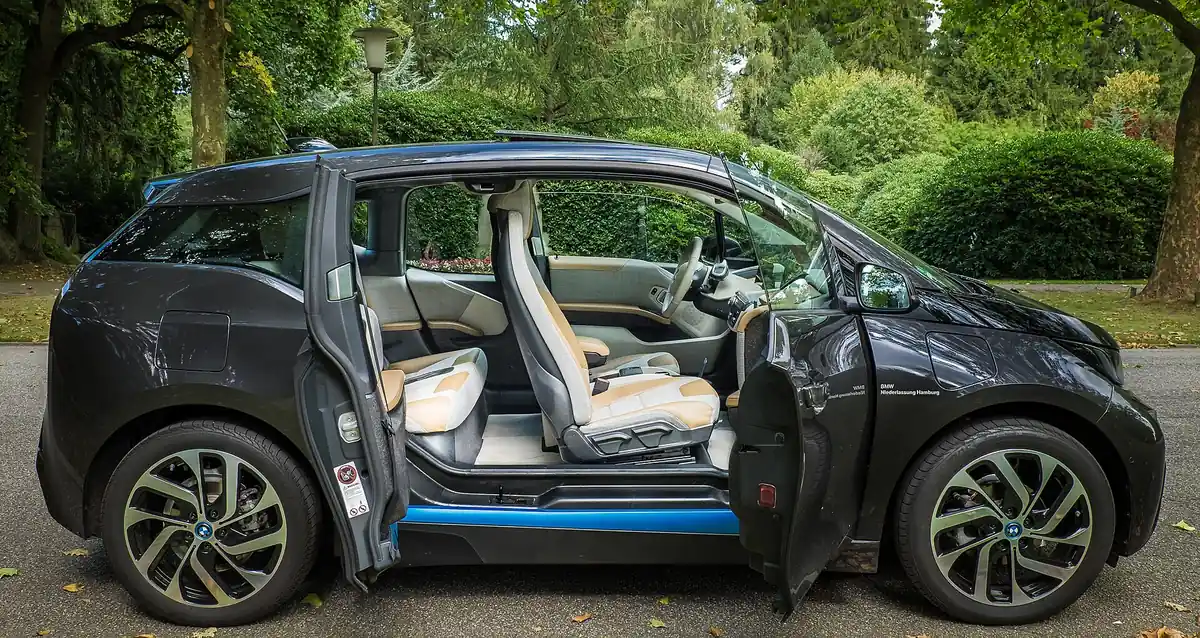
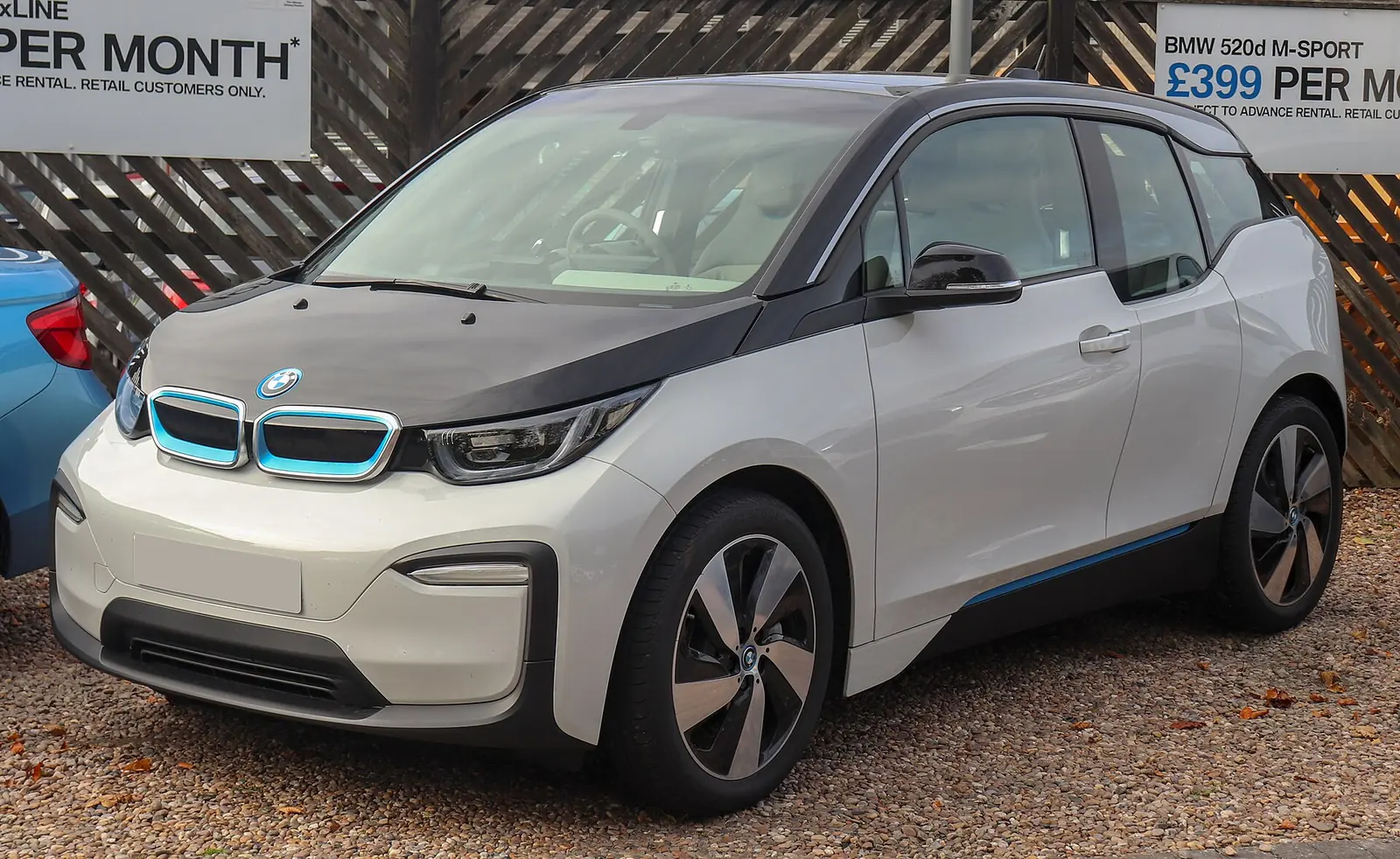
Launched in September 2013 after a concept-car preview in 2011, the i3 was built around what BMW called LifeDrive: an aluminium “Drive” chassis carrying the battery, motor and crash structure, topped by a carbon-fibre “Life” passenger cell.[1] The construction let BMW keep the car light despite the battery, and gave it a shape unlike anything else BMW sold: rear-hinged doors with no B-pillar.
Three trims are recorded here, spanning the car’s battery upgrades and its one genuinely different powertrain option. The base i3 used a 125 kW rear motor and an 18.2 kWh usable battery at launch; the optional REx variant added a 647 cc two-cylinder engine, borrowed from a BMW maxi-scooter and derated to meet emissions rules, that charged the battery but never drove the wheels; its own power output is recorded on the engine block, but it is never added to the motor’s 125 kW, because the two do not combine into one crankshaft figure. The sportier i3s, added for 2018 on a larger 120 Ah battery, is recorded at its highest published output; the ordinary i3 on the same battery made slightly less.
The REx’s all-electric range (72 miles/115.87 km, before the generator starts) and its total range with the generator running (150 miles/241.40 km) are two different quantities. This entry stores the former as the electric range and states the latter only in a note, rather than conflating a battery-only figure with a combined one.