Skip to content
Markey
Theme: System (currently light)
The Audi emblem: four interlocking rings in a row

Generation

Audi Q7 (4L)

Audi Q7 (4L), 2005-2015

Produced
2005–2015
Code
4L
Designer
Satoshi Wada
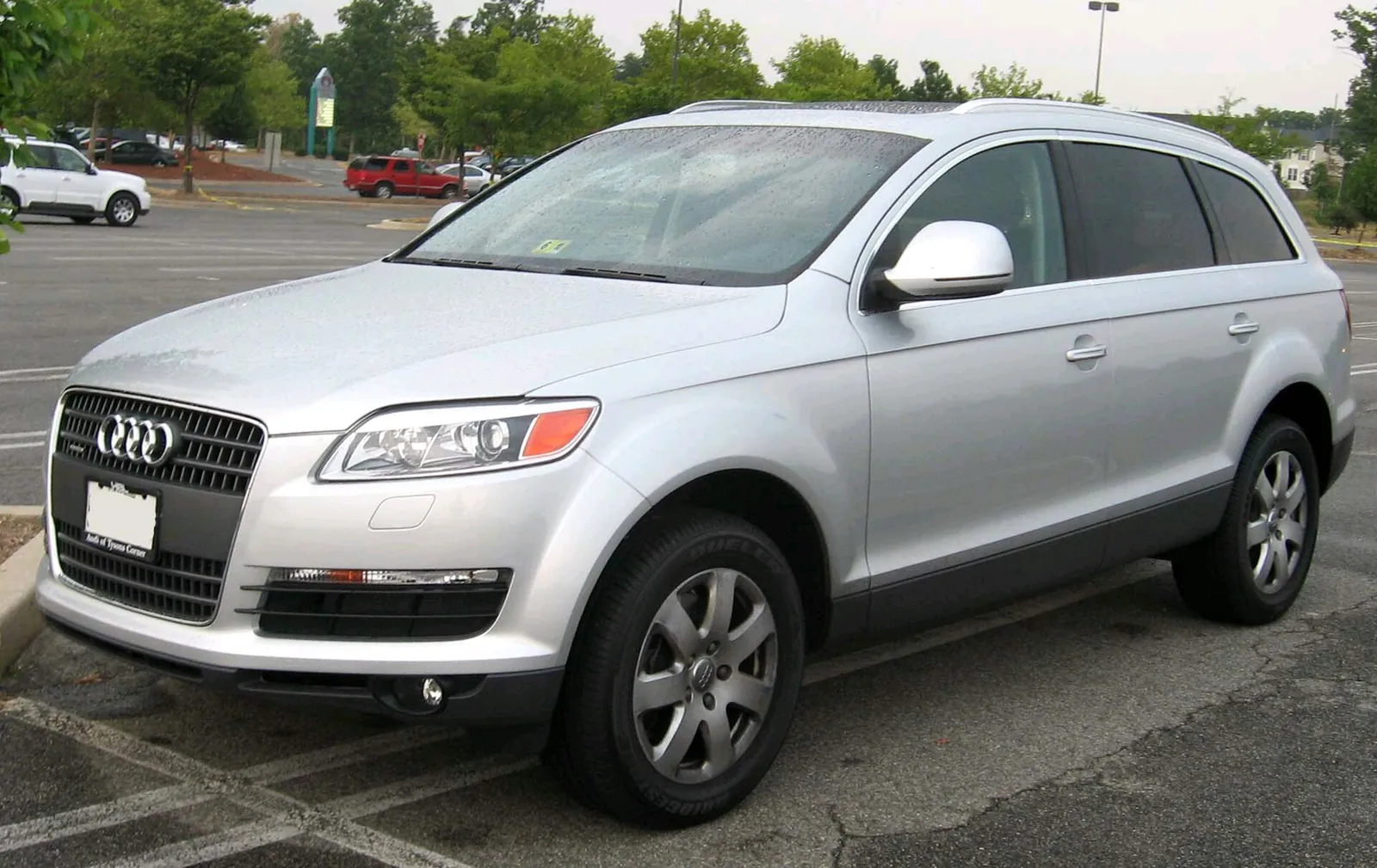
Silver first-generation Audi Q7 photographed from the front three-quarter angle

Image credit

File
File:2007-Audi-Q7.jpg
Author
IFCAR
Licence
Public domain

Body style

Powertrain

Drivetrain

The Typ 4L introduced Audi to the SUV market and, in 2008, put the only series-production V12 diesel ever fitted to a passenger car (a twin-turbo 5.9-litre making 500 PS and 1,000 N⋅m) into a full-size crossover.[1] Despite lacking a low-range transfer case, it carried a Torsen-based quattro system with a 42/58 front-to-rear torque split.

Weight is the figure that needed a judgement call here. The generation infobox publishes a single 2,205-2,605 kg range for the entire engine line-up (six-cylinder diesel to V12) without saying which figure belongs to which engine. This entry assigns the low end to the lightest trim recorded (the 3.0 TDI) and the high end to the heaviest (the V12 TDI), which is a reasonable mapping given the range’s size but not a manufacturer statement that those two engines specifically weigh exactly those two figures; the note on each trim says so.

Overview

Manufacturer
Audi
Produced
2005–2015
Model code
4L
Designer
Satoshi Wada
Segment
E-SUV (Europe) / Full-size SUV (US)
Positioning
Premium
Assembly
  • Bratislava, Slovakia (Volkswagen Bratislava Plant)
  • Aurangabad, India (Audi India, CKD)
  • Kaluga, Russia (Volkswagen Group Rus)

Dimensions

Length
5,085 mm

[1]

Width
1,984 mm

[1]

Height
1,737 mm

[1]

Wheelbase
3,002 mm

[1]

Kerb weight
2,205 kg

Infobox gives a 2,205-2,605 kg range across the whole engine line-up without attributing each figure to an engine. The lower figure is recorded here.

[1]

3.0 TDI

Trim · 2007–2009

Power
176 kW

240 PS at 4,000-4,400 rpm, converted at 1 PS = 0.73549875 kW.

[1]

Torque
550 N⋅m

At 2,000-2,250 rpm.

[1]

Kerb weight
2,205 kgEstimated

Low end of the generation's published 2,205-2,605 kg weight range, applied here to the lightest engine in the line-up rather than taken from a per-engine figure.

[1]

0–100 km/h
Not yet available
Top speed
Not yet available
Fuel economy
Not yet available
CO₂
Not yet available
Drag coefficient
Not yet available
Frontal area
Not yet available
Displacement
2,967 cc

[1]

Boot volume
Not yet available
Seats
7
Engine
V6 turbo
Drivetrain
All-wheel drive

V12 TDI

Trim · 2008–2012

Power
368 kW

500 PS at 3,750 rpm, converted at 1 PS = 0.73549875 kW. The world's first series-production passenger-car V12 diesel.

[1]

Torque
1,000 N⋅m

At 1,750-3,250 rpm.

[1]

Kerb weight
2,605 kgEstimated

High end of the generation's published 2,205-2,605 kg weight range, applied here to the heaviest engine in the line-up rather than taken from a per-engine figure.

[1]

0–100 km/h
5.5 s

[1]

Top speed
Not yet available
Fuel economy
Not yet available
CO₂
Not yet available
Drag coefficient
Not yet available
Frontal area
Not yet available
Displacement
5,934 cc

[1]

Boot volume
Not yet available
Seats
7
Engine
V12, twin-turbo
Drivetrain
All-wheel drive

Sources & confidence

Every figure above carries a status. Nothing on this page is estimated without saying so, and nothing missing has been filled in with a guess.

Last verified
2026-09-08
Review status
Compiled from cited sources

Photography on this page is credited on each image. Tap theion a photograph for its author, licence and source.

References

Every sourced figure and every cited claim on this page, numbered. Wikipedia articles record the revision they were read at, because the article will have changed by the time you check it.

  1. [1]

    Audi Q7. Wikipedia · revision 1372572162 · read 2026-09-08

    WikipediaCC BY-SA 4.0