
Cendol Jelly
Cendol Jelly is a other with no alcohol in it, used in 1 drink on this site.

CC BY-SA 4.0 · Cropped, white-balanced, graded and re-encoded to WebP by eXir.
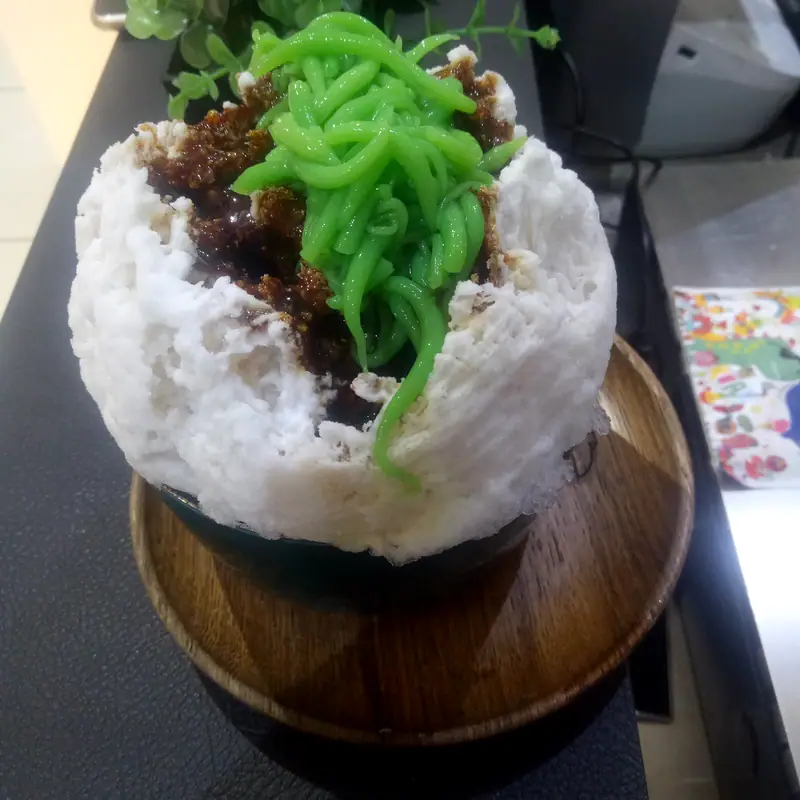
Curly green cendol jelly strands piled on shaved ice in a bowl
Making it
refrigerated in cold water, sealed. A shelf life here is conservative bar practice rather than a food-safety authority's figure, and it assumes the preparation was bottled clean and cold.
Sold frozen, ready-cut, at Southeast Asian grocers; fresh-made jelly is softer and greener than most frozen bags.
Composition
Derived from the ingredient records. Mass and volume are summed over the lines this recipe names rather than measured. The pandan is blended and strained for its colour and aroma and carries no mass into the yield. The starches take up real volume as they set rather than merely dissolving into the cooking water, so the yield is stated a little above the water line alone; the density that follows from it, 1.15 g/ml, is marked estimated for that reason rather than measured.
Used in these drinks
most firstMethod
3 steps · 20mBlend the 20 g pandan leaf with the 150 ml water and strain out the fibre, keeping the pale green liquid.
Whisk the 100 g rice flour and the 15 g dry tapioca pearls into the 400 ml water and the pandan liquid, then cook over medium heat, stirring constantly, until it thickens into a smooth, glossy, translucent paste.
Push the hot paste through a colander or a cendol mould directly into a bowl of iced water, letting it fall in short strands that firm up on contact with the cold water.
The amounts above are the batch this recipe makes, not a portion of it, and they do not scale with any drink count, because a preparation is made once and then measured out of.