
Japanese Highball
Japanese whisky and soda water over hard ice, built for the pour rather than mixed for a ratio.
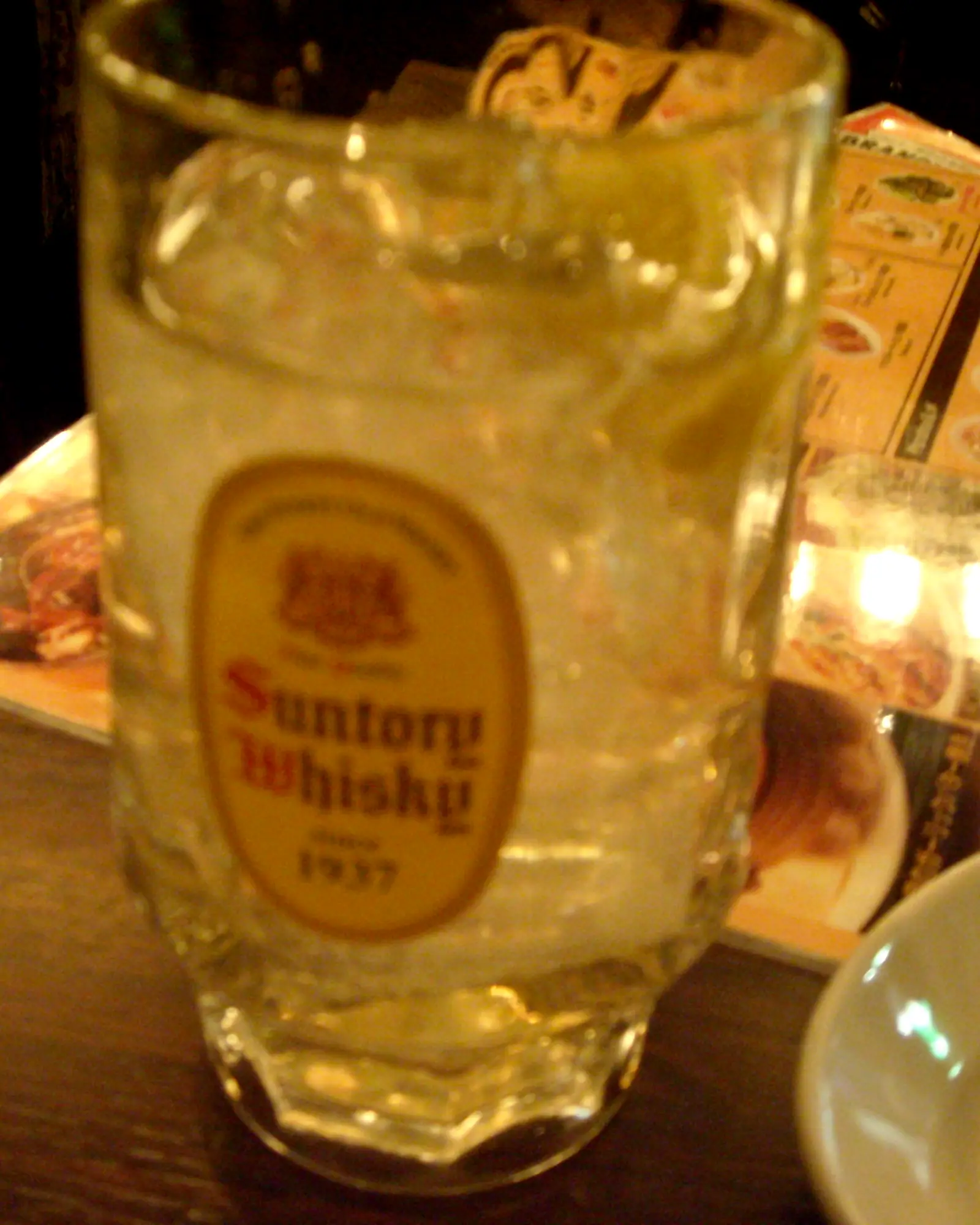

CC BY-SA 3.0 · Cropped, white-balanced, graded and re-encoded to WebP by eXir.
A whisky highball in a tall glass with a Suntory Whisky glass label, pale gold over ice with condensation on the glass
Serving
Drink spec, per drink
Every figure above is per drink and does not move with the count, which is what makes the two service modes comparable. Sugar per litre, strength and standard drinks stay in the units their own authorities publish, because they are figures for comparing rather than for pouring. Dilution is modelled rather than measured, as a fraction of the poured volume before any ice; dotted figures descend from that estimate.
Diet and allergen labels are computed from the ingredients listed on this page and nothing else. They cannot account for cross-contamination or for the particular product you buy, and they are not medical or safety guidance.
Ingredients
 45 ml Japanese whisky
 90 ml soda water
- 45 ml Japanese whisky
- 90 ml soda water
Glass
Vessel
135 ml of liquid plus 200 ml of cubed ice occupies about 335 ml, inside the 350 ml the glass holds. The build fails if a recipe ever exceeds its stated vessel.
A batch needs a vessel that closes and fits a fridge shelf.
Method
5 steps · 1m 40sChill the highball glass.
Pack the chilled glass to the rim with cubed ice.
Large, dense, hand-cracked cubes packed tightly to the rim melt far slower than a loose scoop from a bin, which is most of what separates a good highball from a watery one; the ratio of whisky to soda tells only half the story next to the ice it is poured over.
Pour in the 45 ml Japanese whisky.
Stir once, lifting the ice rather than crushing it, to bring the whisky up through the cubes.
Top with the 90 ml soda water, poured gently down a bar spoon so it keeps its fizz, and stir once more, briefly.
Common pitfallPouring the soda in hard, or stirring more than once or twice after it lands, drives off most of its carbonation before the first sip. It goes in gently down a bar spoon, and the stir is brief enough to lift the whisky off the bottom without beating out the fizz.
Keeping and make-ahead
Built to order glass by glass; the soda is poured fresh for every drink and the ice is packed just before it goes in, both of which are the point of the build.
About
Whisky and soda over ice, a nineteenth-century British drink that Japan adopted, nearly forgot, and then re-exported as a bar technique.
The build itself is not Japanese in origin. Brandy and soda was a fashionable English drink from the early nineteenth century, and when the Napoleonic wars cut off cognac supply, Scotch took its place; by 1900, by the cocktail historian David Wondrich's account, the Scotch highball was the most fashionable drink in the United States 1.
What Japan did was give the same two ingredients a national home. Shinjiro Torii founded Suntory's Yamazaki distillery in 1923, the country's first commercial whisky distillery, and after the Second World War the company opened Torys Bars serving whisky highballs to office workers across major cities (eventually more than two thousand branches nationwide) 2. That made the highball an inexpensive, everyday drink at a time when whisky itself was hard to get, rather than a connoisseur's pour.
The drink then fell out of fashion in Japan through the final decades of the twentieth century, kept alive mainly by bartenders who had learned it the old way 2. Its return came from outside: as the international craft cocktail movement began paying attention to Japanese bars in the 2000s, it found highball technique preserved there in unusual detail (precise ice, a fixed pour and a particular way of stirring) and treated bartenders such as Kazunari Maguchi as specialists in a serious drink rather than a simple one 2. Suntory backed the revival directly, putting highballs on tap in izakayas by 2010 and, in 2016, releasing Toki, a blend built specifically to hold its balance against ice and soda 2. The result is a drink whose ingredients are British and American in origin but whose technique, as served today, is understood internationally as specifically Japanese 1.
- 1History of the highball, Japan's popular whisky and soda cocktailscmp.com
- 2High Times: The Rise and Rise of the Japanese Whisky Highballbroadsheet.com.au