
Tom Collins
Gin, lemon and sugar shaken, then topped with soda water in a tall glass.
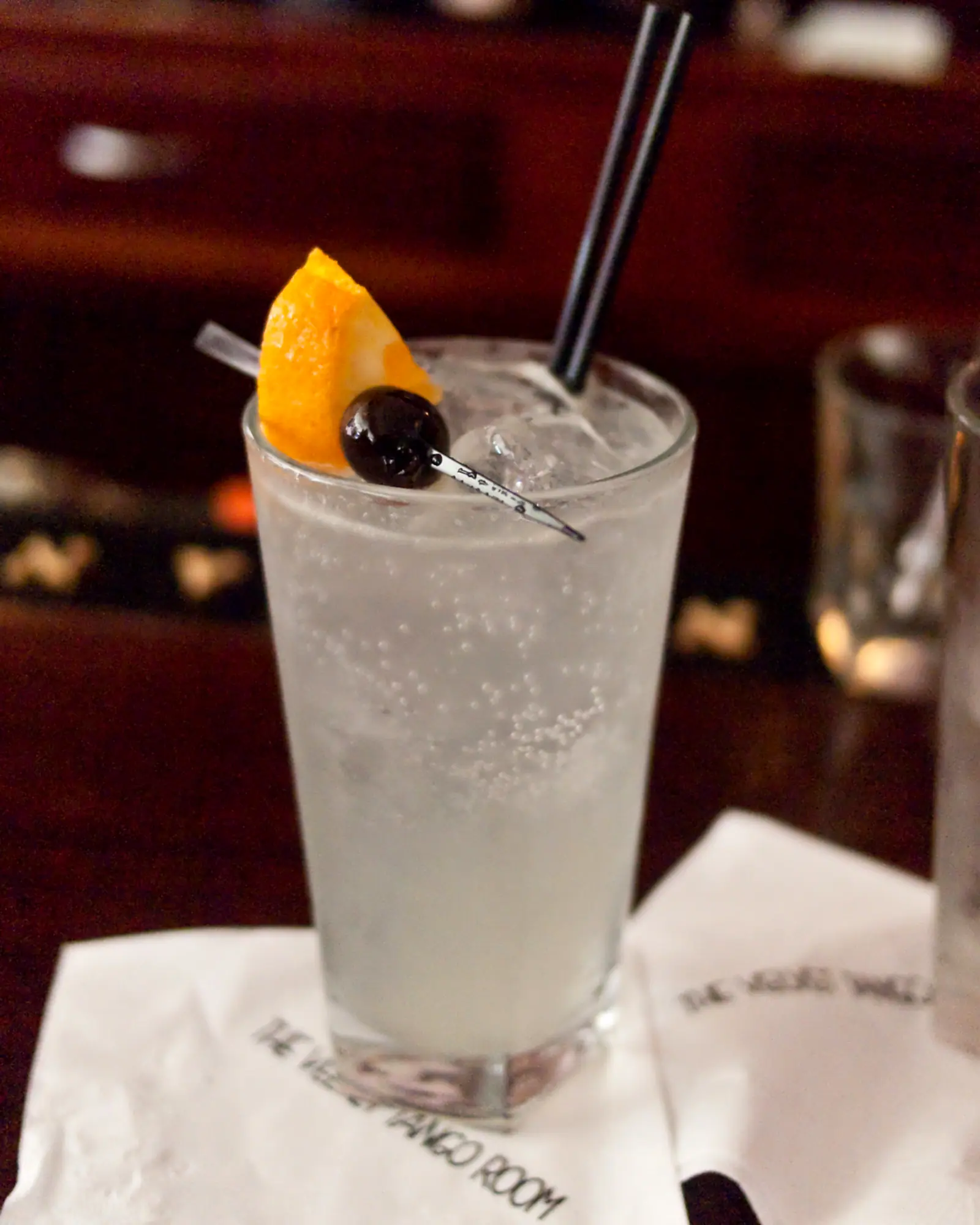

CC BY-SA 2.0 · Cropped, white-balanced, graded and re-encoded to WebP by eXir.
A Tom Collins in a tall glass, pale and fizzing, garnished with an orange wedge and a cherry on a pick, with a straw
Serving
Drink spec, per drink
Every figure above is per drink and does not move with the count, which is what makes the two service modes comparable. Sugar per litre, strength and standard drinks stay in the units their own authorities publish, because they are figures for comparing rather than for pouring. Dilution is modelled rather than measured, as a fraction of the poured volume before any ice; dotted figures descend from that estimate.
Diet and allergen labels are computed from the ingredients listed on this page and nothing else. They cannot account for cross-contamination or for the particular product you buy, and they are not medical or safety guidance.
Ingredients
 23 ml fresh lemon juice
 45 ml London dry gin
 15 ml simple syrup
 45 ml soda water
 1 cherry a maraschino cherry (4 g)
- 23 ml fresh lemon juice
- 45 ml London dry gin
- 15 ml simple syrup
- 45 ml soda water
- 1 cherry a maraschino cherry (4 g)
- ~41 ml water
Glass
Vessel
169 ml of liquid plus 230 ml of cubed ice occupies about 399 ml, inside the 400 ml the glass holds. The build fails if a recipe ever exceeds its stated vessel.
A batch needs a vessel that closes and fits a fridge shelf.
Method
5 steps · 1m 52sSqueeze the 23 ml fresh lemon juice and strain out the pips and pulp.
Combine the 45 ml London dry gin, the 23 ml fresh lemon juice and the 15 ml simple syrup in a shaker and fill it with cubed ice.
Shake for 12s until the tin frosts over.
The gin, lemon and syrup are shaken first and strained onto fresh ice, then the soda goes in last and unshaken: carbonation and a shaker tin have never mixed, so the fizz is added after the part that needs agitation is already done.
Strain into a Collins glass filled with fresh cubed ice.
Top with the 45 ml soda water and drop in the cherry.
Common pitfallThis drink and a Whiskey Sour use the same ratio of spirit to citrus to sugar; the only real difference is the soda top and the taller glass it goes with. Confusing the two changes what fills the rest of the glass, not the balance of the shake itself.
Keeping and make-ahead
Batched ahead, this keeps sealed and cold. The water line the engine adds is the dilution figure from the spec panel, not a rule of thumb.
About
Gin, lemon and sugar shaken and topped with soda, first printed in 1876 under a name borrowed from a nationwide practical joke.
The drink descends from the John Collins, a gin punch attested by 1869 and attributed to a headwaiter of that name at Limmer's Old House, a London hotel and coffee house active in the early nineteenth century 1. That 1869 recipe specifically called for Old Tom gin, a slightly sweetened style distinct from the London dry gin common today, and it is this ingredient, not a different inventor, that drink historian David Wondrich points to as the likely source of the new name 1.
The name's spread was helped along by an unrelated event: in 1874, a citywide hoax swept New York and then other American cities, in which one person would goad a friend into angrily demanding "Tom Collins" from a bartender, who was in on the joke and would point the victim toward a stranger 2. Newspapers ran along with it, printing fabricated sightings and even songs about the fictional Tom Collins, and the name became a piece of shared slang before it was attached to any drink 2. Jerry Thomas printed the first known recipe under the name "Tom Collins" in the 1876 edition of his bartending guide, by which point the joke and the Old Tom gin recipe had merged into one name 2 1.
The naming has since drifted again: "Tom Collins" is now used for the gin version specifically, while "John Collins" has come to mean the same build made with a different base spirit, most often whiskey. That is close to the reverse of how the two names first split apart 1.
- 1John Collins (cocktail)en.wikipedia.org
- 2The Great Tom Collins Hoax of 1874distilledhistory.com