
Ti Punch
Rhum agricole, cane syrup and a twist of lime, built with no ice and no measuring.
CC BY-SA 4.0 · Cropped, white-balanced, graded and re-encoded to WebP by eXir.
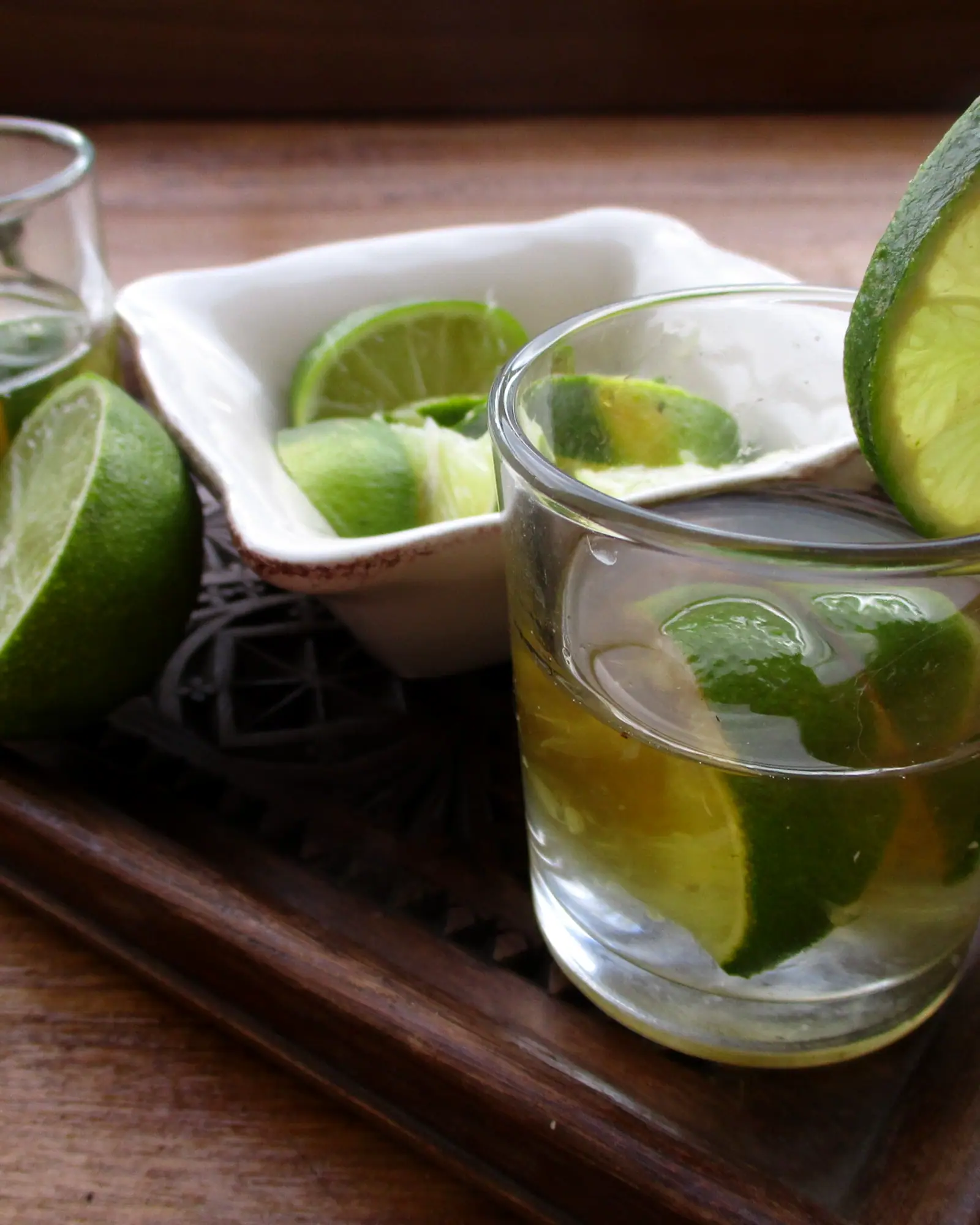
A Ti-Punch in a rocks glass, pale gold rhum agricole with a wedge of lime, surrounded by fresh limes
Serving
Drink spec, per drink
Every figure above is per drink and does not move with the count, which is what makes the two service modes comparable. Sugar per litre, strength and standard drinks stay in the units their own authorities publish, because they are figures for comparing rather than for pouring.
Diet and allergen labels are computed from the ingredients listed on this page and nothing else. They cannot account for cross-contamination or for the particular product you buy, and they are not medical or safety guidance.
Ingredients


Glass
Vessel
60 ml of liquid, served without ice, inside the 300 ml the glass holds. The build fails if a recipe ever exceeds its stated vessel.
A batch needs a vessel that closes and fits a fridge shelf.
Method
2 steps · 40sCut a small piece from the ½ lime (15 g) and twist it over the glass to release its oil, then drop it in.
Add the 10 ml demerara syrup and the 50 ml rhum agricole blanc, and stir briefly with a swizzle stick or spoon. No ice goes in the glass.
Tradition sets out the 50 ml rhum agricole blanc, the 10 ml demerara syrup and the lime and leaves each drinker to stir their own glass to taste rather than serving it pre-mixed, summed up in the island phrase "chacun prépare sa propre mort" (each prepares their own death).
Common pitfallSqueezing the lime hard enough to tear the pith brings its bitterness into a drink with almost nowhere to hide it; the wedge is meant to be twisted for its oil and juice, not crushed.
Keeping and make-ahead
The whole point of the drink is that each glass is built to order at the table; there is nothing here that benefits from batching.
About
Rhum agricole, cane syrup and a twist of lime built with no ice, said to descend from a drink sugarcane field workers took for quick fortification in the French Caribbean and traditionally mixed by the drinker rather than the server.
The drink's Creole name means "small punch," a reference to its origin among sugarcane field workers on Martinique and Guadeloupe, who are described as drinking it for a quick lift of sugar and alcohol during long days of labour rather than as a leisure drink 1. It predates ice being widely available in the region, which is why the classic build has never included any 2.
The rhum it is built on is specific to the style. Rhum agricole is distilled from fresh-pressed cane juice rather than the molasses most rum elsewhere is made from, and it is most closely associated with Martinique, where it carries its own appellation controls 1.
The drink's defining custom is that it is not made for the drinker but by them. The bartender or host sets out the rum, the cane syrup, the lime and the glass and leaves each person to build their own to taste, a habit summed up in the island phrase "chacun prépare sa propre mort" ("each prepares their own death") 2. That same self-service tradition is recorded independently in both regional and outside accounts of the drink, which agree that no fixed ratio governs it the way one governs most cocktails 1.
- 1Where There's Rhum, There's Ti' Punchpunchdrink.com
- 2Ti' punchen.wikipedia.org