
Sugarcane Juice
Cane pressed fresh with lime and ginger, over ice.

CC BY-SA 4.0 · Cropped, white-balanced, graded and re-encoded to WebP by eXir.
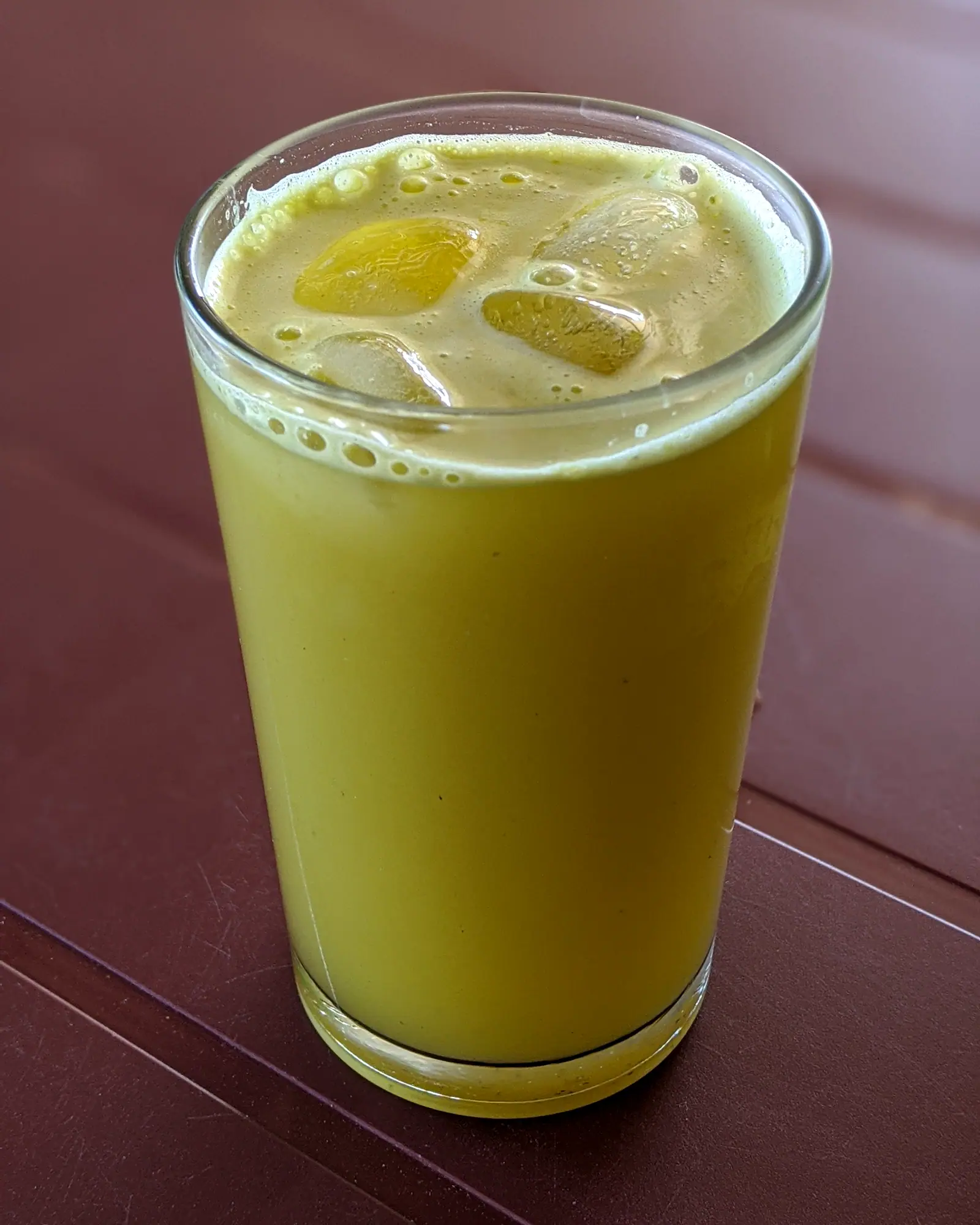
A tall glass of pale green-gold sugarcane juice with lime wedges and ice, photographed from above at an angle
Serving
Drink spec, per drink
Every figure above is per drink and does not move with the count, which is what makes the two service modes comparable. Sugar per litre, strength and standard drinks stay in the units their own authorities publish, because they are figures for comparing rather than for pouring.
Diet and allergen labels are computed from the ingredients listed on this page and nothing else. They cannot account for cross-contamination or for the particular product you buy, and they are not medical or safety guidance.
Ingredients
 5 g fresh ginger
 130 ml fresh sugarcane juice
 10 ml fresh lime juice
- 5 g fresh ginger
- 130 ml fresh sugarcane juice
- 10 ml fresh lime juice
Glass
Vessel
140 ml of liquid plus 230 ml of cubed ice occupies about 370 ml, inside the 400 ml the glass holds. The build fails if a recipe ever exceeds its stated vessel.
A batch needs a vessel that closes and fits a fridge shelf.
Method
2 steps · 1m 50sFeed the cane through a press with the 5 g fresh ginger, straining out the fibre.
Stir the pressed 130 ml fresh sugarcane juice with the 10 ml fresh lime juice in a glass filled with ice.
Ginger is fed through the press alongside the cane rather than added as a separate juice, so its heat comes through diffused rather than as a sharp, separate note.
Common pitfallPressed cane juice starts to ferment and turn within a couple of hours at room temperature, which is why street presses everywhere the drink is sold work to order rather than holding a jug of it.
Keeping and make-ahead
Batched ahead, this keeps sealed and cold. The water line the engine adds is the dilution figure from the spec panel, not a rule of thumb.
About
A fresh-pressed cane drink sold from street presses across the tropics, drawing on a sugarcane tradition in South and Southeast Asia that predates the refined sugar the cane is better known for producing.
Sugarcane was already being grown for its juice across South and Southeast Asia for centuries before it was processed into crystallised sugar, which is the older use of the plant 1. The food historian Richard Foss traces India's documented relationship with cane back further still: citing the Indian historian Ziauddin Barani, Foss notes that a 1316 decree by a Delhi sultan banning the distillation of sugarcane spirit is itself evidence the practice (and by extension cane processing more broadly) was established well before that date, since a ruler generally only outlaws something already in use 2.
Fresh-pressed juice rather than the crystallised product remains the more common street drink across much of the region today, sold from cane presses in India, Pakistan and neighbouring countries, typically finished with lime and sometimes ginger 1. The practice is not confined to South Asia: an inscription from 9th-century Java records a sweet drink called Nalaka Rasa, "sugarcane juice," suggesting the same fresh-pressed tradition took hold independently across the cane-growing regions of Southeast Asia at a comparably early date 1. Regional versions today vary in what is added at the press: lime and ginger in India, lime or pineapple in Brazil, where the drink is called caldo de cana or garapa, and salted lime in Vietnam 1. Pakistan declared sugarcane juice its national drink in 2019 1.
- 1Sugarcane juiceen.wikipedia.org
- 2Sugar and Rum In Ancient India, Continuedrichardfoss.com