
Sikhye
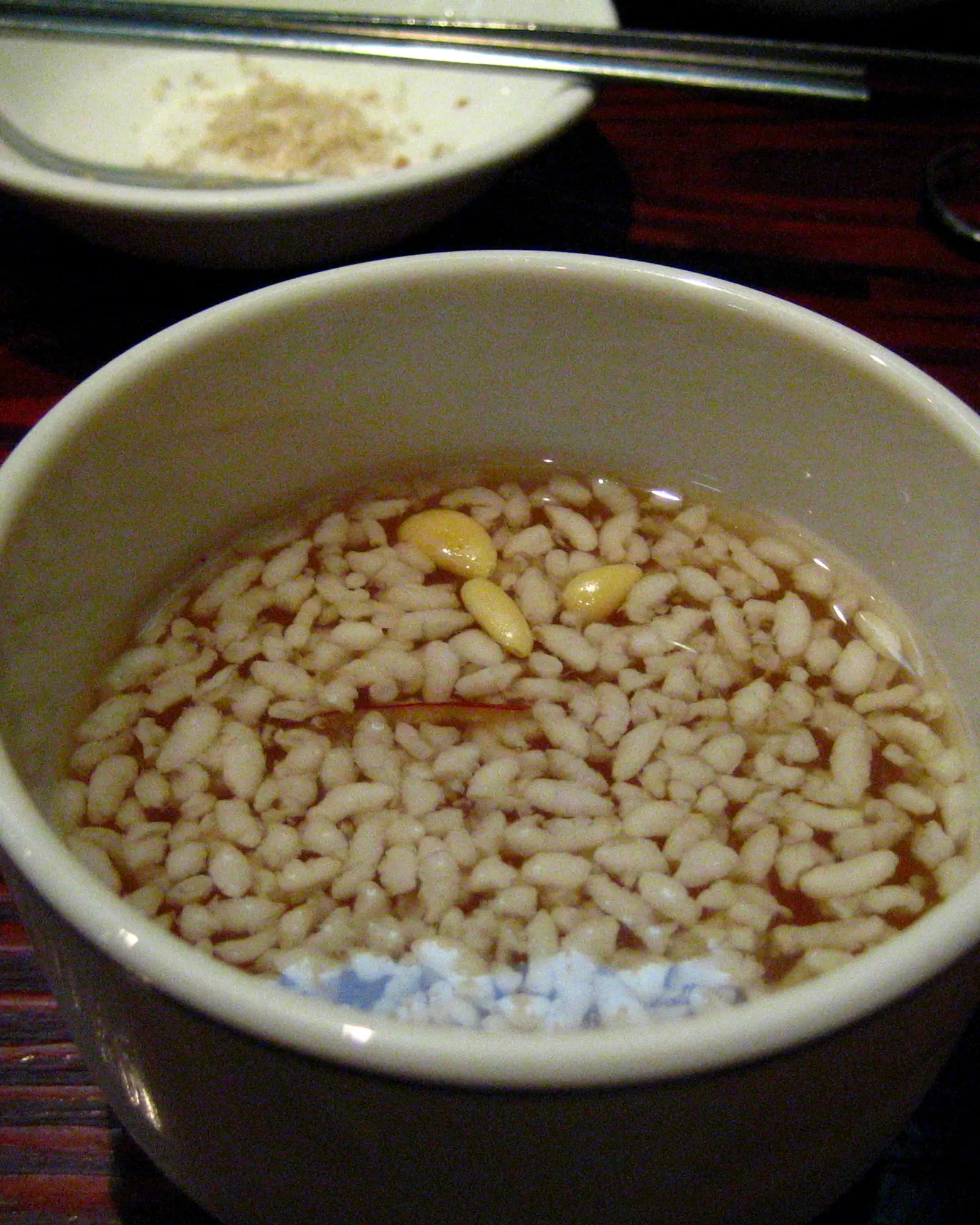
Cooked rice steeped in barley malt water until sweet, then boiled and chilled with a few grains left floating.

CC BY-SA 2.0 · Cropped, white-balanced, graded and re-encoded to WebP by eXir.
Sikhye (Korean rice punch) in a bowl with cooked rice grains and pine nuts floating on top
Serving
Drink spec, per drink
Every figure above is per drink and does not move with the count, which is what makes the two service modes comparable. Sugar per litre, strength and standard drinks stay in the units their own authorities publish, because they are figures for comparing rather than for pouring.
Diet and allergen labels are computed from the ingredients listed on this page and nothing else. They cannot account for cross-contamination or for the particular product you buy, and they are not medical or safety guidance.
Ingredients
 80 g barley malt
 1 000 ml water
 200 g cooked rice
 80 g granulated sugar
 8 g pine nuts
- 80 g barley malt
- 1 000 ml water
- 200 g cooked rice
- 80 g granulated sugar
- 8 g pine nuts
Glass
Vessel
263 ml of liquid, served without ice, inside the 300 ml the glass holds. The build fails if a recipe ever exceeds its stated vessel.
A batch needs a vessel that closes and fits a fridge shelf.
Method
5 steps · 5h 17mSteep the 80 g barley malt in the 300 ml water, warmed through, then strain out the grit and keep the cloudy malt water.
Stir the 200 g cooked rice and the 700 ml water into the malt water.
Hold the mixture at 60 °C to 65 °C for 5h, until a good share of the rice grains have risen and are floating on the surface.
Holding the rice and malt water in the range a rice cooker's keep-warm setting reaches is what lets the malt's own enzymes convert the rice starch to sugar; a home oven left on its lowest setting with the door propped works nearly as well.
Strain out the rice, setting the floating grains aside, and bring the liquid to a boil with the 80 g granulated sugar stirred through.
Cool completely and refrigerate until cold, then float the reserved rice and the 8 g pine nuts on top of each glass just before serving.
Common pitfallBoiling the strained liquid too long after the rice grains have floated concentrates it past the point sikhye is meant to stop at, turning a light, clean sweetness syrupy.
Keeping and make-ahead
Batched ahead, this keeps sealed and cold. The water line the engine adds is the dilution figure from the spec panel, not a rule of thumb.
About
A sweet Korean rice drink made by steeping cooked rice in barley malt water until its own starch turns to sugar, traditionally served after a meal or at a holiday table.
Sikhye was served to Korean royalty after meals, valued as a way to settle the stomach once the food itself was cleared 1. No sugar is added to the traditional version at all: the sweetness comes entirely from barley malt's own enzymes breaking the rice's starch down as the two steep together in warm water, and only once that conversion is done is the liquid strained, boiled and sweetened further, if at all 1. The method survives essentially unchanged from that palace kitchen into home kitchens today, carried forward mostly by grandparents making it for a family gathering rather than by any written recipe tradition 2.
That domestic, generational transmission is what defines the drink's present-day standing more than any specific historical date does. It is strongly associated with Korea's major holidays, Seollal and Chuseok, where it is served after a heavy meal, and it appears at contemporary weddings in punch bowls finished with honey and pine nuts, a modern echo of a drink that began as something made for a special occasion rather than an everyday one 2. Regional versions vary the ingredients considerably: an Andong version adds radish, carrot and red pepper powder for a savoury, faintly spicy variant, and a pumpkin version substitutes that vegetable for much of the rice, though the same malt-and-rice principle underlies all of them 1.
- 1Sikhyeen.wikipedia.org
- 2Seasonal Delightskorean-culture.org