
Sidecar
Cognac, orange liqueur and lemon, shaken and strained into a sugar-rimmed glass.

CC BY-SA 4.0 · Cropped, white-balanced, graded and re-encoded to WebP by eXir.
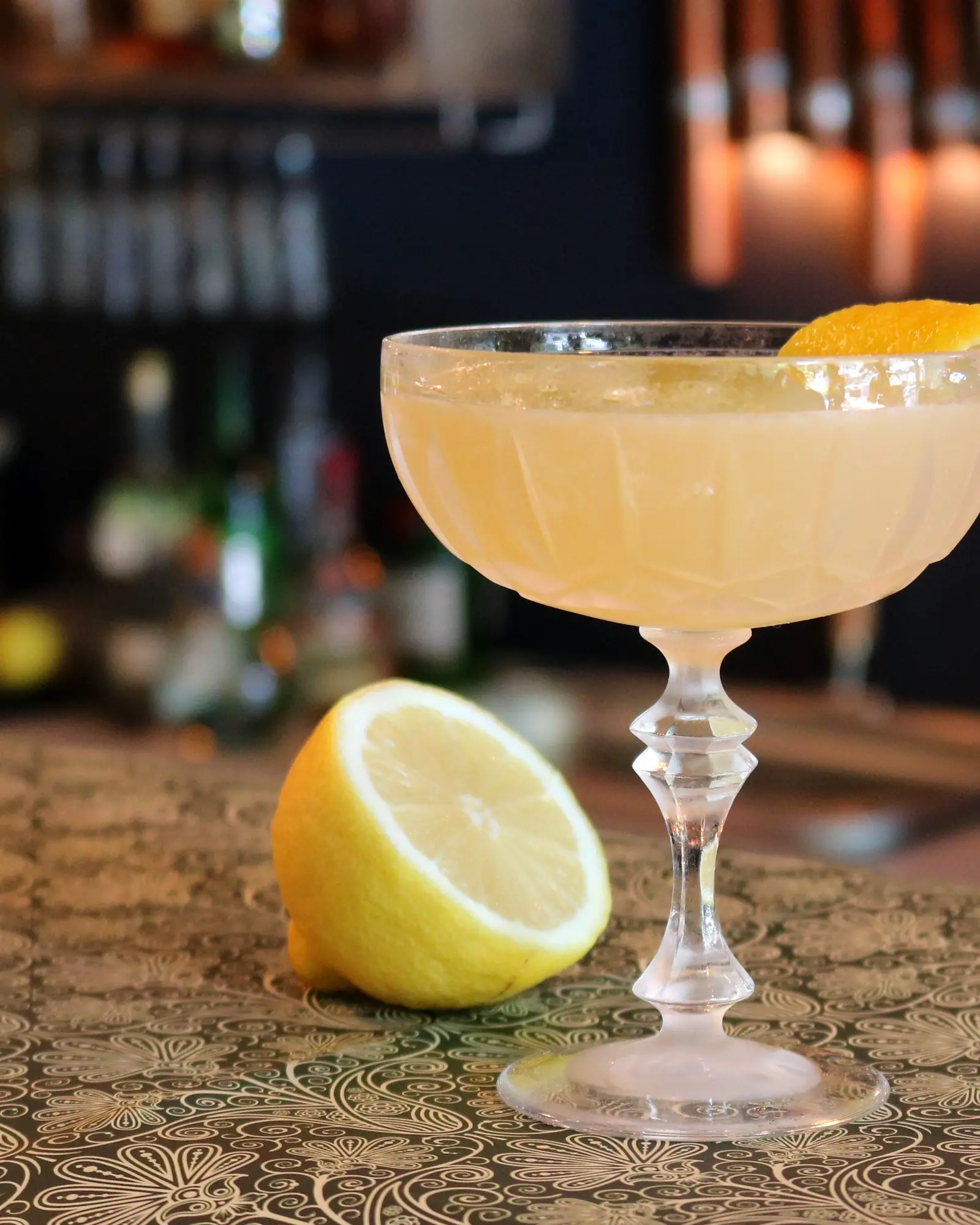
A sugar-rimmed Sidecar served up in a coupe, amber-gold, beside a lemon half
Serving
Drink spec, per drink
Every figure above is per drink and does not move with the count, which is what makes the two service modes comparable. Sugar per litre, strength and standard drinks stay in the units their own authorities publish, because they are figures for comparing rather than for pouring. Dilution is modelled rather than measured, as a fraction of the poured volume before any ice; dotted figures descend from that estimate.
Diet and allergen labels are computed from the ingredients listed on this page and nothing else. They cannot account for cross-contamination or for the particular product you buy, and they are not medical or safety guidance.
Ingredients
 25 ml fresh lemon juice
 50 ml cognac
 25 ml orange liqueurProprietary
 2 g granulated sugar
- 25 ml fresh lemon juice
- 50 ml cognac
- 25 ml orange liqueurProprietary
- 2 g granulated sugar
- ~50 ml water
Glass
Vessel
150 ml of liquid, served without ice, inside the 180 ml the glass holds. The build fails if a recipe ever exceeds its stated vessel.
A batch needs a vessel that closes and fits a fridge shelf.
Method
5 steps · 1m 57sRun a lemon wedge around half the rim of a coupe and dip that half in sugar.
Only half the rim is usually sugared, so the drinker can choose a sip with sugar or without rather than getting it in every mouthful.
Squeeze the 25 ml fresh lemon juice and strain out the pips and pulp.
Combine the 50 ml cognac, the 25 ml orange liqueur and the 25 ml fresh lemon juice in a shaker and fill it with cubed ice.
Shake hard for 12s until the tin frosts over.
Double strain into the rimmed glass, which holds no ice of its own.
Common pitfallA cognac too young or too rough shows through this build more than in a stirred drink; the citrus and liqueur do not hide a thin base spirit the way a longer drink might.
Keeping and make-ahead
Batched ahead, this keeps sealed and cold. The water line the engine adds is the dilution figure from the spec panel, not a rule of thumb.
About
A cognac sour named for a motorcycle sidecar, claimed by three Parisian and London establishments in the years around 1920 and set down in print by 1922.
The Sidecar's name is agreed on even where its inventor is not: several versions of the story have a customer, usually a soldier, arriving at a Paris bar in the sidecar of a motorcycle, and the drink made for him keeping the name 1. Three establishments each have a documented claim to being that bar. The Ritz Paris credits its bartender Frank Meier, with the cognac house Rémy Martin dating the drink to the Ritz in 1923 and Hennessy's own history placing it there as early as 1920 2. Harry MacElhone, of Harry's New York Bar in Paris, published a Sidecar recipe in his 1922 ABC of Mixing Cocktails, but that edition credits the drink not to himself but to Pat MacGarry, a bartender at Buck's Club in London; only in later editions did MacElhone claim to have invented it himself 1 2.
None of the three accounts can be independently confirmed over the others, and the dates given for the Ritz version alone range across several years of the early 1920s depending on the source citing it 2. What is fixed is the printed record: a Sidecar recipe was in circulation by 1922, whichever bar first poured it.
The drink is also read as a simplified descendant of the Brandy Crusta, a sugar-rimmed brandy sour built with maraschino and bitters that was served in New Orleans decades earlier; the Sidecar keeps the sugared rim and the citrus-and-liqueur shape while dropping the additional ingredients 1.
- 1The Mysterious Origins Of The Sidecar Cocktailchowhound.com
- 2The Sidecar Cognac Cocktailcognac.com