
Caribbean Rum Punch
Rum, citrus, sweetener and juice in the old sour-sweet-strong-weak ratio, built over ice.
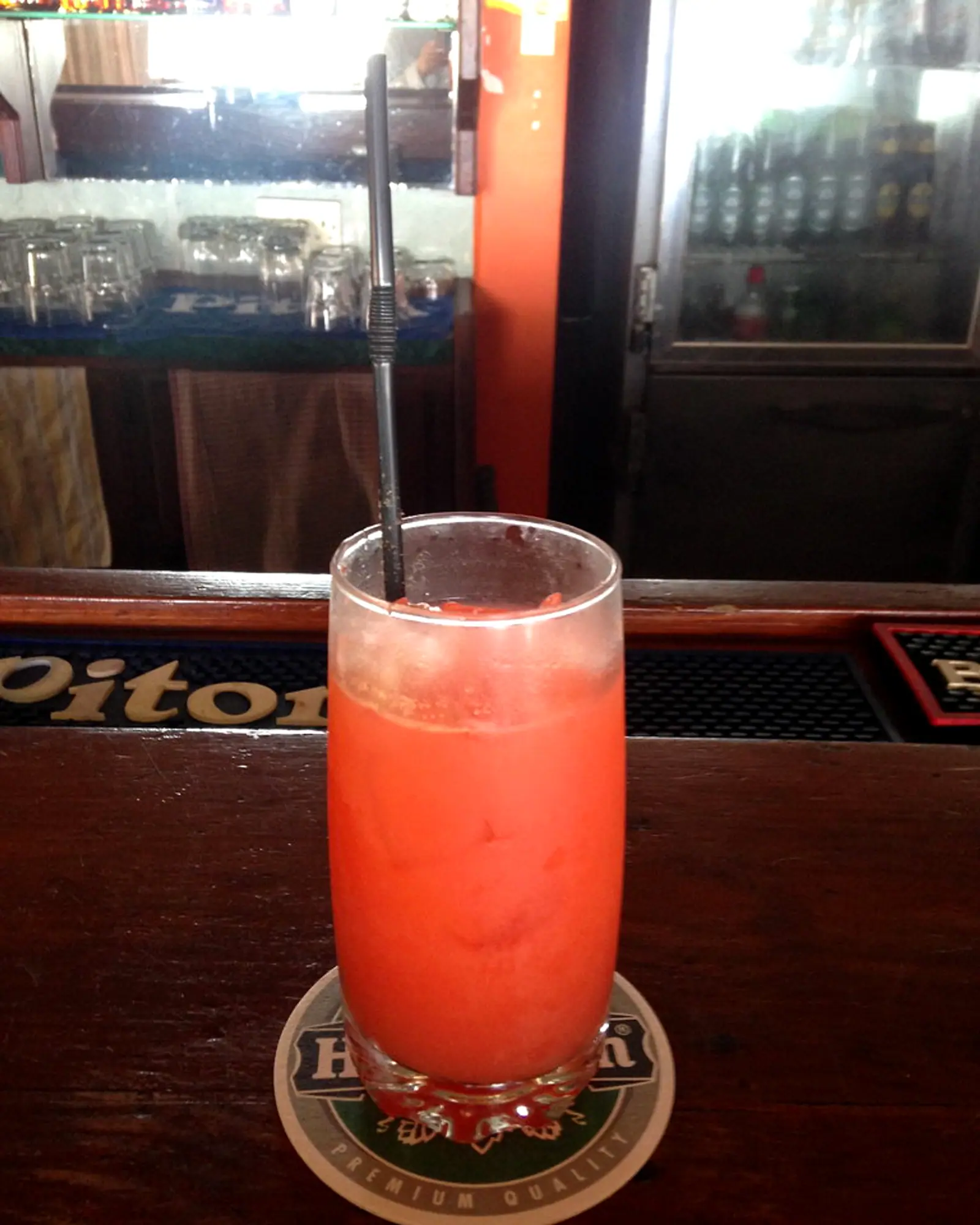
CC BY 2.0 · Cropped, white-balanced, graded and re-encoded to WebP by eXir.
An orange-red rum punch over ice in a tall collins glass with a straw
Serving
Drink spec, per drink
Every figure above is per drink and does not move with the count, which is what makes the two service modes comparable. Sugar per litre, strength and standard drinks stay in the units their own authorities publish, because they are figures for comparing rather than for pouring. Dilution is modelled rather than measured, as a fraction of the poured volume before any ice; dotted figures descend from that estimate.
The producer's own product page states the bitters are 100% vegan and gluten-free.
Diet and allergen labels are computed from the ingredients listed on this page and nothing else. They cannot account for cross-contamination or for the particular product you buy, and they are not medical or safety guidance.
Ingredients
 15 ml fresh lime juice
 30 ml grenadine
 45 ml dark rum
 30 ml fresh orange juice
 30 ml fresh pineapple juice
 1 dash Angostura Aromatic Bitters (0.9 ml)Proprietary
 0.3 g freshly grated nutmeg
- 15 ml fresh lime juice
- 30 ml grenadine
- 45 ml dark rum
- 30 ml fresh orange juice
- 30 ml fresh pineapple juice
- 1 dash Angostura Aromatic Bitters (0.9 ml)Proprietary
- 0.3 g freshly grated nutmeg
- ~38 ml water
Glass
Vessel
151 ml of liquid plus 230 ml of cubed ice occupies about 381 ml, inside the 400 ml the glass holds. The build fails if a recipe ever exceeds its stated vessel.
A batch needs a vessel that closes and fits a fridge shelf.
Method
3 steps · 50sBuild the 15 ml fresh lime juice, the 30 ml grenadine, the 45 ml dark rum, the 30 ml fresh orange juice, the 30 ml fresh pineapple juice and the 1 dash Angostura Aromatic Bitters (0.9 ml) over cubed ice in a collins glass.
The old rhyme behind the ratio is one of sour, two of sweet, three of strong, four of weak: the 15 ml fresh lime juice is the sour, the 30 ml grenadine the sweet, the 45 ml dark rum the strong, and the 30 ml fresh orange juice and 30 ml fresh pineapple juice together make up the weak.
Stir to bring the grenadine up from the bottom of the glass.
Grate the 0.3 g freshly grated nutmeg over the top.
Common pitfallFresh pineapple juice carries real acidity that no dataset used here reports a figure for, so the composition below reads less sour than the drink tastes; that is a gap in the data rather than a claim the drink is mild.
Keeping and make-ahead
Batched ahead, this keeps sealed and cold. The water line the engine adds is the dilution figure from the spec panel, not a rule of thumb.
About
Rum, citrus, sweetener and diluting juice built to an old sailor's rhyme of sour, sweet, strong and weak, descended from a punch British traders carried to Asia in the 1600s and later remade around Caribbean rum.
Punch as a category predates rum entirely. It is recorded among British East India Company traders from the early 1600s, made first with arrack, a palm or rice spirit, rather than any Caribbean spirit; the earliest written reference identified is a 1632 letter from an East India Company employee in India 1. Sailors are credited with the idea itself: a shelf-stable stand-in for wine, built from whatever spirit was on hand, citrus for acidity and sugar to round it off 2.
The drink's name has a disputed origin. It is popularly traced to the Sanskrit or Hindi word for "five," describing five standard ingredients (spirit, citrus, sugar, water and spice), but drinks historian David Wondrich argues instead for a source in "puncheon," the large barrel rum itself was shipped in, and treats the five-ingredient story as folk etymology rather than settled fact 1.
Rum only entered the drink once British colonial trade expanded into sugar-producing Caribbean territory and the Royal Navy began issuing rum rations to sailors, who carried rum, sugar and lime aboard specifically to make punch 1. The formula that resulted is preserved in an old rhyme (one of sour, two of sweet, three of strong, four of weak) that has stayed consistent enough across generations of Caribbean bars that modern recipes still cite it directly by ratio 2. The category's popularity in Britain itself later faded through the Victorian era, even as the Caribbean version it left behind persisted 2.
- 1Punch & Punches — Historydiffordsguide.com
- 2The 17th Century Rum Punch Recipe That's Remembered By Rhymetastingtable.com