
Root Beer Float
A scoop of vanilla ice cream, drowned in root beer at the glass.
CC BY 2.0 · Cropped, white-balanced, graded and re-encoded to WebP by eXir.
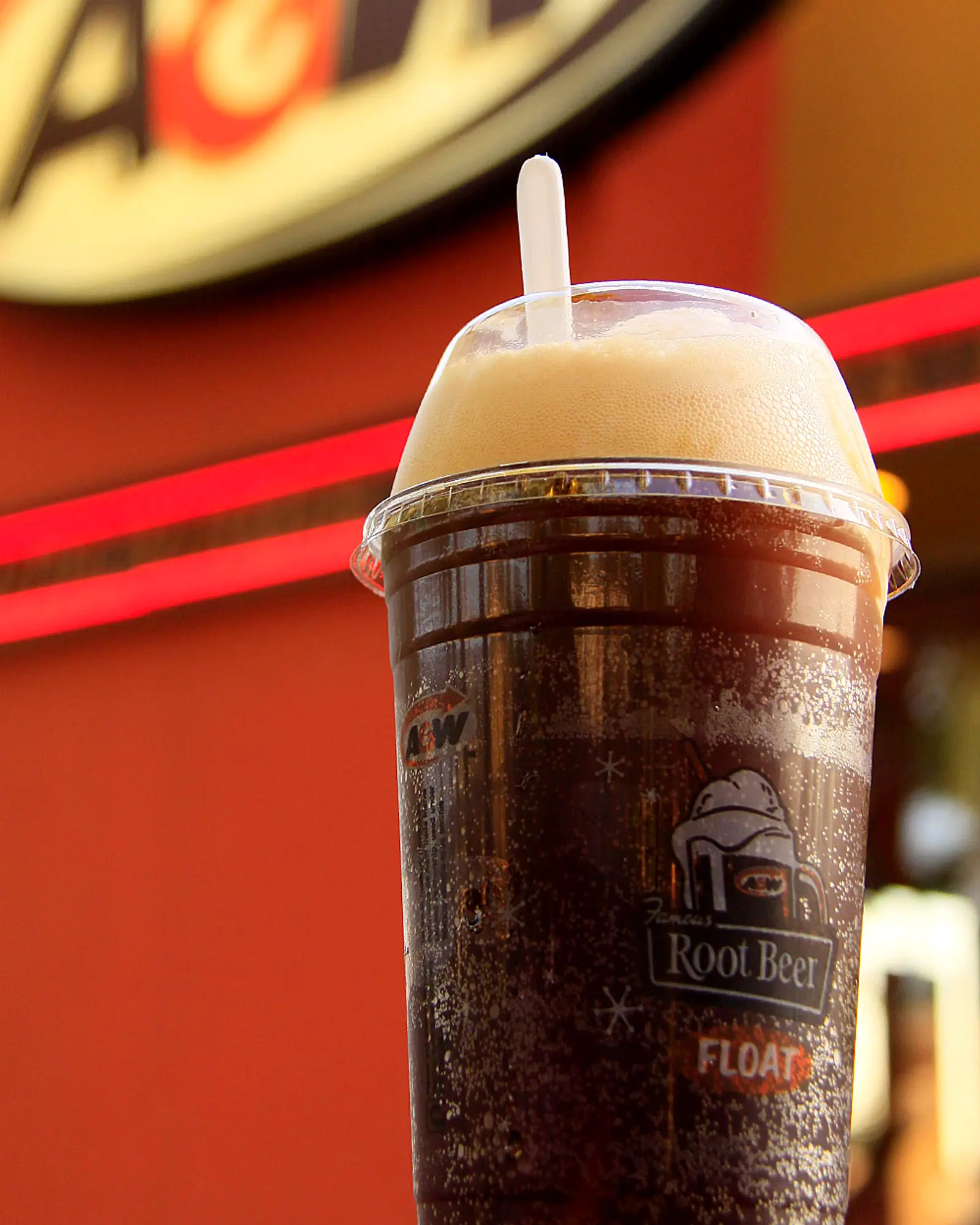
A root beer float in a clear cup printed 'Root Beer Float', dark root beer topped with white foam and a straw, an A&W sign visible behind
Serving
Drink spec, per drink
Every figure above is per drink and does not move with the count, which is what makes the two service modes comparable. Sugar per litre, strength and standard drinks stay in the units their own authorities publish, because they are figures for comparing rather than for pouring.
Always dairy. Some vanilla ice cream is churned from an egg-yolk custard base (the French style) and some is egg-free (the Philadelphia style); which one a given tub is depends on the maker.
Diet and allergen labels are computed from the ingredients listed on this page and nothing else. They cannot account for cross-contamination or for the particular product you buy, and they are not medical or safety guidance.
Ingredients


Glass
Vessel
347 ml of liquid, served without ice, inside the 400 ml the glass holds. The build fails if a recipe ever exceeds its stated vessel.
A batch needs a vessel that closes and fits a fridge shelf.
Method
3 steps · 50sSet the 90 g vanilla ice cream in a chilled glass.
Pour the 40 ml root beer syrup over the scoop.
Top slowly with the 220 ml soda water and serve at once, with a straw and a long spoon.
The soda is poured slowly down the side of the glass rather than straight onto the scoop, so it foams up around the ice cream into a head rather than fizzing over the rim.
Common pitfallBuilt too far ahead, the scoop melts into the soda before it is served and the drink loses the contrast between cold, solid cream and fizzing liquid that is the entire point of a float. It is assembled at the last moment, not held.
Keeping and make-ahead
This drink is made to order.
About
A soda-fountain drink with at least four separate American claimants to its invention, none of them settled by a contemporary written record.
The wider category the root beer float belongs to, the ice cream soda, is most often credited to Robert M. Green, a Philadelphia soda-fountain operator. By his own account, published decades later in 1910, he combined vanilla ice cream with flavoured soda water to draw customers away from a competing vendor at the Franklin Institute's fiftieth-anniversary celebration in 1874 1. That version, a deliberate piece of product development, sits at odds with the more romantic story usually told about him, that he ran out of ice for his cream mixer on a hot day and substituted ice cream on the spot 1. Green was confident enough of his own priority to have "Originator of the Ice Cream Soda" engraved on his tombstone 1, but he was not the only claimant: at least three other people, including his own employee George Guy, are separately credited with combining ice cream and soda around the same period, with Guy's own claim placing the moment as early as 1872, two years before Green's 1.
The root beer version specifically carries a separate and less documented legend of its own. One widely repeated account credits a Colorado brewer with dropping ice cream into root beer in 1893, inspired by the sight of snow on a mountainside, and naming the result the Black Cow, the name the drink still sometimes carries 2. Unlike Green's account, this version rests on retellings rather than on a contemporary source, and it is not the story followed by more general histories of the ice cream soda, which do not mention it at all 1. The float's invention is best treated as unsettled among several competing accounts rather than attributable to any single one of them.
- 1Ice cream floaten.wikipedia.org
- 2The History of Root Beer Floatsbackthenhistory.com