
Pina Colada
White rum, pineapple juice and cream of coconut blended with ice to a slush.
The same three ingredients shaken hard and strained up, rather than blended with ice.
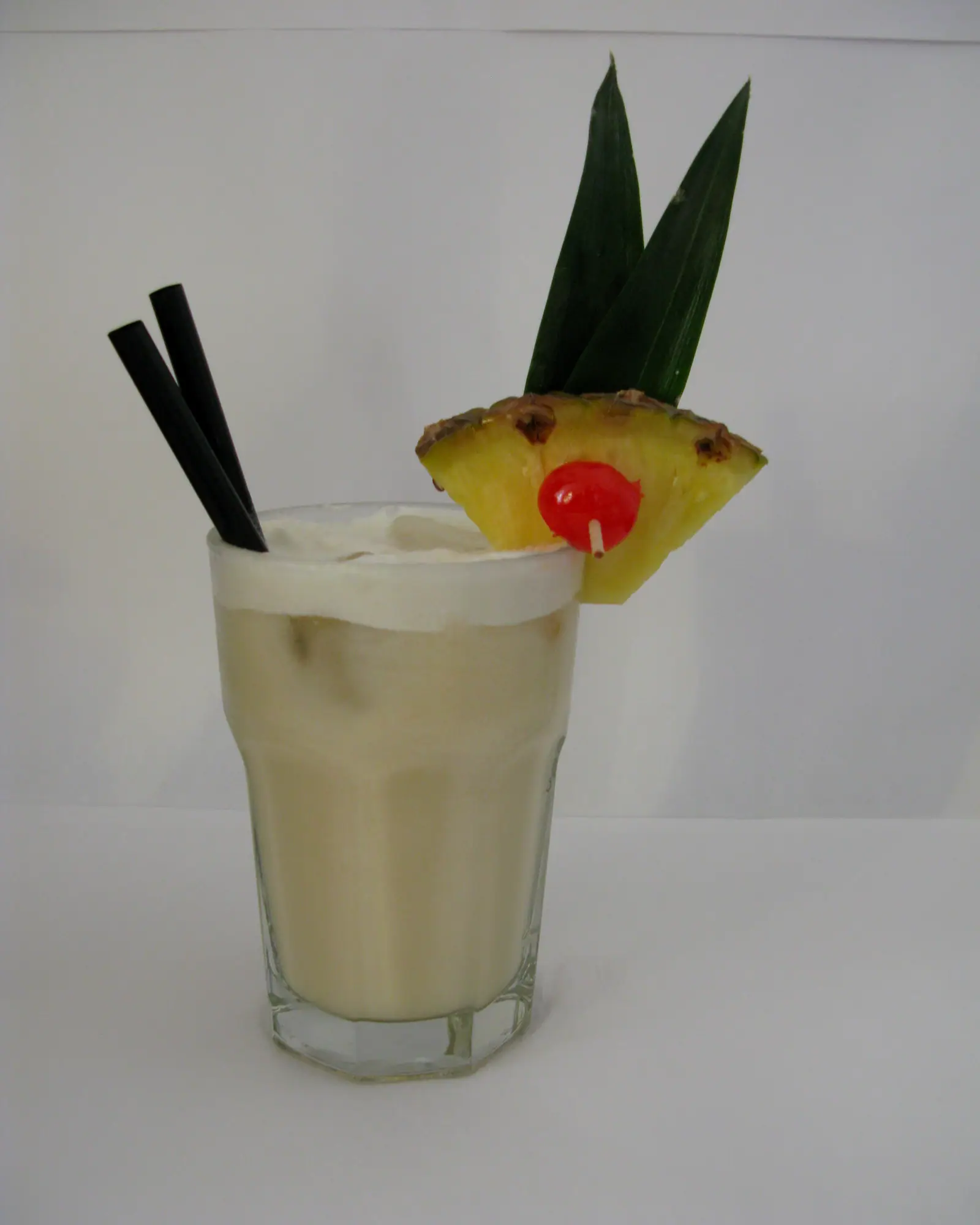

CC BY-SA 3.0 · Cropped, white-balanced, graded and re-encoded to WebP by eXir.
A Pina Colada served in a glass with a pineapple wedge, cherry and straws
Serving
Drink spec, per drink
Every figure above is per drink and does not move with the count, which is what makes the two service modes comparable. Sugar per litre, strength and standard drinks stay in the units their own authorities publish, because they are figures for comparing rather than for pouring.
Diet and allergen labels are computed from the ingredients listed on this page and nothing else. They cannot account for cross-contamination or for the particular product you buy, and they are not medical or safety guidance.
Ingredients
 60 ml white rum
 90 ml fresh pineapple juice
 60 ml cream of coconut
 150 g water
- 60 ml white rum
- 90 ml fresh pineapple juice
- 60 ml cream of coconut
- 150 g water
Glass
Vessel
360 ml of liquid, served without ice, inside the 470 ml the glass holds. The build fails if a recipe ever exceeds its stated vessel.
A batch needs a vessel that closes and fits a fridge shelf.
Drink spec, per drink
Every figure above is per drink and does not move with the count, which is what makes the two service modes comparable. Sugar per litre, strength and standard drinks stay in the units their own authorities publish, because they are figures for comparing rather than for pouring. Dilution is modelled rather than measured, as a fraction of the poured volume before any ice; dotted figures descend from that estimate.
Diet and allergen labels are computed from the ingredients listed on this page and nothing else. They cannot account for cross-contamination or for the particular product you buy, and they are not medical or safety guidance.
Ingredients
- 60 ml white rum
- 90 ml fresh pineapple juice
- 60 ml cream of coconut
- 60 ml white rum
- 90 ml fresh pineapple juice
- 60 ml cream of coconut
- ~116 ml water
Glass
Vessel
326 ml of liquid, served without ice, inside the 470 ml the glass holds. The build fails if a recipe ever exceeds its stated vessel.
A batch needs a vessel that closes and fits a fridge shelf.
Method
3 steps · 1m 5sCombine the 60 ml white rum, the 90 ml fresh pineapple juice and the 60 ml cream of coconut in a blender jug, then add the 150 g water.
Cream of coconut is shaken or stirred in its own can before it is measured, because the fat separates and settles in storage; a spoonful taken from the top and a spoonful taken from the bottom are not the same drink.
Blend in short bursts for 30s, until the mixture climbs the sides of the jug as an even, pourable slush with no loose chunks left clicking against the blade.
Pour, unstrained, into a chilled hurricane glass and serve with a straw before it starts to separate.
Common pitfallCream of coconut is not coconut milk or coconut cream sold for cooking: both are thinner and neither carries the added sugar the balance here depends on, so swapping one in without adjusting anything else leaves the drink sour rather than short.
Keeping and make-ahead
This drink is made to order.
Method
3 steps · 49sCombine the 60 ml white rum, the 90 ml fresh pineapple juice and the 60 ml cream of coconut in a shaker and fill it with cubed ice.
Shake hard for 14s to fully emulsify the cream of coconut through the juice and rum.
Cream of coconut behaves like the cream or egg white this dilution class is named for: it needs to be worked into the shake rather than merely chilled by it, so the shake runs a beat longer than a clear spirit-and-citrus drink to emulsify the fat through the liquid.
Double strain into a chilled hurricane glass, catching the ice shards the shake has broken off.
Common pitfallThis is a different drink from the blended form, not a shortcut to it: the ice here melts at the usual shaken rate rather than entering the glass as a mass, so the two never converge no matter how hard or long the shake runs.
Keeping and make-ahead
Batched ahead, this keeps sealed and cold. The water line the engine adds is the dilution figure from the spec panel, not a rule of thumb.
About
A rum, pineapple and coconut drink from Puerto Rico, claimed by at least three bartenders and declared the island's national drink in 1978.
Three Puerto Rican bartenders have each claimed the drink. The Caribe Hilton credits Ramón "Monchito" Marrero, who tended its Beachcomber Bar and says he combined rum, pineapple juice and the newly available canned cream of coconut in 1954 after being asked to create a new welcome drink for guests 1. Marrero himself dated the moment two years earlier, to August 1952, and a colleague at the same bar, Ricardo Garcia, has separately claimed the invention for himself 2. A third claim comes from Ramón Portas Mingot, who says he made the drink in 1963 at the Barrachina Restaurant in Old San Juan, which still displays a plaque to that effect 2.
None of the three claims is independently documented from the time, and the drink does not appear in print in a cocktail book until the late 1960s 2. A related, coconut-free drink combining rum, pineapple and lime was already being served under the same name in the 1920s, closer to a shaken pineapple Daiquiri than to the blended drink known today 2. What the competing bar claims agree on is the setting: San Juan, the 1950s and 60s, and the sweetened, canned cream of coconut that made the modern proportions possible.
The dispute was eventually settled administratively rather than historically. In 1978, Puerto Rico's legislature declared the Piña Colada the island's official drink 1, without adjudicating which bar, or which bartender, made the first one.
- 1Historycaribehilton.com
- 2Piña Colada Cocktail History, Origins, and Storydiffordsguide.com