
Old Fashioned
Bourbon, sugar and bitters, built and stirred over a single cube.
Bourbon and demerara syrup in place of white sugar, built the same way.
Rye whiskey in place of bourbon, built and stirred the same way.
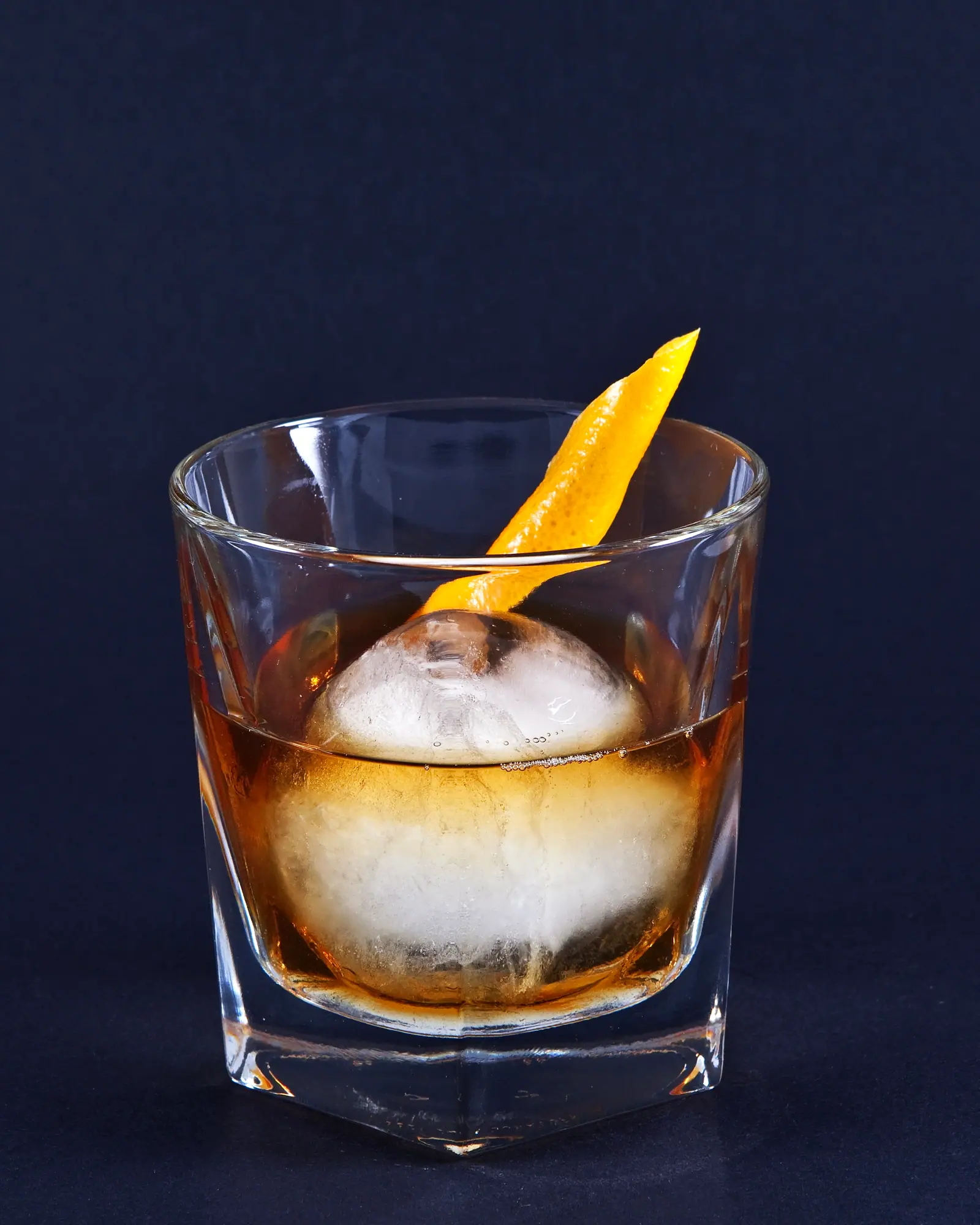

CC BY-SA 4.0 · Cropped, white-balanced, graded and re-encoded to WebP by eXir.
An Old Fashioned in a rocks glass, amber and clear, with a single large round ice cube and an orange twist standing against the rim
Serving
Drink spec, per drink
Every figure above is per drink and does not move with the count, which is what makes the two service modes comparable. Sugar per litre, strength and standard drinks stay in the units their own authorities publish, because they are figures for comparing rather than for pouring. Dilution is modelled rather than measured, as a fraction of the poured volume before any ice; dotted figures descend from that estimate.
The producer's own product page states the bitters are 100% vegan and gluten-free.
Diet and allergen labels are computed from the ingredients listed on this page and nothing else. They cannot account for cross-contamination or for the particular product you buy, and they are not medical or safety guidance.
Ingredients
 7.5 ml simple syrup
 2 dashes Angostura Aromatic Bitters (1.8 ml)Proprietary
 60 ml bourbon
 1 orange (140 g)
- 7.5 ml simple syrup
- 2 dashes Angostura Aromatic Bitters (1.8 ml)Proprietary
- 60 ml bourbon
- 1 orange (140 g)
- ~17 ml water
Glass
Vessel
69 ml of liquid plus 130 ml of block ice occupies about 199 ml, inside the 300 ml the glass holds. The build fails if a recipe ever exceeds its stated vessel.
A batch needs a vessel that closes and fits a fridge shelf.
Drink spec, per drink
Every figure above is per drink and does not move with the count, which is what makes the two service modes comparable. Sugar per litre, strength and standard drinks stay in the units their own authorities publish, because they are figures for comparing rather than for pouring. Dilution is modelled rather than measured, as a fraction of the poured volume before any ice; dotted figures descend from that estimate.
The producer's own product page states the bitters are 100% vegan and gluten-free.
Diet and allergen labels are computed from the ingredients listed on this page and nothing else. They cannot account for cross-contamination or for the particular product you buy, and they are not medical or safety guidance.
Ingredients
- 7.5 ml simple syrup
- 2 dashes Angostura Aromatic Bitters (1.8 ml)Proprietary
 60 ml rye whiskey
- 1 orange (140 g)
- 7.5 ml simple syrup
- 2 dashes Angostura Aromatic Bitters (1.8 ml)Proprietary
- 60 ml rye whiskey
- 1 orange (140 g)
- ~17 ml water
Glass
Vessel
69 ml of liquid plus 130 ml of block ice occupies about 199 ml, inside the 300 ml the glass holds. The build fails if a recipe ever exceeds its stated vessel.
A batch needs a vessel that closes and fits a fridge shelf.
Method
4 steps · 1m 45sChill a rocks glass and set a single large cube in it. One large piece melts more slowly than the same mass broken into small ones, which matters more here than in any stirred-and-strained relative, because this cube keeps working for as long as the drink is on the table.
Pour the 7.5 ml simple syrup and the 2 dashes Angostura Aromatic Bitters (1.8 ml) over the cube, then add the 60 ml bourbon.
Stir for 20s, just enough to marry the syrup and bitters into the spirit and start the cube working. It is a shorter stir than a strained drink gets, because there is no second glass to bring it to equilibrium in; the rest happens in the glass the drinker is holding.
The drink is built and stirred in the glass it is served in, over the one large cube, rather than stirred in a separate glass and strained. It starts less diluted than a Manhattan and keeps opening up while it is drunk, which is the point of the format rather than a shortcut taken on the way to it.
Cut a 4 cm swathe of orange peel, hold it skin-outwards over the surface and squeeze so the oil lands on the drink. Rub it around the rim and drop it in.
Common pitfallThe syrup is denser than the bourbon and sits at the bottom of the glass if the stir is skipped, so the first sip reads sharp and the last one reads cloying from the same drink.
Keeping and make-ahead
Batched ahead, this keeps sealed and cold. The water line the engine adds is the dilution figure from the spec panel, not a rule of thumb.
Method
4 steps · 1m 45sChill a rocks glass and set a single large cube in it. One large piece melts more slowly than the same mass broken into small ones, which keeps the cube working for as long as the drink is on the table.
Pour the 7.5 ml demerara syrup and the 2 dashes Angostura Aromatic Bitters (1.8 ml) over the cube, then add the 60 ml bourbon.
Demerara sugar carries molasses that plain white sugar has already had washed out of it, so the sweetener slot here contributes a background note of caramel and dried fruit rather than sweetness alone. The bourbon and the bitters are unchanged, so the difference audible in the glass is entirely this one line.
Stir for 20s, just enough to marry the syrup and bitters into the spirit and start the cube working. The syrup is cloudier than the white-sugar version and takes a beat longer to disappear into the spirit.
Cut a 4 cm swathe of orange peel, hold it skin-outwards over the surface and squeeze so the oil lands on the drink. Rub it around the rim and drop it in.
Common pitfallCommercial demerara syrups are made to varying strengths, and a bottle thinner than the one this recipe assumes under-sweetens a drink with only one other slot to carry the balance.
Keeping and make-ahead
Batched ahead, this keeps sealed and cold. The water line the engine adds is the dilution figure from the spec panel, not a rule of thumb.
Method
4 steps · 1m 45sChill a rocks glass and set a single large cube in it. One large piece melts more slowly than the same mass broken into small ones, which keeps the cube working for as long as the drink is on the table.
Pour the 7.5 ml simple syrup and the 2 dashes Angostura Aromatic Bitters (1.8 ml) over the cube, then add the 60 ml rye whiskey.
Rye's mash is majority rye grain rather than corn, and that grain reads as pepper and dry spice against the same sugar and bitters that make bourbon read round. Nothing else changes, because the point of this tab is what one slot's identity does to the rest of the shape.
Stir for 20s, just enough to marry the syrup and bitters into the spirit and start the cube working.
Cut a 4 cm swathe of orange peel, hold it skin-outwards over the surface and squeeze so the oil lands on the drink. Rub it around the rim and drop it in.
Common pitfallA young, high-proof rye can read as raw heat rather than spice once its grain character is the whole show. Rye whiskies vary in age and proof more than bourbon does, so a bottle that works well in a Manhattan can taste thin or hot in this leaner build.
Keeping and make-ahead
Batched ahead, this keeps sealed and cold. The water line the engine adds is the dilution figure from the spec panel, not a rule of thumb.
About
The shape "cocktail" meant before the word meant anything else, requested under this name once bartenders had moved on to more elaborate drinks, and a creation story fixed on a Louisville club that the drink's own print record rules out.
The word cocktail was defined in print in 1806 as a mixture of spirits, sugar, water and bitters, with no further embellishment implied 1. By the 1860s bartenders were adding curaçao, absinthe and other liqueurs to that base, and a drinker who wanted the plainer, older style had to ask for it specifically, which is where the name comes from. It names a request for something already old-fashioned, not a drink invented under that description.
The commonly told origin traces it to the Pendennis Club in Louisville, Kentucky, crediting bartender Martin Cuneo with making it for the bourbon distiller Colonel James E. Pepper sometime between 1889 and 1895 2. The dates make the claim impossible: the Chicago Daily Tribune was already writing about "old fashioned cocktails" in February 1880, a year before the Pendennis Club was even founded 1. The story appears to originate with Albert Stevens Crockett's writing in the 1930s, decades after the drink itself, and Crockett's own account does not describe the muddled fruit the club's version of the story is built around 2. A former Pendennis bar manager who published his own drinks book in 1914 neither mentions fruit in the recipe nor claims the drink for his old employer, which is the kind of silence that a genuine claim of invention does not usually keep 2.
None of this means the club invented nothing. It may have served an excellent version and helped standardise the bourbon-and-bitters build that most bars now serve by default. What it did not do is originate a drink that newspapers were already naming a decade before the club opened its doors.
The earliest known printed recipe under this name appears in a Chicago bartending manual in 1888 1, seven years after the Tribune's reference to the term and a year before the Pendennis story is even set. The gap between the name in print and the story built around it is the same shape this catalogue keeps finding in cocktail history: the drink is older than the anecdote, and the anecdote is what survives.
- 1Old fashioned (cocktail)en.wikipedia.org
- 2Old Fashioned cocktail — the Pendennis Clubdiffordsguide.com