
Moroccan Mint Tea
Gunpowder green tea and fresh mint, poured from a height to raise a foam.
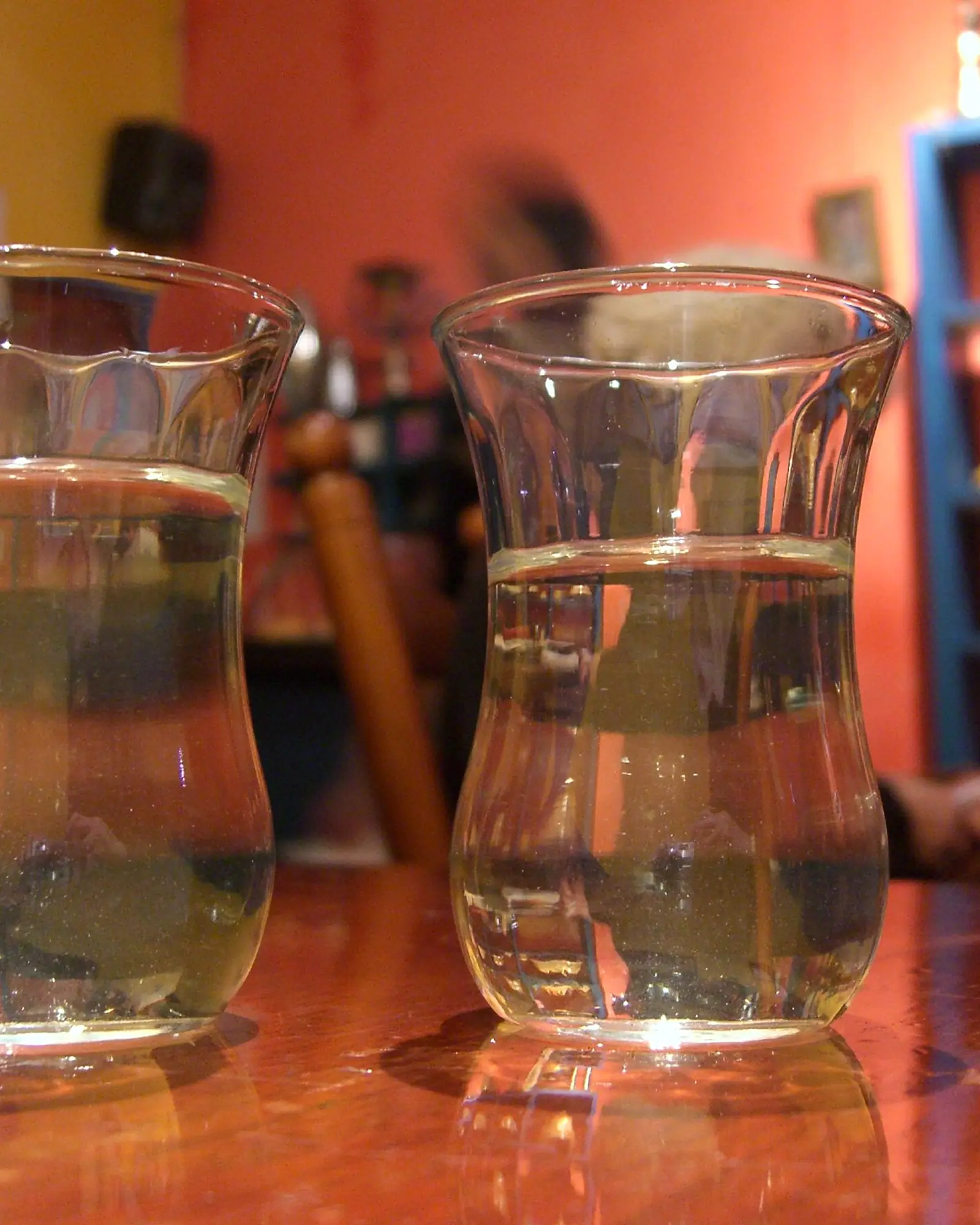

CC BY-SA 2.0 · Cropped, white-balanced, graded and re-encoded to WebP by eXir.
Two small glasses of Moroccan mint tea on a wooden counter
Serving
Drink spec, per drink
Every figure above is per drink and does not move with the count, which is what makes the two service modes comparable. Sugar per litre, strength and standard drinks stay in the units their own authorities publish, because they are figures for comparing rather than for pouring.
Diet and allergen labels are computed from the ingredients listed on this page and nothing else. They cannot account for cross-contamination or for the particular product you buy, and they are not medical or safety guidance.
Extraction
No extraction yield is shown. It needs a measured dissolved-solids figure from the finished cup, nothing on a bag of coffee supplies one, and estimating it from the method would be inventing the single number the calculation exists to establish.
Ingredients
 5 g green tea
 120 ml water
 15 g mint
 15 g granulated sugar
- 5 g green tea
- 120 ml water
- 15 g mint
- 15 g granulated sugar
Glass
Vessel
109 ml of liquid, served without ice, inside the 150 ml the glass holds. The build fails if a recipe ever exceeds its stated vessel.
A batch needs a vessel that closes and fits a fridge shelf.
Method
4 steps · 3m 45sRinse the 5 g green tea briefly with a little of the hot water and pour that off before steeping.
Add the 120 ml water at 100 °C and the 15 g mint to the pot and steep for 3m.
Stir in the 15 g granulated sugar.
Pour from well above the glass to raise a foam on the surface.
The tea is poured from well above the glass rather than close to it, which aerates it enough to raise a thin foam across the surface. This is a sign in Morocco that the tea has been made properly, not just a flourish.
Common pitfallSkipping the rinse leaves the first pot noticeably more bitter, since gunpowder tea's tightly rolled pellets carry a layer of dust and early bitterness on the outside that a quick rinse washes away before the real steep begins.
Keeping and make-ahead
Brewed in the pot and poured glass by glass; the high pour that raises the foam has to happen at the moment of serving.
About
Chinese gunpowder green tea and fresh mint, poured from a height to raise a foam, and the standard gesture of hospitality across Morocco.
The tea itself came to Morocco by accident of war. Gunpowder green tea (tightly rolled Chinese leaf named for its resemblance to shot) was bound for Baltic markets when the Crimean War closed those ports to British shipping in the 1850s, and merchants carrying the surplus stock sailed it south instead, selling it cheaply through the Moroccan ports of Tangier and Essaouira 1 2. Moroccans were already growing spearmint for medicinal use, and combining the two into one drink took hold quickly: within a generation it had become the country's defining domestic beverage 2.
The pour is as much a part of the drink as the leaf. Tea is lifted well above the glass before it is poured, which cools it slightly and aerates it enough to raise a thin foam on top, known locally as the "turban", regarded as proof the tea has been made properly rather than as decoration 1 2. The same leaves are then used for three successive rounds, each weaker and differently balanced than the last, matched in a well-known saying to three stages of life: the first bitter, the second sweet, the third gentle 2.
Serving it is treated as an act of welcome rather than refreshment alone. A Tuareg proverb given in one account holds that tea needs three things (time, embers and friends) and preparing it in front of a guest, rather than handing over a finished glass, is understood as the more meaningful gesture 2.
- 1Maghrebi Mint: The History of Moroccan Teateatrade.co.uk
- 2The Ritual of Mint Tea in Moroccomoroccancorridor.com