
Caffe Mocha
Espresso and cocoa stirred to a paste, lengthened with steamed milk.
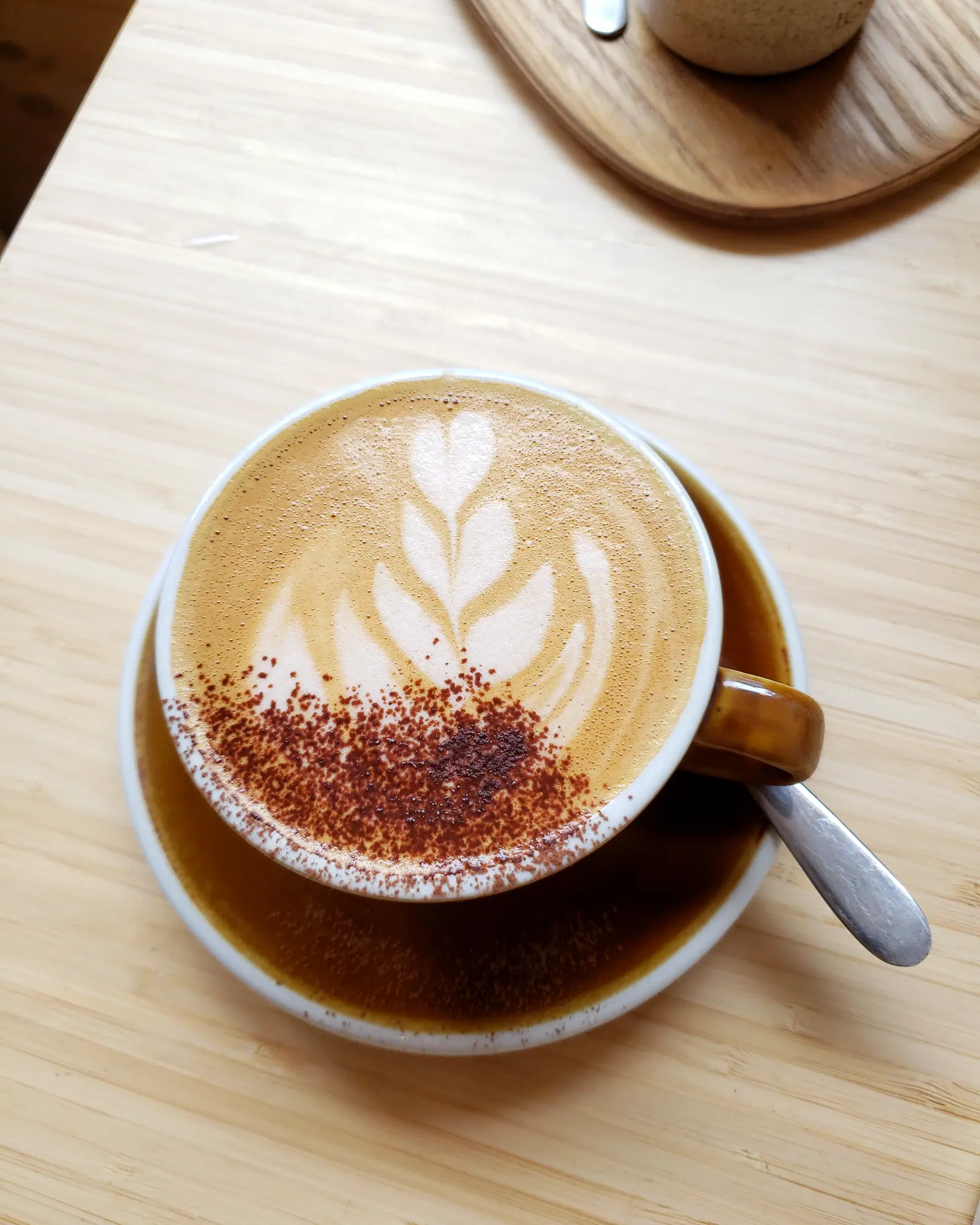

CC0 · Cropped, white-balanced, graded and re-encoded to WebP by eXir.
A mocha viewed from above in a cup, latte art and cocoa dusting on the foam, a spoon on the saucer
Serving
Drink spec, per drink
Every figure above is per drink and does not move with the count, which is what makes the two service modes comparable. Sugar per litre, strength and standard drinks stay in the units their own authorities publish, because they are figures for comparing rather than for pouring.
Diet and allergen labels are computed from the ingredients listed on this page and nothing else. They cannot account for cross-contamination or for the particular product you buy, and they are not medical or safety guidance.
Extraction
No extraction yield is shown. It needs a measured dissolved-solids figure from the finished cup, nothing on a bag of coffee supplies one, and estimating it from the method would be inventing the single number the calculation exists to establish.
Ingredients
 18 g coffee
 50 ml water
 10 g cocoa powder
 12 g granulated sugar
 150 ml whole milk
- 18 g coffee
- 50 ml water
- 10 g cocoa powder
- 12 g granulated sugar
- 150 ml whole milk
Glass
Vessel
203 ml of liquid, served without ice, inside the 300 ml the glass holds. The build fails if a recipe ever exceeds its stated vessel.
A batch needs a vessel that closes and fits a fridge shelf.
Method
5 steps · 2m 28sGrind the 18 g coffee fine for the espresso machine.
Pump the 50 ml water through the grounds at 93 °C for 28s, into a glass large enough to take the milk after.
Stir the 10 g cocoa powder and 12 g granulated sugar into the hot shot for 20s, until it forms a smooth, glossy paste with no dry lumps left.
The cocoa and sugar are worked into the hot shot before any milk goes in, because cocoa powder clumps in cold or dilute liquid; against the concentrated shot it wets out into a smooth paste that then mixes cleanly into the milk.
Steam the 150 ml whole milk to a light microfoam.
Pour the steamed milk over the paste, finishing with a thin cap of foam.
Common pitfallCocoa stirred straight into the full glass of milk instead of the shot leaves floating specks that never fully dissolve, because milk alone does not carry enough heat or concentration to wet the powder through.
Keeping and make-ahead
Steamed and pulled to order. Foam this light collapses within a couple of minutes, so nothing here is made ahead.
About
Espresso and cocoa combined under steamed milk, carrying a Yemeni port's name to a drink invented long after the beans it once referred to.
The name is older than the drink and refers to a place, not a flavour. Mocha was a Red Sea port in Yemen that became Arabia's principal outlet for coffee, handling most of the export trade between the fifteenth and seventeenth centuries 1. Beans that shipped through it were sold under the port's name, and European drinkers of the period associated their taste with a natural chocolate note, which is the reason the word attached itself to chocolate at all rather than to any recipe 1.
The drink now sold under that name has a separate and much later origin. Turin had its own coffee-and-chocolate tradition first: chocolate, coffee and cream were combined there from the seventeenth century into a drink called bavareisa, which by the eighteenth century had settled into the bicerin, served in a small glass so its three layers stayed visible 2. The specific pairing of espresso, milk and cocoa that the word "mocha" now names is later still: before around 1900 the word meant only Yemeni coffee, and a recipe combining milk, coffee and cocoa under the name "Chilled Mocha" is on record only from 1920 2.
The two threads are connected by little more than a coincidence of taste: a bean from a Yemeni port that happened to read as chocolatey to the Europeans who bought it, and a Northern Italian drink built from chocolate and coffee on purpose, which eventually took the bean's name for a flavour it never originally described. The espresso base keeps the drink closer to the espresso-and-milk family it is served alongside than to the Turin original, which is built without a shot at all.
- 1Your Mocha Is Named After the Birthplace of the Coffee Tradesmithsonianmag.com
- 2Caffè mochaen.wikipedia.org