
Matcha Latte
Whisked matcha lengthened with steamed milk, a café adaptation of the tea it is made from.
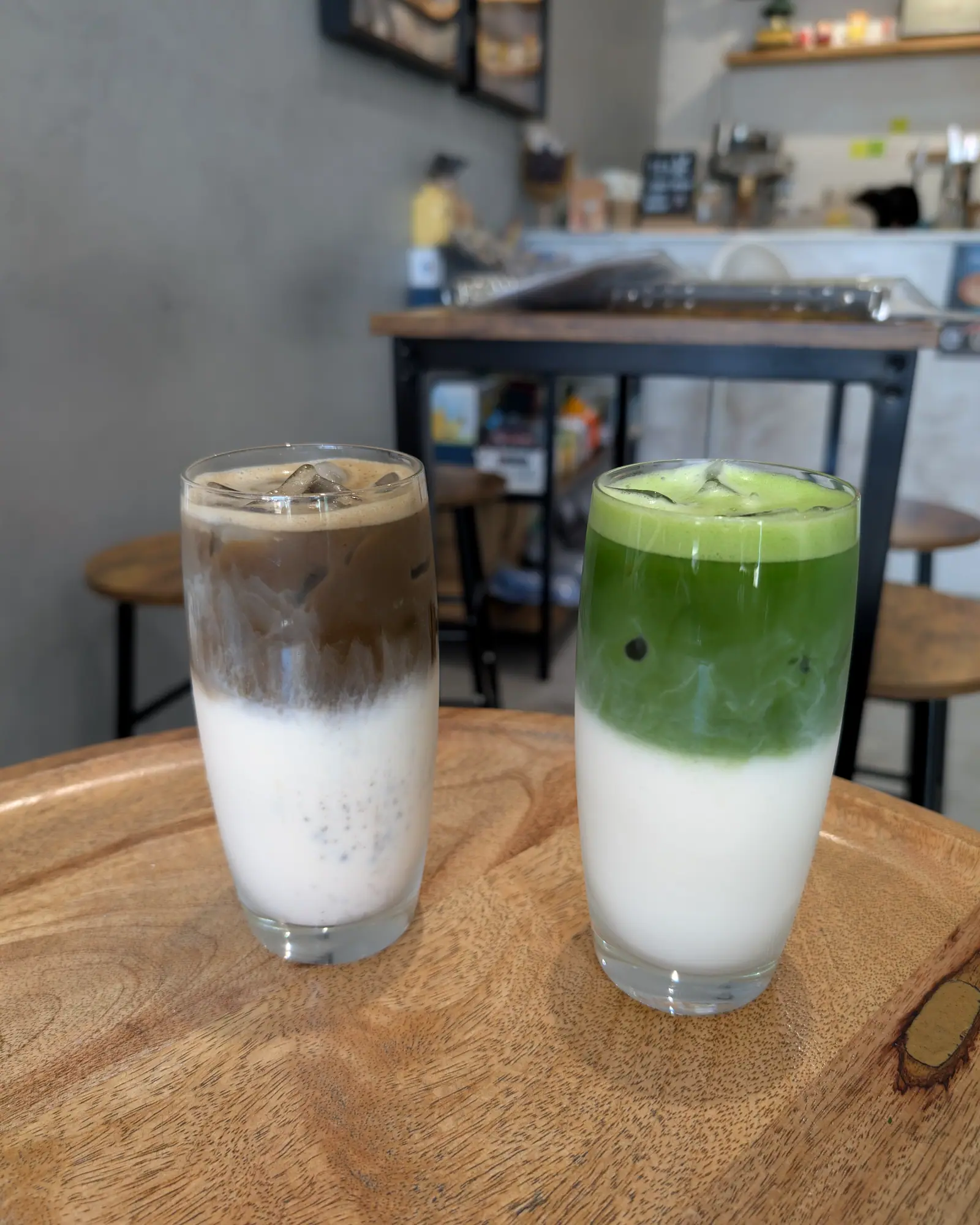

CC0 · Cropped, white-balanced, graded and re-encoded to WebP by eXir.
An iced matcha latte in a tall glass, layered green matcha over white milk, beside another iced latte
Serving
Drink spec, per drink
Every figure above is per drink and does not move with the count, which is what makes the two service modes comparable. Sugar per litre, strength and standard drinks stay in the units their own authorities publish, because they are figures for comparing rather than for pouring.
Diet and allergen labels are computed from the ingredients listed on this page and nothing else. They cannot account for cross-contamination or for the particular product you buy, and they are not medical or safety guidance.
Ingredients
 2 g matcha
 40 ml water
 200 ml whole milk
- 2 g matcha
- 40 ml water
- 200 ml whole milk
Glass
Vessel
240 ml of liquid, served without ice, inside the 300 ml the glass holds. The build fails if a recipe ever exceeds its stated vessel.
A batch needs a vessel that closes and fits a fridge shelf.
Method
4 steps · 1m 35sSift the 2 g matcha into a bowl to break up any clumps.
Add the 40 ml water just off the boil and whisk briskly in a zigzag for 20s, until smooth and lightly foamed.
The matcha is whisked to a smooth paste in a small amount of water before any milk is added, exactly as it is for a bowl of matcha on its own; whisked straight into the full glass of milk it clumps instead of dissolving.
Steam the 200 ml whole milk to a light microfoam.
Pour the steamed milk into the glass over the whisked matcha, finishing with a thin cap of foam.
Common pitfallUnsifted matcha clumps the moment hot water hits it, and no amount of whisking afterward fully breaks those clumps back down, so they stay as flecks even once the milk is poured in.
Keeping and make-ahead
Whisked and steamed to order. Matcha whisked ahead and left standing separates and loses its foam before the milk ever goes in.
About
Whisked matcha lengthened with steamed milk, a Western café adaptation of Japanese tea-ceremony matcha that large chains brought to a mass market from the mid-2000s.
Matcha itself is far older than the drink built from it. Powdered tea reached Japan from China with the Zen monk Eisai in the late twelfth century, and the shade-growing method that produces the matcha used today developed later, between the fifteenth and sixteenth centuries around Uji, near Kyoto 1. In that tradition the powder is whisked into hot water alone and drunk from the bowl it is made in; this is the preparation this site documents separately as matcha on its own, with no milk in it at all.
The milk-lengthened version is a distinct and much more recent product of Western café culture, built on the same whisked base but adapted to the espresso-bar format of a shot topped with steamed milk. Its spread through mainstream coffee chains is documented rather than informal: a large chain added a sweetened matcha green tea latte, made with Japanese matcha and steamed milk, to its regular menu on 4 April 2006, alongside a matcha Frappuccino sold as a limited seasonal item that year 2. Other major chains followed with their own versions over the following decade and a half 1.
The two preparations are related only by the powder itself. A bowl of matcha prizes the texture and bitterness that come from powder whisked directly into water with nothing to round it out; the latte is built specifically to soften that bitterness under milk and, in most commercial versions, added sugar, which is a different intention rather than a lesser version of the same drink.
- 1Matcha latteen.wikipedia.org
- 2Green Tea Joins Starbucks Menuqgazette.com