
Lemonade
Strained lemon juice, sugar syrup and water, clear over ice.
Whole squeezed lemon and sugar stirred straight into water, pulp and all.
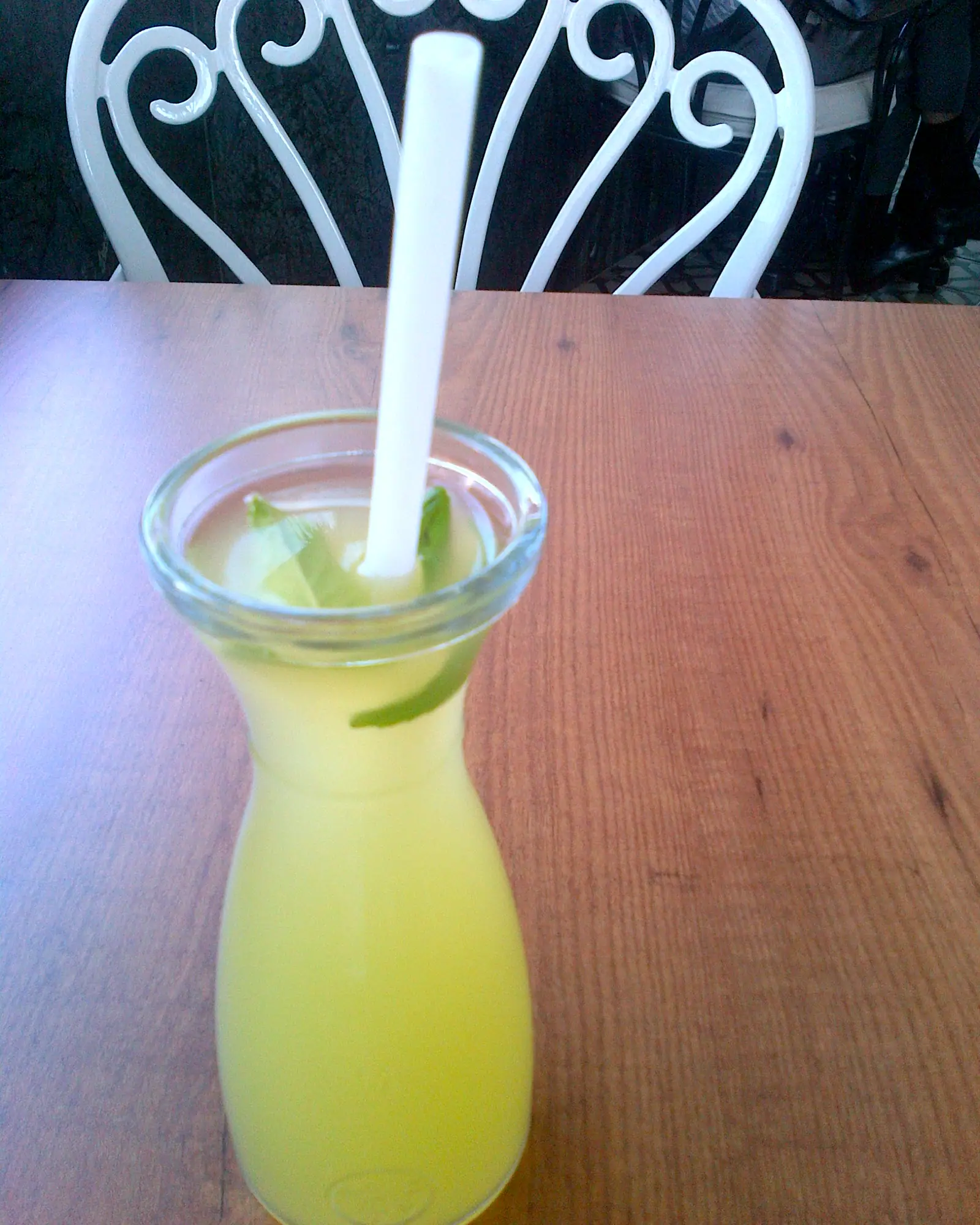

CC BY-SA 4.0 · Cropped, white-balanced, graded and re-encoded to WebP by eXir.
Pale yellow lemonade with a slice of lime in a small carafe with a straw
Serving
Drink spec, per drink
Every figure above is per drink and does not move with the count, which is what makes the two service modes comparable. Sugar per litre, strength and standard drinks stay in the units their own authorities publish, because they are figures for comparing rather than for pouring.
Diet and allergen labels are computed from the ingredients listed on this page and nothing else. They cannot account for cross-contamination or for the particular product you buy, and they are not medical or safety guidance.
Ingredients
 30 ml fresh lemon juiceInterchangeable by volume at a similar acidity, so the arithmetic barely moves. The drink reads sharper and less floral, closer to a limeade than a lemonade.flavour: moderate change · strength: no change · sweetness: no change
 20 ml simple syrup
 110 ml water
 ½ lemon (10 g)
- 30 ml fresh lemon juice
- 20 ml simple syrup
- 110 ml water
- ½ lemon (10 g)
Glass
Vessel
160 ml of liquid plus 230 ml of cubed ice occupies about 390 ml, inside the 400 ml the glass holds. The build fails if a recipe ever exceeds its stated vessel.
A batch needs a vessel that closes and fits a fridge shelf.
Drink spec, per drink
Every figure above is per drink and does not move with the count, which is what makes the two service modes comparable. Sugar per litre, strength and standard drinks stay in the units their own authorities publish, because they are figures for comparing rather than for pouring.
Diet and allergen labels are computed from the ingredients listed on this page and nothing else. They cannot account for cross-contamination or for the particular product you buy, and they are not medical or safety guidance.
Ingredients
- 30 ml fresh lemon juice
 15 g granulated sugar
- 120 ml water
- ½ lemon (10 g)
- 30 ml fresh lemon juice
- 15 g granulated sugar
- 120 ml water
- ½ lemon (10 g)
Glass
Vessel
159 ml of liquid plus 230 ml of cubed ice occupies about 389 ml, inside the 400 ml the glass holds. The build fails if a recipe ever exceeds its stated vessel.
A batch needs a vessel that closes and fits a fridge shelf.
Method
4 steps · 1m 50sSqueeze the lemons for the 30 ml fresh lemon juice.
Strain out the pulp and seeds through a fine sieve.
Straining the squeezed juice through a fine sieve before it goes anywhere near the glass is what keeps this version clear rather than clouded; the pulp left behind is what the cloudy version keeps in.
Combine the strained juice with the 20 ml simple syrup and the 110 ml water in a glass filled with ice and stir once to combine.
Set the ½ lemon (10 g) lemon wheel on the rim.
Common pitfallSweetening with dry sugar straight in the glass leaves undissolved crystals at the bottom under cold water; the syrup is made and cooled first so the sweetness is even from the first sip to the last.
Keeping and make-ahead
Batched ahead, this keeps sealed and cold. The water line the engine adds is the dilution figure from the spec panel, not a rule of thumb.
Method
3 steps · 1m 40sSqueeze the lemons for the 30 ml fresh lemon juice, leaving the pulp in rather than straining it out.
Stir the juice with the 15 g granulated sugar and the 120 ml water in a glass filled with ice until the sugar dissolves.
The juice goes into the glass unstrained, pulp and all, and the sugar dissolves straight into the water rather than as a pre-made syrup; the pulp suspended in the glass is what gives this version its cloudy body against the still version's clear one.
Set the ½ lemon (10 g) lemon wheel on the rim.
Common pitfallSugar stirred into cold water takes noticeably longer to dissolve than the same amount warmed first, and an under-stirred glass settles sweet at the bottom and thin at the top.
Keeping and make-ahead
Batched ahead, this keeps sealed and cold. The water line the engine adds is the dilution figure from the spec panel, not a rule of thumb.
About
A lemon, sugar and water drink first documented in medieval Cairo, carried into Europe as a luxury and only combined with carbonated water into the fizzy style familiar today in the 19th century.
The earliest documented lemonade, called qatarmizat, is recorded among Cairo's medieval Jewish community between the 10th and 13th centuries, made from lemon juice sweetened with sugar or honey 1 2. Lemons and sugar both reached Europe as costly imports, which kept the drink a luxury there for centuries; 18th-century Europeans paid a premium for a violet-scented version made from imported Sicilian lemons and Caribbean sugar 2.
Paris is where lemonade became a genuine street trade. Vendors sold it from tanks carried on their backs from the 1630s, and by 1676 the city had chartered the Compagnie de Limonadiers, a guild that regulated the drink's proportions, inspected the vendors' tanks and fixed its price by social rank 2. The first English literary reference to lemonade dates to Thomas Killigrew's 1663 play The Parson's Wedding 1.
The still, cloudy style served by the glass and the clear, carbonated style sold in bottles are the same base drink at different points in its history rather than separate inventions. The earliest written reference to a carbonated lemonade dates to 1833, and London had more than fifty manufacturers of it within the following decade 1. William Terrington's 1869 guide Cooling Cups and Dainty Drinks records the period method of rubbing lemon zest into sugar before combining it with juice and carbonated water 1.
- 1When life gives you lemons — the history of lemonadeclassbarmag.com
- 2The Unknown History of Lemonadehistoryoasis.com