
Lassi
Yoghurt blended with water, sugar and cardamom to a thick, frothy drink.
Yoghurt blended with water, salt and toasted cumin, savoury rather than sweet.
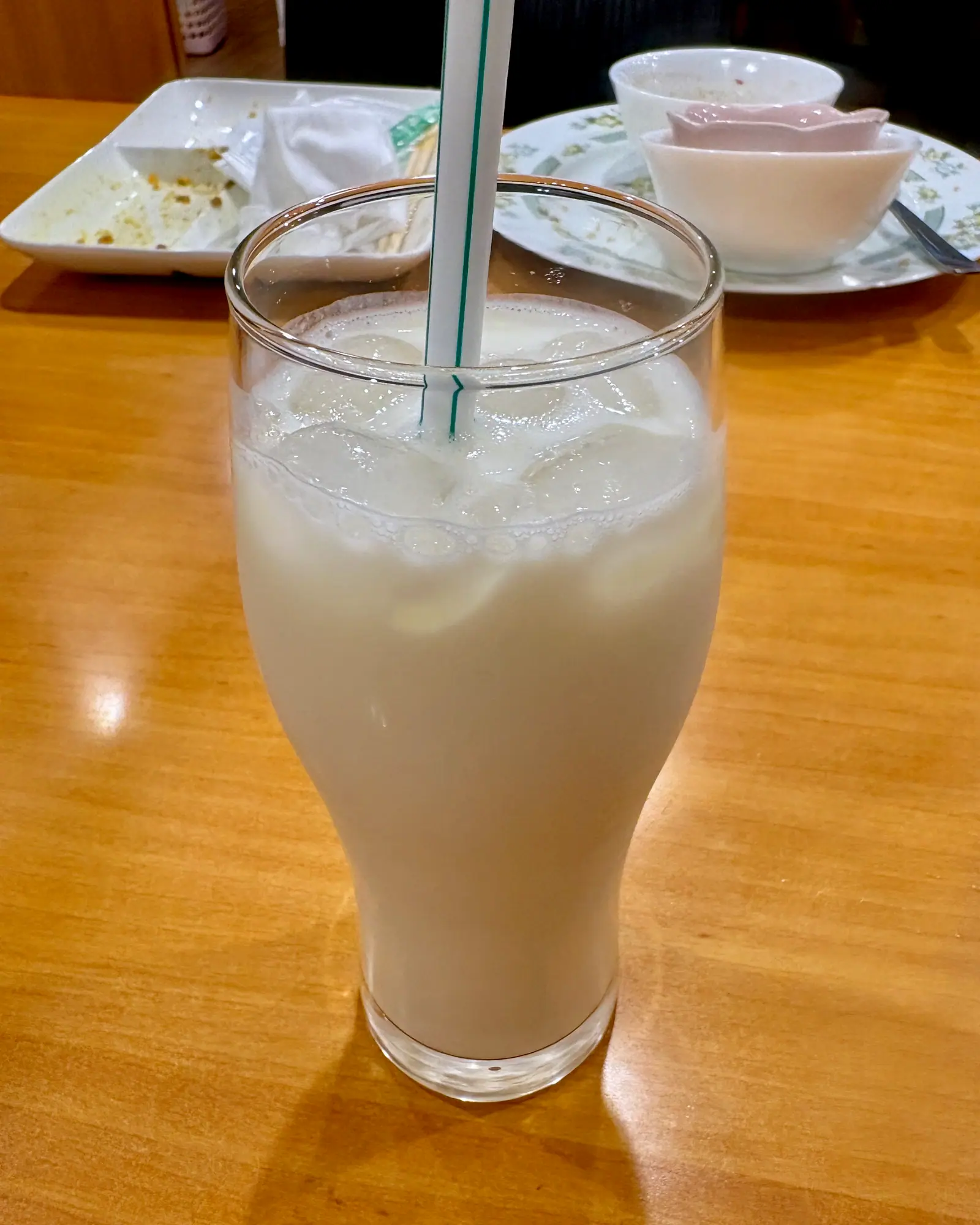

CC BY-SA 4.0 · Cropped, white-balanced, graded and re-encoded to WebP by eXir.
A tall glass of white, frothy plain lassi with a straw
Serving
Drink spec, per drink
Every figure above is per drink and does not move with the count, which is what makes the two service modes comparable. Sugar per litre, strength and standard drinks stay in the units their own authorities publish, because they are figures for comparing rather than for pouring.
Diet and allergen labels are computed from the ingredients listed on this page and nothing else. They cannot account for cross-contamination or for the particular product you buy, and they are not medical or safety guidance.
Ingredients
 180 g plain yoghurt
 60 ml water
 20 g granulated sugar
 0.5 g crushed cardamom pods
- 30 g water
- 180 g plain yoghurt
- 60 ml water
- 20 g granulated sugar
- 0.5 g crushed cardamom pods
- 30 g water
Glass
Vessel
277 ml of liquid, served without ice, inside the 350 ml the glass holds. The build fails if a recipe ever exceeds its stated vessel.
A batch needs a vessel that closes and fits a fridge shelf.
Drink spec, per drink
Every figure above is per drink and does not move with the count, which is what makes the two service modes comparable. Sugar per litre, strength and standard drinks stay in the units their own authorities publish, because they are figures for comparing rather than for pouring.
Diet and allergen labels are computed from the ingredients listed on this page and nothing else. They cannot account for cross-contamination or for the particular product you buy, and they are not medical or safety guidance.
Ingredients
- 180 g plain yoghurt
- 80 ml water
 2 g salt
- 3 g granulated sugar
 1 g toasted ground cumin
- 30 g water
- 180 g plain yoghurt
- 80 ml water
- 2 g salt
- 3 g granulated sugar
- 1 g toasted ground cumin
- 30 g water
Glass
Vessel
288 ml of liquid, served without ice, inside the 350 ml the glass holds. The build fails if a recipe ever exceeds its stated vessel.
A batch needs a vessel that closes and fits a fridge shelf.
Method
2 steps · 45sCombine the 180 g plain yoghurt, 60 ml water, 20 g granulated sugar and cracked 0.5 g crushed cardamom pods in a blender jug, then add the 30 g water.
Blend for 25s, until smooth and frothed on top.
The blend runs only long enough to smooth the yoghurt and raise a froth on top, because lassi is meant to keep the body of yoghurt rather than the thin, fully liquefied texture a longer blend on high speed would leave it with.
Common pitfallGround cardamom stirred straight in tastes sharp and slightly bitter compared with pods cracked and blended fresh; pre-ground powder loses its aromatic oils quickly once opened.
Keeping and make-ahead
This drink is made to order.
Method
2 steps · 45sCombine the 180 g plain yoghurt, 80 ml water, 2 g salt, 3 g granulated sugar and 1 g toasted ground cumin in a blender jug, then add the 30 g water.
The cumin is toasted and ground fresh before it goes in, which is what a savoury lassi is built around; a pre-ground jar tastes flat and dusty next to the bright, slightly bitter oil a fresh toast and grind releases.
Blend for 25s, until smooth and lightly frothed.
Common pitfallSalt added after blending never fully dissolves into yoghurt this thick, and grains left at the bottom of the glass throw the last few sips off balance from the first.
Keeping and make-ahead
This drink is made to order.
About
Blended yoghurt from Punjab, made sweet with sugar and cardamom or savoury with salt and cumin, and old enough that historians treat it as an early ancestor of the smoothie.
The drink is associated above all with Punjab, in northern India, where yoghurt fermentation techniques are traced back to the Indus Valley Civilisation and lassi itself is described by some historians as dating to around 1000 BCE, early enough that it is sometimes called the original smoothie 1. Its documented history in English is far more recent and much better established: the word "lassi" is first recorded in English in 1882, borrowed from Hindi, though the word's own deeper etymology remains disputed between two proposed Sanskrit roots 2.
From a single base of yoghurt loosened with water, the drink splits into two genuinely different directions rather than one recipe with an optional sweetener. A sweet version is built with sugar and aromatics such as cardamom, rosewater and saffron; a salted version replaces the sugar with salt and savoury spices, most often black pepper and toasted cumin 2. Fruit versions, mango above all, are a further branch rather than a third base; mango is native to the Indian subcontinent and was very likely among the earliest fruits added, which is part of why it remains the most widely recognised version outside India 1.
The two versions on this page represent that same split rather than one drink and a variation on it: sugar and cardamom on one side, salt and cumin on the other, both blended from the same base to the same froth. Neither is a simplified or reduced form of the other, and a reader used to only the sweet version is often surprised that the salted one is not a savoury novelty but the older, plainer register of the same drink.
- 1The History Behind India's Refreshing Mango Lassi Drinktastingtable.com
- 2Lassien.wikipedia.org