
Kalimotxo
Red wine and cola in equal parts, over ice.
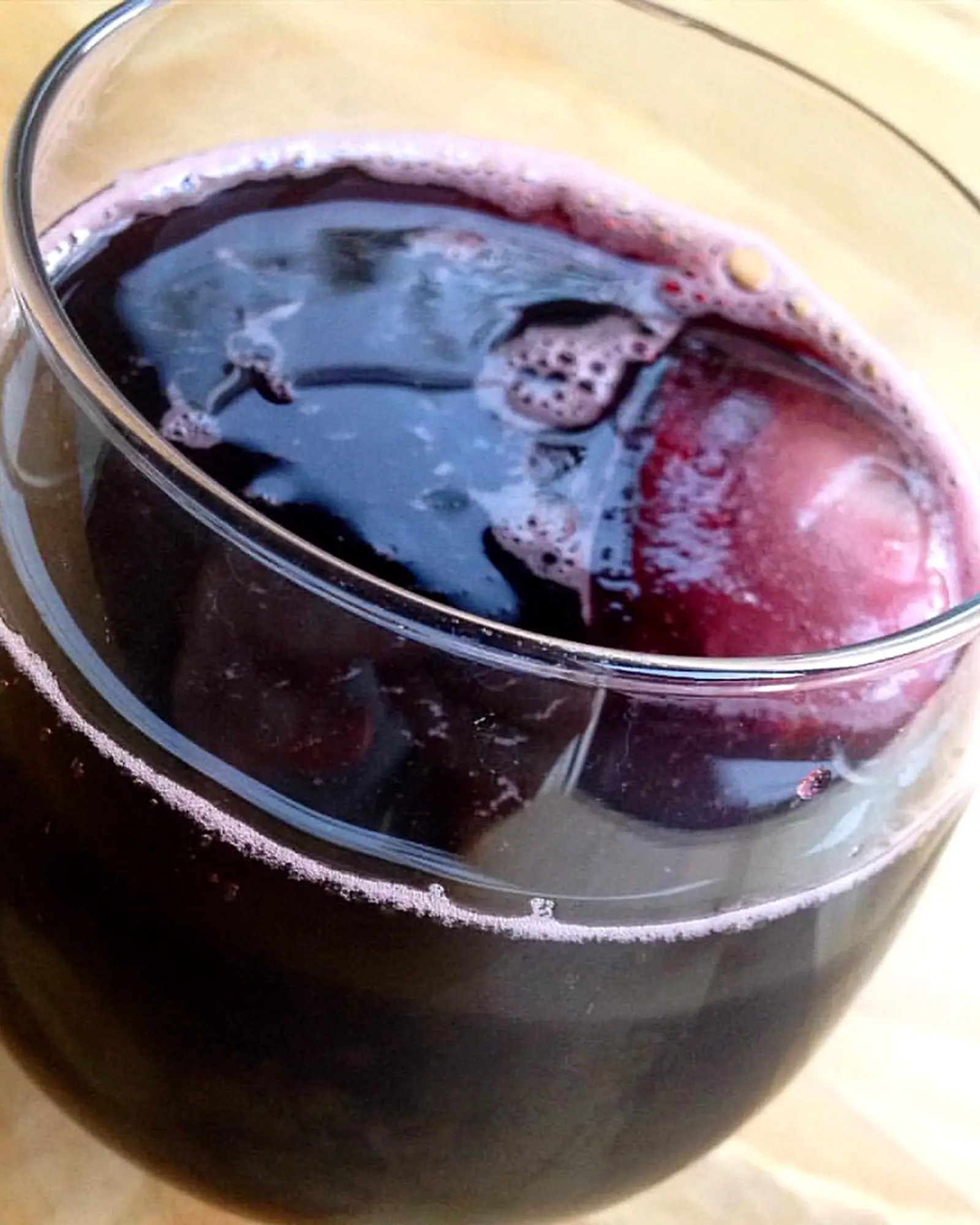
CC BY-SA 2.0 · Cropped, white-balanced, graded and re-encoded to WebP by eXir.
A dark red kalimotxo (red wine and cola) over ice cubes in a round glass
Serving
Drink spec, per drink
Every figure above is per drink and does not move with the count, which is what makes the two service modes comparable. Sugar per litre, strength and standard drinks stay in the units their own authorities publish, because they are figures for comparing rather than for pouring. Dilution is modelled rather than measured, as a fraction of the poured volume before any ice; dotted figures descend from that estimate.
Many red wines are fined with isinglass, gelatine or egg white or casein; unfiltered or vegan-labelled bottles are not. The finished wine contains at most a trace of the fining agent, but the label is the only way to know which was used for a given bottle.
Diet and allergen labels are computed from the ingredients listed on this page and nothing else. They cannot account for cross-contamination or for the particular product you buy, and they are not medical or safety guidance.
Ingredients
 85 ml red wine
 85 ml cola
- 85 ml red wine
- 85 ml cola
- ~43 ml water
Glass
Vessel
170 ml of liquid plus 230 ml of cubed ice occupies about 400 ml, inside the 400 ml the glass holds. The build fails if a recipe ever exceeds its stated vessel.
A batch needs a vessel that closes and fits a fridge shelf.
Method
2 steps · 50sFill a Collins glass with ice.
Pour in the 85 ml red wine and the 85 ml cola together and lift once with a bar spoon.
Equal parts is the whole recipe, and departs furthest of any highball here from the family's usual one-to-three: a mixer this sweet and acidic needs a full match of wine rather than a smaller pour of it to stay balanced.
Common pitfallA wine chosen for its own merits is wasted here: the mixture was devised to rescue wine that had already gone flat or oxidised, and a cheap, straightforward red serves the drink at least as well as a good one.
Keeping and make-ahead
Batched ahead, this keeps sealed and cold. The water line the engine adds is the dilution figure from the spec panel, not a rule of thumb.
About
Red wine and cola in equal parts, with a birth date and a naming story that are unusually well documented for a mixed drink: a 1972 Basque festival and two friends' nicknames.
Mixing red wine with cola predates the name: the combination was already known in the Basque Country from the 1920s, and spread further after Coca-Cola began bottling in Spain in 1953 1. The name itself dates to a specific event, a 1972 festival in Algorta, in the Basque town of Getxo, where organisers had laid in a large stock of red wine that turned out to taste poor, oxidised or otherwise off 2. Rather than waste it, stallholders cut it with cola to mask the flaw, and the mixture caught on with the crowd 1.
The name is a portmanteau of two people's nicknames: Kalimero, after one of the festival's organisers, and Motxo, the Basque word for ugly, applied to him or to a friend depending on which telling is followed 2. Both sources agree on the shape of the story even where they differ on which name attached to which person, which is more corroboration than most cocktail-naming stories get.
The drink is served in equal parts wine and cola over ice, a ratio unusual enough among mixed drinks that it is part of the definition rather than an option, and it remains closely associated with Basque festival culture rather than with bar service generally.
- 1Kalimotxoen.wikipedia.org
- 2The Wonderfully Weird History of Kalimotxo — and Why Bartenders Love Itvinepair.com