
Hot Toddy
Whisky, honey, lemon and cloves, built straight in the glass with hot water.
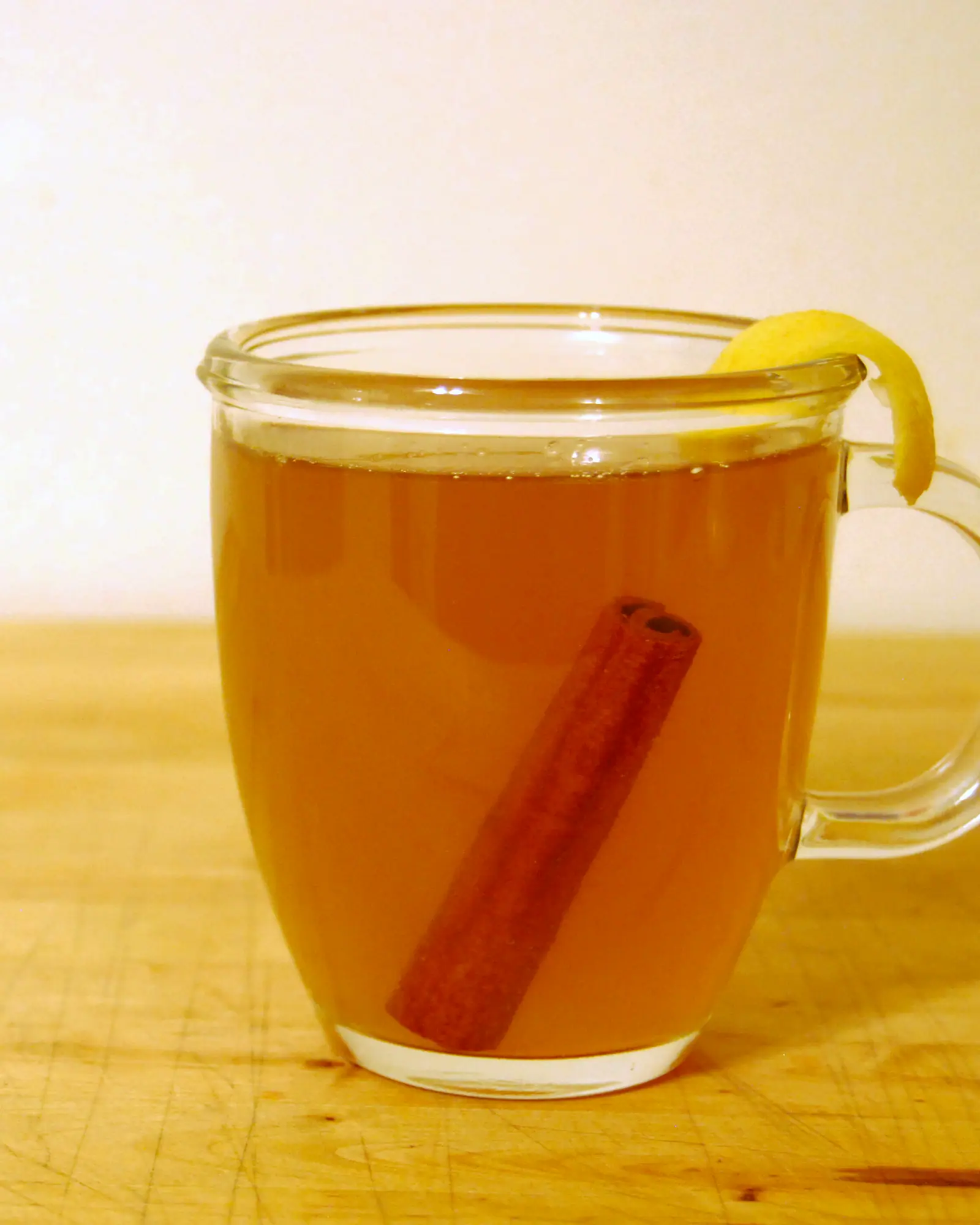

CC BY-SA 2.0 · Cropped, white-balanced, graded and re-encoded to WebP by eXir.
A glass mug of amber Hot Toddy with a cinnamon stick and a curl of lemon peel
Serving
Drink spec, per drink
Every figure above is per drink and does not move with the count, which is what makes the two service modes comparable. Sugar per litre, strength and standard drinks stay in the units their own authorities publish, because they are figures for comparing rather than for pouring.
Diet and allergen labels are computed from the ingredients listed on this page and nothing else. They cannot account for cross-contamination or for the particular product you buy, and they are not medical or safety guidance.
Ingredients
 45 ml bourbon
 20 g honey
 15 ml fresh lemon juice
 0.5 g cloves
 120 ml water
 ½ lemon (12 g)
- 45 ml bourbon
- 20 g honey
- 15 ml fresh lemon juice
- 0.5 g cloves
- 120 ml water
- ½ lemon (12 g)
Glass
Vessel
194 ml of liquid, served without ice, inside the 300 ml the glass holds. The build fails if a recipe ever exceeds its stated vessel.
A batch needs a vessel that closes and fits a fridge shelf.
Method
3 steps · 1m 5sWarm the toddy mug with hot water, then empty it.
Stir the 45 ml bourbon and the 20 g honey together in the warmed mug until the honey loosens, then add the 15 ml fresh lemon juice, the 0.5 g cloves and the hot 120 ml water.
The water is heated well short of a boil before it meets the 45 ml bourbon, since a full boil drives off some of the spirit's own alcohol and turns a hot drink meant to warm into one that is mostly water with whisky flavour.
Float the clove-studded ½ lemon (12 g) wheel on top.
Common pitfallDissolving the 20 g honey straight into the whisky before the water goes in keeps it from clumping at the bottom of the glass, where it is easy to miss on the first few sips and then hit all at once near the end.
Keeping and make-ahead
The water is heated and poured fresh for each glass; there is nothing here that benefits from batching ahead.
About
Hot whisky, honey and lemon, its name borrowed from an Indian palm drink and carried to Britain and colonial America as both a warming pub order and a folk remedy for colds.
The name has nothing to do with the drink's ingredients and everything to do with a borrowed word. "Toddy" comes from tari or taddy, a Hindi term recorded from the 1610s for fermented palm sap, an unrelated alcoholic drink native to India 1. By 1786 the English word had already shifted meaning, recorded specifically as "a beverage made of alcoholic liquor with hot water, sugar, and spices". This is the shape of the drink served today rather than the palm sap it was named after 2.
British colonists in India are credited with carrying the idea home, where it was adapted to the cold, damp climates of Scotland and northern England using Scotch whisky and spices reaching Britain through the same colonial trade 1. A separate, competing account credits the Irish physician Robert Bentley Todd with a medical version of the drink, made from hot brandy, canella bark and sugar syrup, prescribed to patients rather than served in a pub 2. The two stories are not mutually exclusive: one retelling suggests physicians of the period likely knew of the Indian drink already and folded it into their own prescriptions rather than inventing something unrelated 1.
The drink crossed the Atlantic into colonial America, where local spirits such as rum and brandy stood in for whisky, and by the 1830s American newspapers were promoting hot toddies specifically as a treatment for colds 1. That reputation as a folk remedy persists in how the drink is still described today (for the vitamin C, the honey to soothe a sore throat, and the alcohol's numbing effect) without either source consulted here making a medical claim that it actually treats an illness 2.
- 1The History of the Hot Toddyvinepair.com
- 2Hot toddyen.wikipedia.org