
Horchata
Raw rice soaked overnight, blended with cinnamon and strained into a sweet, milky drink.
Rice and blanched almonds soaked and blended together, for a richer, nuttier version of the same drink.
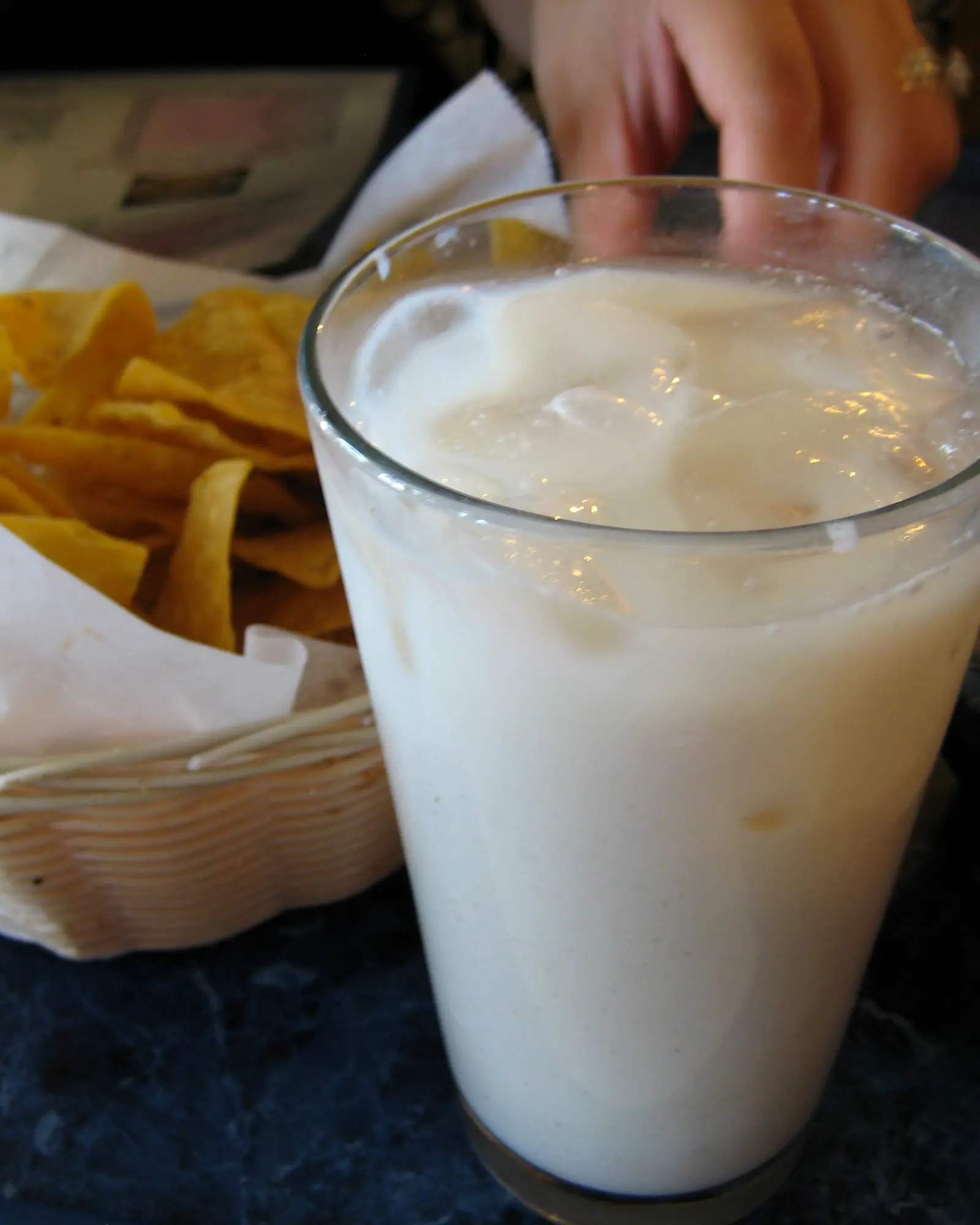

CC BY 2.0 · Cropped, white-balanced, graded and re-encoded to WebP by eXir.
A tall glass of white, milky rice horchata over ice, beside a basket of tortilla chips
Serving
Drink spec, per drink
Every figure above is per drink and does not move with the count, which is what makes the two service modes comparable. Sugar per litre, strength and standard drinks stay in the units their own authorities publish, because they are figures for comparing rather than for pouring.
Diet and allergen labels are computed from the ingredients listed on this page and nothing else. They cannot account for cross-contamination or for the particular product you buy, and they are not medical or safety guidance.
Ingredients
 200 g raw rice
 8 g cinnamon bark
 1 400 ml water
 130 g granulated sugar
- 200 g raw rice
- 8 g cinnamon bark
- 1 400 ml water
- 130 g granulated sugar
Glass
Vessel
370 ml of liquid, served without ice, inside the 400 ml the glass holds. The build fails if a recipe ever exceeds its stated vessel.
A batch needs a vessel that closes and fits a fridge shelf.
Drink spec, per drink
Every figure above is per drink and does not move with the count, which is what makes the two service modes comparable. Sugar per litre, strength and standard drinks stay in the units their own authorities publish, because they are figures for comparing rather than for pouring.
Diet and allergen labels are computed from the ingredients listed on this page and nothing else. They cannot account for cross-contamination or for the particular product you buy, and they are not medical or safety guidance.
Ingredients
- 150 g raw rice
 60 g blanched almonds
- 8 g cinnamon bark
- 1 400 ml water
- 130 g granulated sugar
- 150 g raw rice
- 60 g blanched almonds
- 8 g cinnamon bark
- 1 400 ml water
- 130 g granulated sugar
Glass
Vessel
370 ml of liquid, served without ice, inside the 400 ml the glass holds. The build fails if a recipe ever exceeds its stated vessel.
A batch needs a vessel that closes and fits a fridge shelf.
Method
4 steps · 10h 4mSoak the 200 g raw rice and the 8 g cinnamon bark in the 600 ml water for 8h.
A long soak softens the raw rice enough to blend to a fine slurry; skipping it leaves a gritty drink no amount of straining fixes.
Blend the soaked rice and cinnamon with their soaking water and the 800 ml water until as smooth as the blender will take it.
Strain through a cloth-lined strainer, pressing to get all the liquid through, then stir in the 130 g granulated sugar.
Refrigerate until cold before serving.
Common pitfallA single pass through a loose strainer still leaves fine rice grit in the glass; a second pass through muslin or a cloth-lined strainer is what gets horchata properly smooth.
Keeping and make-ahead
Batched ahead, this keeps sealed and cold. The water line the engine adds is the dilution figure from the spec panel, not a rule of thumb.
Method
4 steps · 10h 4mSoak the 150 g raw rice, the 60 g blanched almonds and the 8 g cinnamon bark in the 600 ml water for 8h.
Blend the soaked mixture with its soaking water and the 800 ml water until as smooth as the blender will take it.
Strain through a cloth-lined strainer, pressing hard to get all the liquid through, then stir in the 130 g granulated sugar.
Refrigerate until cold before serving.
The almonds are what set this tab apart from the plain rice version: soaked and blended raw rather than toasted, they thicken the drink and give it a rounder, nuttier body without tasting distinctly of almond on their own.
Common pitfallGround almonds clog a fine strainer fast; press in stages and rinse the cloth partway through rather than trying to force the whole batch through at once.
Keeping and make-ahead
Batched ahead, this keeps sealed and cold. The water line the engine adds is the dilution figure from the spec panel, not a rule of thumb.
About
A rice-based drink named after a Valencian tiger-nut milk it does not actually contain, adapted by Mexican cooks once the original plant proved impractical to grow in the Americas.
The name traces to Roman hordeata, a barley drink, from the Latin hordeum for barley, though the drink most associated with the word today is not made from grain at all 1. Tiger nuts, the tuber Valencian horchata is actually built on, reached the Iberian peninsula during Muslim rule beginning in the eighth century and took root particularly well around Valencia, and by the thirteenth century local writing already mentions "llet de xufes," tiger nut milk, as the drink's direct ancestor 21. Valencia still produces the tiger-nut version under a protected designation of origin today, treating it as a defining regional product rather than one drink among many 2.
The name's popular origin story, in which King James I of Aragon tastes the drink from a young Valencian woman and declares "this is not milk, this is gold, girl" (a pun the Valencian word for horchata is said to echo) is told locally as a charming legend rather than a documented event, and no source treats it as established history 2.
Horchata's rice version is a later, separate adaptation. Spanish colonists carried the drink to the Americas, but tiger nuts were not readily grown across most of Mexico, and cooks there substituted rice, usually with cinnamon and sugar, to reproduce something like the original's pale colour and milky body with what was actually available 1. That substitution is now the version most people outside Spain mean by the word, even though it shares no plant with the drink it was named after.
- 1Horchataen.wikipedia.org
- 2Valencian horchatavisitvalencia.com