
Horchata de Chufa
Valencian tiger nuts soaked, blended and strained into a pale, sweet, faintly nutty milk.
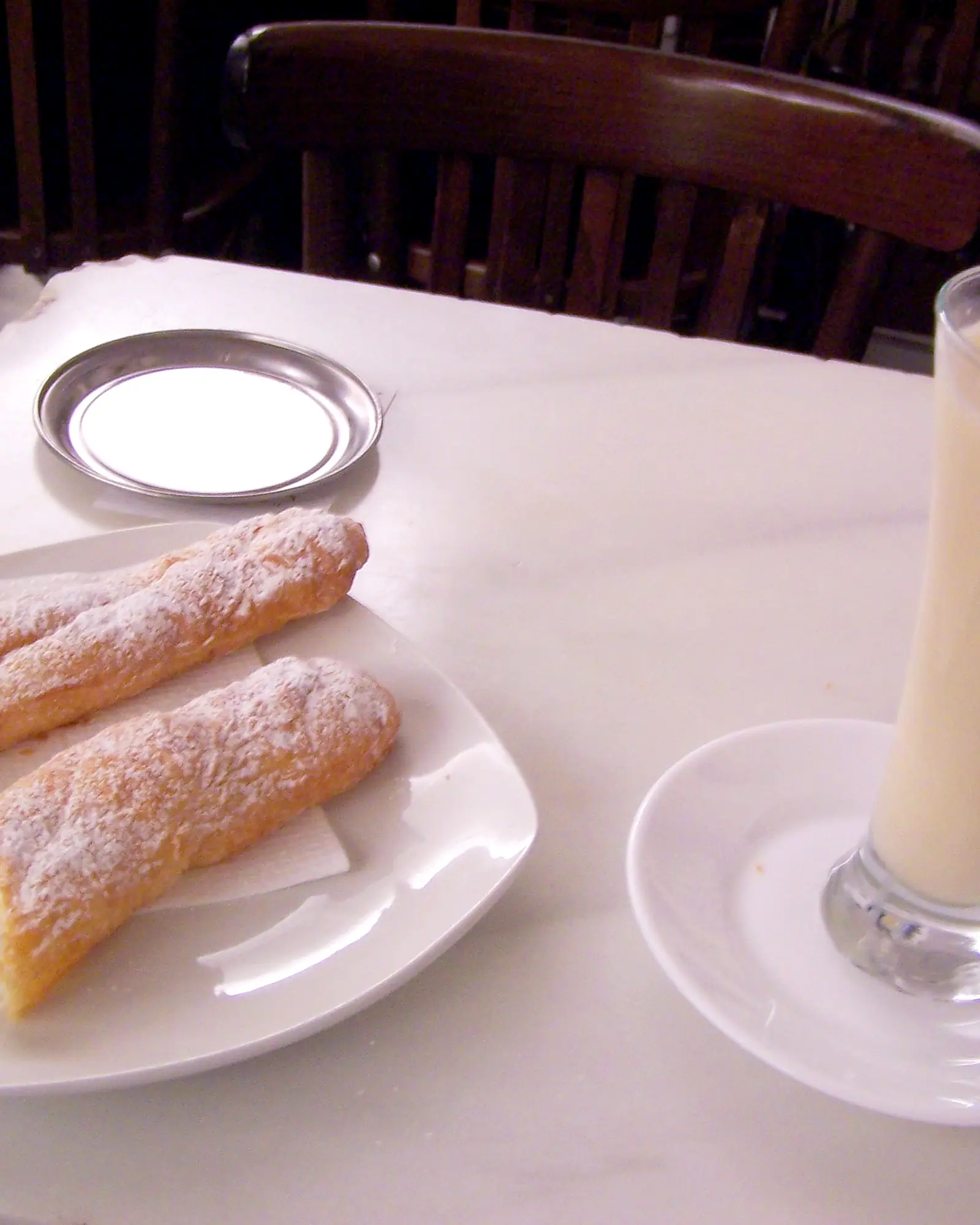

CC BY-SA 2.0 · Cropped, white-balanced, graded and re-encoded to WebP by eXir.
A tall glass of pale horchata de chufa beside a plate of sugar-dusted fartons on a café table
Serving
Drink spec, per drink
Every figure above is per drink and does not move with the count, which is what makes the two service modes comparable. Sugar per litre, strength and standard drinks stay in the units their own authorities publish, because they are figures for comparing rather than for pouring.
Diet and allergen labels are computed from the ingredients listed on this page and nothing else. They cannot account for cross-contamination or for the particular product you buy, and they are not medical or safety guidance.
Ingredients
 250 g tiger nuts
 1 300 ml water
 120 g granulated sugar
- 250 g tiger nuts
- 1 300 ml water
- 120 g granulated sugar
Glass
Vessel
344 ml of liquid, served without ice, inside the 400 ml the glass holds. The build fails if a recipe ever exceeds its stated vessel.
A batch needs a vessel that closes and fits a fridge shelf.
Method
4 steps · 10h 5mSoak the 250 g tiger nuts in the 700 ml water for 8h, until fully softened.
Tiger nuts soak far longer than rice does; a full day rather than overnight is normal, since the whole tuber has to soften enough to blend, not just its surface.
Blend the soaked tiger nuts with their soaking water and the 600 ml water until as smooth as the blender will take it.
Strain through a cloth-lined strainer, pressing hard to get all the liquid through and leave the fibrous pulp behind, then stir in the 120 g granulated sugar.
Refrigerate until fully cold before serving.
Common pitfallTiger nut pulp is considerably more fibrous than rice or almond pulp, and a single pass through a loose strainer leaves a gritty drink; it wants a firm press through muslin or a fine cloth.
Keeping and make-ahead
Batched ahead, this keeps sealed and cold. The water line the engine adds is the dilution figure from the spec panel, not a rule of thumb.
About
The original tiger-nut horchata of Valencia, grown from a tuber the region has cultivated since Muslim rule and still protects today as a named agricultural product.
Tiger nuts, small tubers rather than a true nut, arrived on the Iberian peninsula during Muslim rule beginning in the eighth century and found particularly favourable growing conditions in the soil around Valencia 1. Written references to "llet de xufes," tiger nut milk, appear locally by the thirteenth century, making it one of the clearer lines back from a modern Spanish drink name to a documented medieval one 2. Valencia has never stopped growing the crop the drink depends on: chufa now carries its own protected designation of origin, and the region's orchards still supply the tubers that go into both the drink sold from horchaterías and the version made at home 1.
Local tradition also credits the drink's name to an encounter between King James I of Aragon and a young Valencian woman who served it to him, with the king supposedly exclaiming that what he was drinking was not milk but gold. It is told as a piece of civic folklore rather than a documented event, and no source treats it as history rather than legend 1.
This is the drink the far more widely known Mexican horchata is named after and adapted from, not the other way around: when the drink crossed the Atlantic with Spanish colonists, tiger nuts did not grow readily across most of Mexico, so cooks substituted rice for a similar pale, milky result 2. The two now share only a name and a general idea of what the drink should look like; a Valencian ordering horchata and a Mexican ordering horchata are asking for two different plants.
- 1Valencian horchatavisitvalencia.com
- 2Horchataen.wikipedia.org