
Gin Fizz
Gin, lemon and sugar, shaken and strained up, then topped with soda at the table.
The classic fizz rounded out with egg white, poured with a head of foam under the soda.
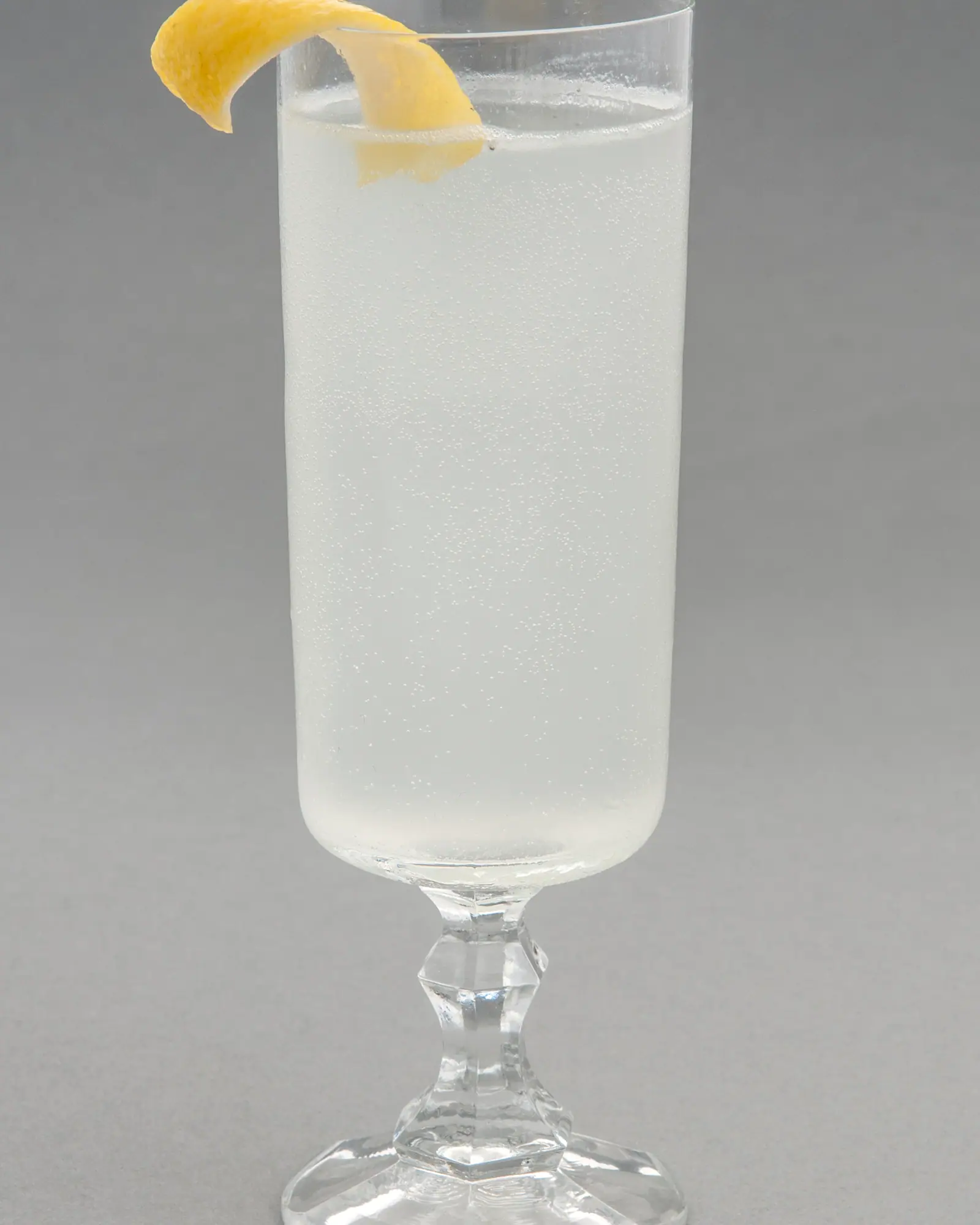

CC BY-SA 3.0 · Cropped, white-balanced, graded and re-encoded to WebP by eXir.
A clear, fizzy Gin Fizz in a tall stemmed glass, garnished with a curl of lemon peel
Serving
Drink spec, per drink
Every figure above is per drink and does not move with the count, which is what makes the two service modes comparable. Sugar per litre, strength and standard drinks stay in the units their own authorities publish, because they are figures for comparing rather than for pouring. Dilution is modelled rather than measured, as a fraction of the poured volume before any ice; dotted figures descend from that estimate.
Diet and allergen labels are computed from the ingredients listed on this page and nothing else. They cannot account for cross-contamination or for the particular product you buy, and they are not medical or safety guidance.
Ingredients
 23 ml fresh lemon juice
 60 ml London dry gin
 23 ml simple syrupInterchangeable by volume and close in sugar, so the arithmetic barely moves. The molasses note sits oddly against the soda's own cleanness, which is why plain syrup is the usual choice here.flavour: moderate change · strength: no change · sweetness: minor change
 90 ml soda water
- 23 ml fresh lemon juice
- 60 ml London dry gin
- 23 ml simple syrup
- 90 ml soda water
- ~53 ml water
Glass
Vessel
248 ml of liquid, served without ice, inside the 350 ml the glass holds. The build fails if a recipe ever exceeds its stated vessel.
A batch needs a vessel that closes and fits a fridge shelf.
Drink spec, per drink
Every figure above is per drink and does not move with the count, which is what makes the two service modes comparable. Sugar per litre, strength and standard drinks stay in the units their own authorities publish, because they are figures for comparing rather than for pouring. Dilution is modelled rather than measured, as a fraction of the poured volume before any ice; dotted figures descend from that estimate.
Diet and allergen labels are computed from the ingredients listed on this page and nothing else. They cannot account for cross-contamination or for the particular product you buy, and they are not medical or safety guidance.
Ingredients
- 23 ml fresh lemon juice
- 60 ml London dry gin
- 23 ml simple syrupInterchangeable by volume and close in sugar, so the arithmetic barely moves. The molasses note sits oddly against the soda's own cleanness, which is why plain syrup is the usual choice here.flavour: moderate change · strength: no change · sweetness: minor change
 1 white egg white (32 ml)
- 75 ml soda water
- 23 ml fresh lemon juice
- 60 ml London dry gin
- 23 ml simple syrup
- 1 white egg white (32 ml)
- 75 ml soda water
- ~117 ml water
Glass
Vessel
329 ml of liquid, served without ice, inside the 350 ml the glass holds. The build fails if a recipe ever exceeds its stated vessel.
A batch needs a vessel that closes and fits a fridge shelf.
Method
5 steps · 2m 7sSqueeze the 23 ml fresh lemon juice and strain out the pips and pulp.
Combine the 60 ml London dry gin, the 23 ml fresh lemon juice and the 23 ml simple syrup in a shaker and fill it with cubed ice.
Shake hard for 12s to chill and aerate the drink before any soda reaches it.
Strain up into a chilled highball glass, with no ice in the glass itself.
Top with the 90 ml soda water, poured gently down the side of the glass so the foam it raises has somewhere to go, and serve at once.
The soda is never shaken with the rest. It is poured in afterward, straight into the strained drink, so the bubbles it carries survive to the glass instead of being beaten out of it in the tin.
Common pitfallFlat soda is the single most common way this drink goes wrong, and it happens quietly: an open bottle kept in the fridge overnight looks identical to a fresh one and pours the same, but the fizz that gives the drink its name is already half gone.
Keeping and make-ahead
Batched ahead, this keeps sealed and cold. The water line the engine adds is the dilution figure from the spec panel, not a rule of thumb.
Method
6 steps · 2m 29sSqueeze the 23 ml fresh lemon juice and strain out the pips and pulp.
Combine the 60 ml London dry gin, the 23 ml fresh lemon juice, the 23 ml simple syrup and the 1 white egg white (32 ml) in a shaker, with no ice yet.
Shake hard for 20s with no ice, so the egg white has room to whip into a stable foam before any water is added to it.
Shaken once without ice before the ice ever goes in, the same order a Clover Club uses. Cold, diluted liquid will not whip into a foam; building the emulsion while the drink is still warm and full strength is what lets the second shake finish it rather than start it.
Add cubed ice and shake again for 14s to chill the drink and finish the emulsion.
Fine strain up into a chilled highball glass, with no ice in the glass itself.
Top with the 75 ml soda water, poured gently down the side of the glass so the foam already sitting on the drink is not broken, and serve at once.
Common pitfallPouring the soda straight down the middle of the glass collapses the foam this version is built around. It needs to go in gently down the side, the way it is added to any drink already carrying a head.
Keeping and make-ahead
Batched ahead, this keeps sealed and cold. The water line the engine adds is the dilution figure from the spec panel, not a rule of thumb.
About
A sour lengthened with soda at the table rather than shaken into it, first printed in the 1870s and, at the format's turn-of-the-century peak, ordered by the thousand in New Orleans alone.
The fizz was first recorded in print by Jerry Thomas in 1867, as spirit, lemon, sweetener and seltzer 1. Gin was one of several base spirits the format was built around from the start, and the resulting drink spread widely enough in the United States between 1900 and the 1940s that it became known as a hometown specialty of New Orleans, where bars are said to have kept teams of bartenders shaking nothing else 2.
The format is defined against its nearest relative, the Collins: the two share a near-identical build of spirit, citrus and sugar topped with soda, and differ mainly in that the fizz is shaken before straining and drunk at once, while the Collins is built directly over ice and left to sit 2. The distinction was enough to earn the fizz its own reputation as a hangover remedy before the Bloody Mary took over that role 1.
Several named variants branch from the same base by changing one ingredient: a Silver Fizz adds egg white, a Golden Fizz an egg yolk, and a Royal Fizz the whole egg 1. The best known and most elaborate is a separate drink built on the same idea. Henry C. Ramos created his version, cream, orange flower water, egg white and all, at the Imperial Cabinet Saloon in New Orleans in 1888 2. It became popular enough before Prohibition that the Imperial reportedly kept more than twenty bartenders shaking it in relay, since the drink's own long shake time made a single bartender too slow to keep up with demand 2. The Roosevelt Hotel later revived and trademarked that recipe in 1935, after its own bartender was sent to teach it to bar staff in New York 2, and it is documented today as its own drink rather than a version of this one.
- 1How Well Do You Actually Know the Fizz?punchdrink.com
- 2Fizz (cocktail)en.wikipedia.org