
Gin Basil Smash
Gin, lemon and a fistful of muddled basil, shaken hard and strained over fresh ice.

CC0 · Cropped, white-balanced, graded and re-encoded to WebP by eXir.
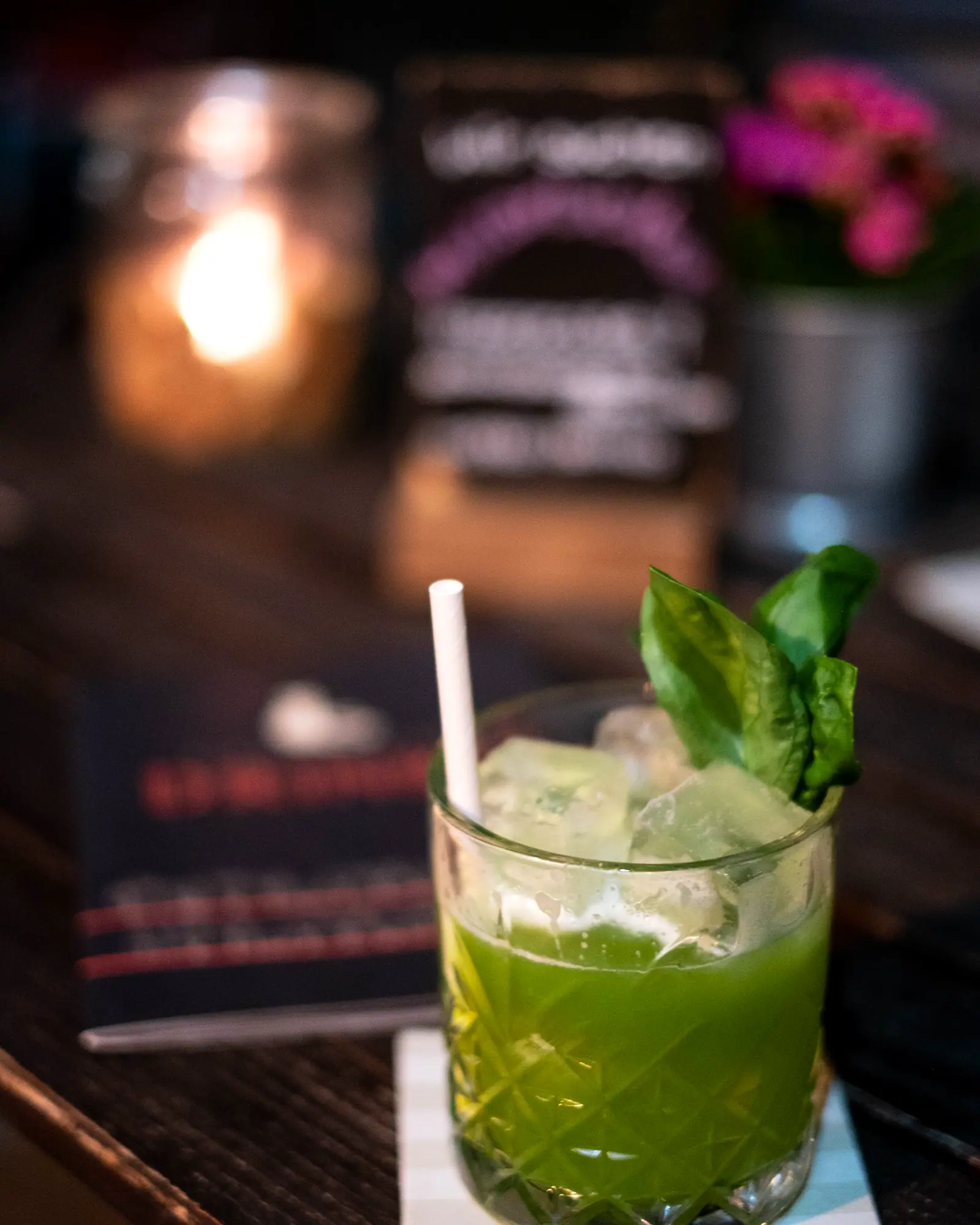
A Gin Basil Smash in a rocks glass over ice, pale green and topped with a fresh basil leaf, on a bar table with a candle behind it
Serving
Drink spec, per drink
Every figure above is per drink and does not move with the count, which is what makes the two service modes comparable. Sugar per litre, strength and standard drinks stay in the units their own authorities publish, because they are figures for comparing rather than for pouring. Dilution is modelled rather than measured, as a fraction of the poured volume before any ice; dotted figures descend from that estimate.
Diet and allergen labels are computed from the ingredients listed on this page and nothing else. They cannot account for cross-contamination or for the particular product you buy, and they are not medical or safety guidance.
Ingredients
 6 g basil
 23 ml fresh lemon juice
 23 ml simple syrupInterchangeable by volume and close in sugar, so the arithmetic barely moves. The molasses note it adds competes with the basil rather than supporting it, which is why plain syrup is the usual choice here.flavour: moderate change · strength: no change · sweetness: minor change
 60 ml London dry gin
- 6 g basil
- 23 ml fresh lemon juice
- 23 ml simple syrup
- 60 ml London dry gin
- ~53 ml water
Glass
Vessel
158 ml of liquid plus 175 ml of cubed ice occupies about 333 ml, inside the 400 ml the glass holds. The build fails if a recipe ever exceeds its stated vessel.
A batch needs a vessel that closes and fits a fridge shelf.
Method
4 steps · 1m 7sPress the 6 g basil in the bottom of a shaker with the 23 ml fresh lemon juice and the 23 ml simple syrup, just enough to bruise the leaves and release their oil.
The basil is pressed rather than pounded, the same restraint a mint julep asks for. A gentle bruise releases the leaf's oil into the lemon and syrup; a hard pounding tears the cell walls and pulls out a bitter, chlorophyll-heavy note along with it.
Add the 60 ml London dry gin and fill the shaker with cubed ice.
Shake hard for 12s. Short and violent; the aim is to chill and aerate, not to melt the ice.
Double strain into a double old fashioned glass over fresh cubed ice, catching the torn leaf the shake has broken off.
Common pitfallA thin fine strain still lets flecks of torn leaf through, which look like herb but taste like grass by the time the glass is finished. A hard double strain through a tea strainer as well as the shaker's own is worth the extra step.
Keeping and make-ahead
Batched ahead, this keeps sealed and cold. The water line the engine adds is the dilution figure from the spec panel, not a rule of thumb.
About
A German bar's 2008 variant on the American whiskey smash, credited to a single bartender and a single dated blog post rather than to the usual fog of bar folklore.
The drink was created by Jörg Meyer at Le Lion, his bar in Hamburg, after a trip to New York in the winter of 2007 where he tasted Dale DeGroff's Whiskey Smash at the Pegu Club 1. Back in Hamburg the following year, a gin recipe booklet that garnished its serve with basil sent him toward the herb, and by the summer of 2008 he was shaking gin, lemon and sugar with a handful of it muddled in 1.
Meyer served the drink under the name Gin Pesto before settling on its current one 2. He marks 10 July 2008, the day he posted the recipe to the Bitters Blog he co-wrote with Stephan Berg, as its real birthday 1. The post spread through the European bartending community within a single summer, helped by the Traveling Mixologists, a touring group of bartenders formed a few years earlier, and the drink is credited as the first modern cocktail to reach worldwide fame from a European bar outside London or Paris 1.
It has since been adopted by the International Bartenders Association as one of its official cocktails, in the category the IBA reserves for recent additions to the canon rather than the pre-Prohibition list 2. Le Lion itself leaned into the association: Meyer had "Cradle of the Gin Basil Smash" painted on the bar's exterior in 2012 1. The smash format it belongs to (a spirit, citrus and sugar sour with a muddled herb worked through it) is older and mostly whiskey-based in America; this is the gin version that outgrew its source.
- 1How the Gin Basil Smash Became a Modern Classic Cocktailpunchdrink.com
- 2Gin basil smashen.wikipedia.org