
Cosmopolitan
Vodka, orange liqueur, lime and cranberry, shaken pink and strained up.

Public domain · Cropped, white-balanced, graded and re-encoded to WebP by eXir.
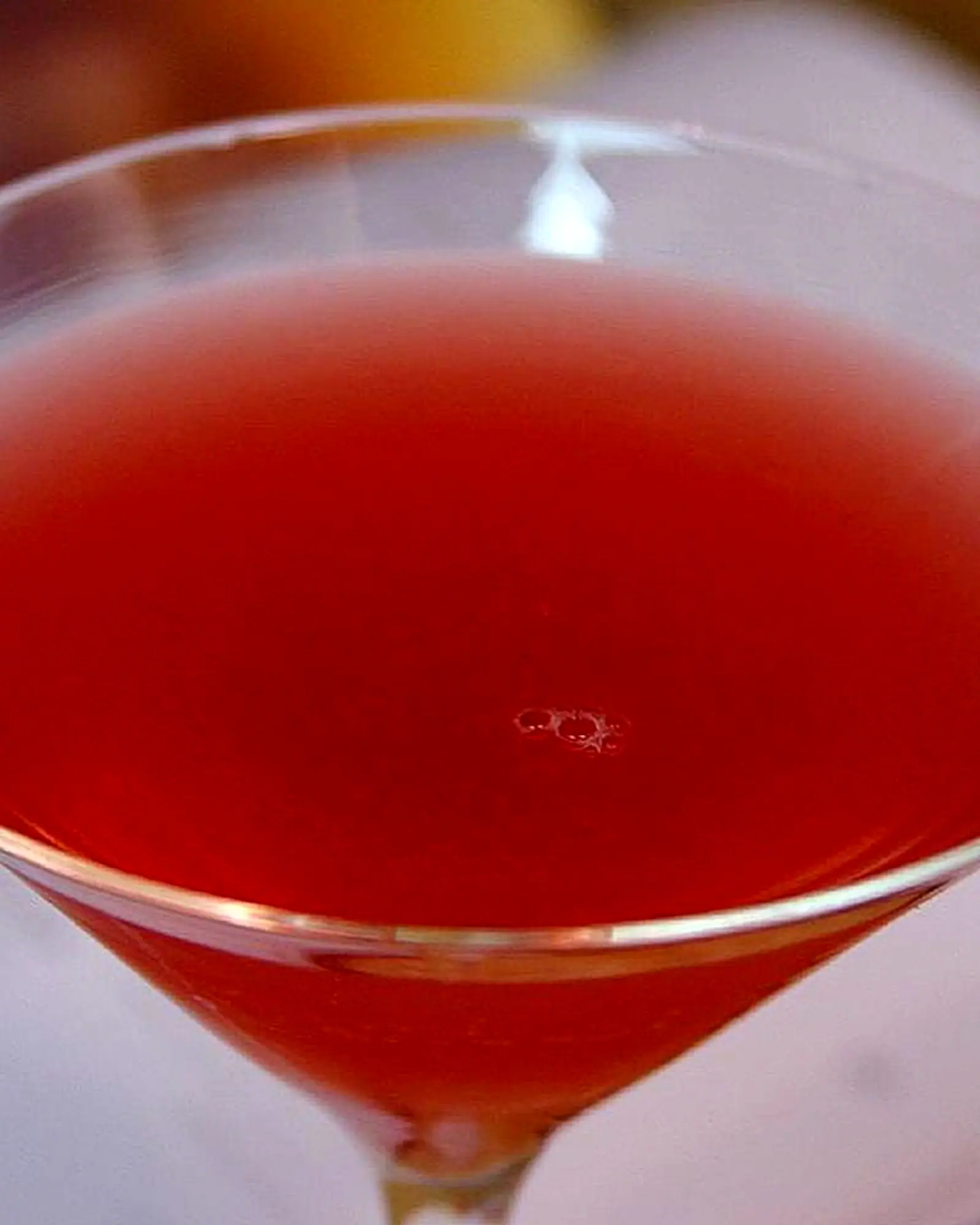
A close view of a Cosmopolitan's deep pink-red colour in a cocktail glass
Serving
Drink spec, per drink
Every figure above is per drink and does not move with the count, which is what makes the two service modes comparable. Sugar per litre, strength and standard drinks stay in the units their own authorities publish, because they are figures for comparing rather than for pouring. Dilution is modelled rather than measured, as a fraction of the poured volume before any ice; dotted figures descend from that estimate.
Diet and allergen labels are computed from the ingredients listed on this page and nothing else. They cannot account for cross-contamination or for the particular product you buy, and they are not medical or safety guidance.
Ingredients
 15 ml fresh lime juice
 45 ml vodka
 15 ml orange liqueurProprietary
 30 ml cranberry juice
 1 orange (140 g)
- 15 ml fresh lime juice
- 45 ml vodka
- 15 ml orange liqueurProprietary
- 30 ml cranberry juice
- 1 orange (140 g)
- ~53 ml water
Glass
Vessel
158 ml of liquid, served without ice, inside the 180 ml the glass holds. The build fails if a recipe ever exceeds its stated vessel.
A batch needs a vessel that closes and fits a fridge shelf.
Method
5 steps · 1m 57sSqueeze the 15 ml fresh lime juice and strain out the pips and pulp.
Combine the 45 ml vodka, the 15 ml orange liqueur, the 15 ml fresh lime juice and the 30 ml cranberry juice in a shaker and fill it with cubed ice.
Shake hard for 12s until the tin frosts over.
The cranberry juice is what turns the shake from a clear sour into an opaque pink one, and it is shaken as hard and as briefly as any other: the colour comes from the juice itself, not from extra time in the tin.
Double strain into a chilled martini glass, which holds no ice of its own.
Cut a wide strip of orange peel, express it skin-outwards over the surface so the oil lands on the drink, then either drop it in or set it across the rim.
Common pitfallBottled sweetened cranberry juice is what the drink is built around; an unsweetened juice with none of its added sugar is far more tart in its place and throws off the balance the recipe assumes, without changing anything else in the line.
Keeping and make-ahead
Batched ahead, this keeps sealed and cold. The water line the engine adds is the dilution figure from the spec panel, not a rule of thumb.
About
A vodka sour built on orange liqueur, lime and cranberry, credited to several bartenders working the same idea in the late 1980s and settled into its familiar form by the mid-1990s.
No single origin is settled. Several bartenders working independently through the 1980s converged on close variants of the same pink, citrus-vodka sour, and each has a documented claim.
Neal Murray dates his version to autumn 1975, mixed at a Minneapolis steakhouse from a Cape Cod and a Kamikaze; a regular's remark, "how cosmopolitan," gave it a name he later carried to San Francisco 1. Cheryl Cook made a citron-vodka, triple sec and cranberry version at The Strand in Miami's South Beach around 1988, and the name took hold locally after her bar appeared on a 1989 cover of Cosmopolitan magazine 1. In New York, bartender Melissa Huffsmith brought a version of the San Francisco drink to The Odeon in Tribeca, where Toby Cecchini reworked it in 1988 into close to the recipe served today: Absolut Citron, Cointreau, fresh lime juice and Ocean Spray cranberry juice 2.
Dale DeGroff put his own recipe on the menu at the Rainbow Room in 1996 and was, for a time, credited by New York magazine as the drink's inventor, a claim he has explicitly declined 2. His version thinned the Cointreau and lime and added more cranberry, closer to the pale pink most readers now expect, and introduced the flamed orange peel some bars still use as a garnish 2.
The vodka used throughout this early history was citron (lemon-flavoured) rather than plain, a distinction the drink's later popularity mostly erased as it spread onto menus built around a single house vodka.
- 1Cosmopolitan Cocktail Historydiffordsguide.com
- 2Mastering the Cosmopolitan With Toby Cecchinipunchdrink.com