
Cortado
Equal parts espresso and warm milk, cutting the shot without lengthening it.

CC BY 2.0 · Cropped, white-balanced, graded and re-encoded to WebP by eXir.
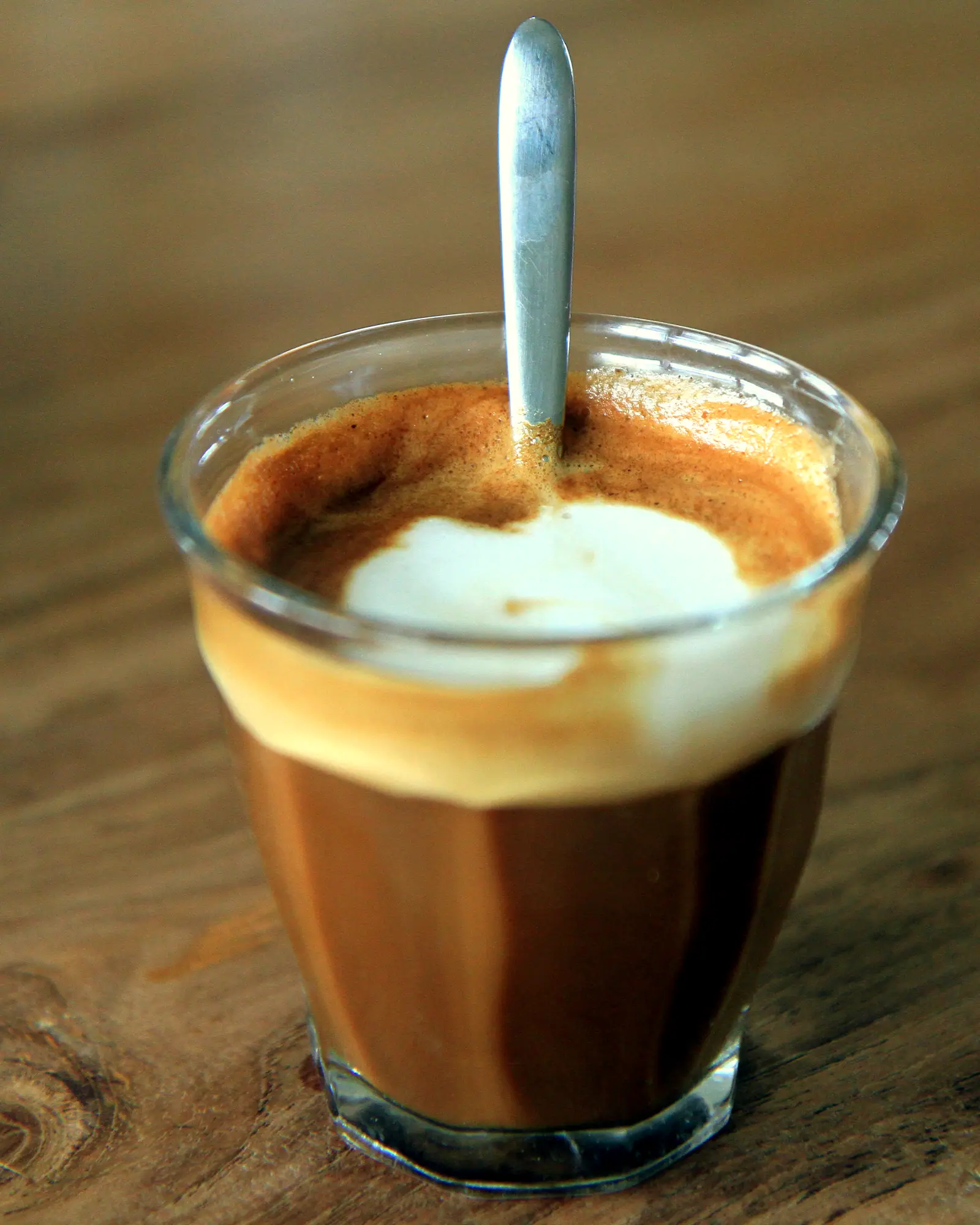
A cortado in a small glass, espresso cut with steamed milk, a spoon resting inside
Serving
Drink spec, per drink
Every figure above is per drink and does not move with the count, which is what makes the two service modes comparable. Sugar per litre, strength and standard drinks stay in the units their own authorities publish, because they are figures for comparing rather than for pouring.
Diet and allergen labels are computed from the ingredients listed on this page and nothing else. They cannot account for cross-contamination or for the particular product you buy, and they are not medical or safety guidance.
Extraction
No extraction yield is shown. It needs a measured dissolved-solids figure from the finished cup, nothing on a bag of coffee supplies one, and estimating it from the method would be inventing the single number the calculation exists to establish.
Ingredients
 18 g coffee
 36 ml whole milk
 50 ml water
- 18 g coffee
- 36 ml whole milk
- 50 ml water
Glass
Vessel
72 ml of liquid, served without ice, inside the 120 ml the glass holds. The build fails if a recipe ever exceeds its stated vessel.
A batch needs a vessel that closes and fits a fridge shelf.
Method
4 steps · 1m 25sGrind the 18 g coffee fine for the espresso machine.
Warm the 36 ml whole milk gently, working in just enough air to soften it without building a real foam.
The milk is warmed rather than steamed to a foam, with only enough air worked in to take the raw edge off it, because the drink is meant to soften the shot's sharpness rather than dilute or cover it.
Pump the 50 ml water through the grounds at 93 °C for 28s while the milk warms.
Pour the warm milk into the glass over the shot in equal measure and serve at once.
Keeping and make-ahead
Warmed and pulled to order, in a glass sized for exactly this amount of milk; there is nothing to make ahead of it.
About
Espresso cut with roughly its own volume of warm milk, a Spanish name that simply means "cut" and a Basque café habit from the early twentieth century.
The name states exactly what the drink does. Cortado is the past participle of the Spanish verb cortar, "to cut", used here in the sense of diluting rather than slicing 1; the milk cuts the espresso's sharpness without lengthening the drink the way a larger pour would. Accounts of its origin place it in Spain's Basque region in the early twentieth century, where it was known before the name settled as café con leche pequeño, "small coffee with milk" 2.
The drink answers a specific complaint rather than reaching for a new technique: straight espresso reads as acidic and sharp to a milk-drinking palate, and a small amount of warmed milk (steamed but not aerated into a real foam) softens both without diluting the coffee toward a latte's larger proportions 2 1. That distinction from a caffè latte is the whole point of the drink: a cortado is built to a size that only ever holds an equal-parts ratio, not a smaller latte poured into a smaller glass.
The name and the drink both travelled to Cuba, where the same technique is called a cortadito and takes a different form: a standard shot of espresso finished with sweetened condensed milk rather than fresh, heated milk, a substitution that reflects what was reliably available on the island rather than a stylistic choice 1. The two are close enough in name and idea to be mistaken for each other, but the milk they are built on is not interchangeable.
- 1Cortadoen.wikipedia.org
- 2What Is A Cortado? History, How-To787coffee.com