
Corpse Reviver No. 2
Gin, orange liqueur, Lillet Blanc and lemon in equal parts, shaken and poured into an absinthe-rinsed glass.

CC BY-SA 3.0 · Cropped, white-balanced, graded and re-encoded to WebP by eXir.
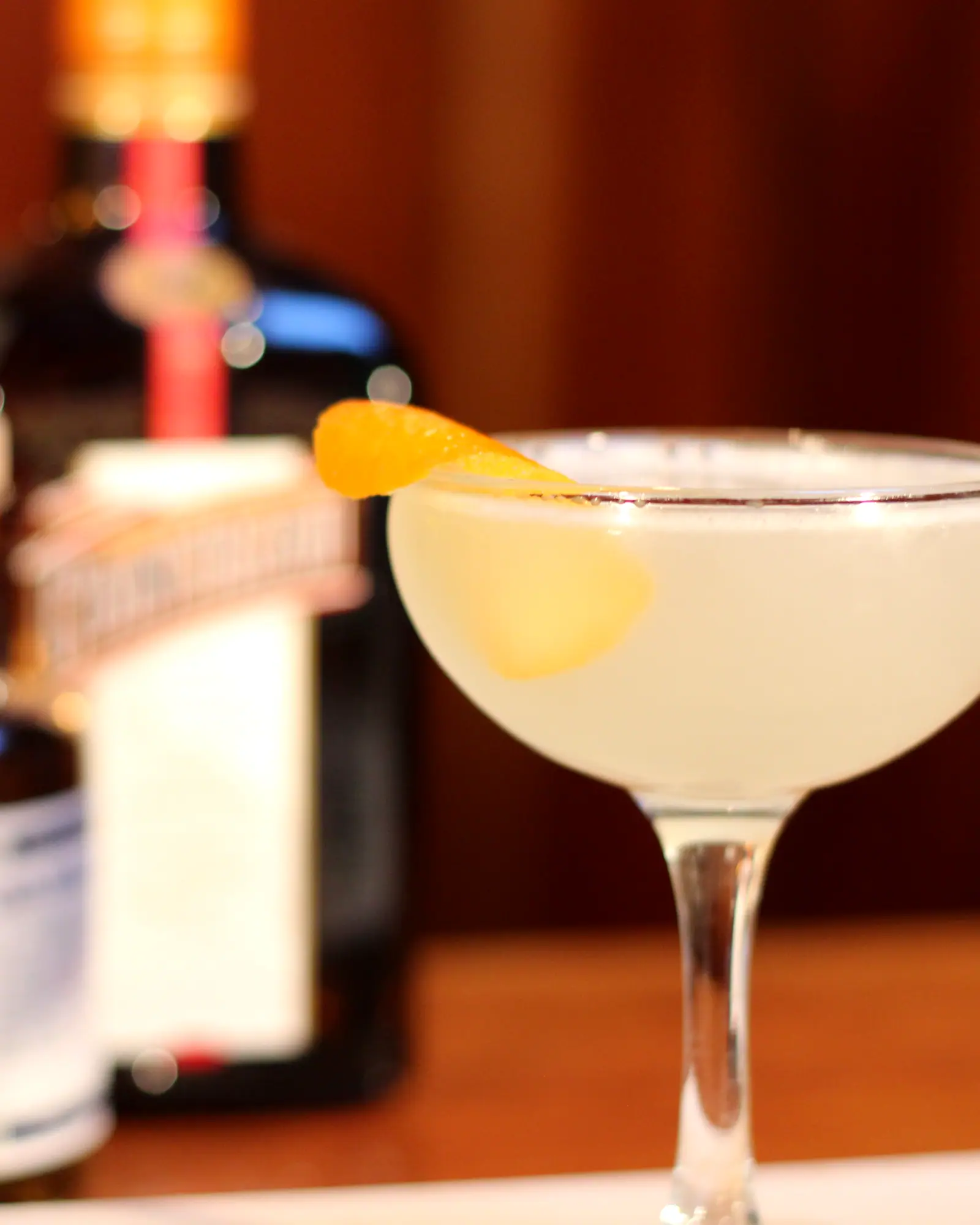
A Corpse Reviver No. 2 served up in a coupe with a lemon twist garnish, pale and clear
Serving
Drink spec, per drink
Every figure above is per drink and does not move with the count, which is what makes the two service modes comparable. Sugar per litre, strength and standard drinks stay in the units their own authorities publish, because they are figures for comparing rather than for pouring. Dilution is modelled rather than measured, as a fraction of the poured volume before any ice; dotted figures descend from that estimate.
A wine-based aperitif; wine is routinely fined with isinglass or gelatine and the producer does not publish whether this bottling is animal-fined.
Diet and allergen labels are computed from the ingredients listed on this page and nothing else. They cannot account for cross-contamination or for the particular product you buy, and they are not medical or safety guidance.
Ingredients
 6 dashes absinthe (5 ml)
 23 ml fresh lemon juice
 23 ml London dry gin
 23 ml orange liqueurProprietary
 23 ml Lillet BlancProprietary
- 6 dashes absinthe (5 ml)
- 23 ml fresh lemon juice
- 23 ml London dry gin
- 23 ml orange liqueurProprietary
- 23 ml Lillet BlancProprietary
- ~45 ml water
Glass
Vessel
136 ml of liquid, served without ice, inside the 180 ml the glass holds. The build fails if a recipe ever exceeds its stated vessel.
A batch needs a vessel that closes and fits a fridge shelf.
Method
5 steps · 2m 7sChill a coupe. Pour the 6 dashes absinthe (5 ml) into it, tilt and swirl so the spirit coats the inside completely, then tip it out over the sink.
Four ingredients in true equal parts is unusual; most sours weight the spirit heaviest. Here the orange liqueur and the Lillet are doing the sweetening a syrup would elsewhere, so the drink stays balanced without one, and the absinthe rinse supplies a top note none of the four would otherwise carry.
Squeeze the 23 ml fresh lemon juice and strain out the pips and pulp.
Combine the 23 ml London dry gin, the 23 ml orange liqueur, the 23 ml Lillet Blanc and the 23 ml fresh lemon juice in a shaker and fill it with cubed ice.
Shake hard for 12s. Short and violent; the aim is to chill and aerate, not to melt the ice.
Double strain into the rinsed coupe, which holds no ice of its own.
Common pitfallLillet Blanc is milder and less bitter than the Kina Lillet the drink was written for, which was discontinued and reformulated decades ago. Made with today's bottle the drink reads a shade sweeter and less bitter than the original did.
Keeping and make-ahead
Batched ahead, this keeps sealed and cold. The water line the engine adds is the dilution figure from the spec panel, not a rule of thumb.
About
A gin, orange liqueur, Lillet and lemon sour in true equal parts, finished with an absinthe rinse and published by Harry Craddock in 1930 as the second of two hangover cures sharing the name.
"Corpse reviver" was bar slang before it named any particular recipe: an 1889 slang dictionary already glossed it as simply a dram of spirits, and the term turns up in Punch as early as 1861 1. It described a whole loose category of hair-of-the-dog drinks rather than one formula, and several competing recipes carried the name through the late nineteenth century, among them a brandy, maraschino and Boker's bitters combination published in The Gentleman's Table Guide in 1871 1.
The version served today is Harry Craddock's. An American bartender who crossed to London's Savoy Hotel in 1920, Craddock published two Corpse Revivers in The Savoy Cocktail Book in 1930, numbered one and two, the second appended with the warning that four of them taken in swift succession would unrevive the corpse again 2 1. Craddock's own recipe specified equal parts gin, Cointreau, Kina Lillet and lemon juice, with a dash of absinthe 2.
Kina Lillet, the quinine-forward aperitif wine Craddock named, was discontinued and reformulated as the milder Lillet Blanc in 1986, so a Corpse Reviver No. 2 made today from that bottle reads less bitter than the one Craddock served. Cocchi Americano, a separate producer's quinquina, is frequently substituted as a closer match to the original profile, and its reappearance on the market is credited with a share of the drink's modern revival 1.
Of the two Corpse Revivers Craddock published, the second is by far the more enduring; the first, built on brandy and Calvados, is comparatively rarely made today.
- 1The Enduring Legacy of the Corpse Revivertalesofthecocktail.org
- 2Corpse Reviver No.2 (Savoy Recipe)diffordsguide.com